Venezuelan food feels both familiar and different in Miami because it uses ingredients many people recognize, like corn, cheese, beef, chicken, beans, rice and plantains, but combines them in a distinctly Venezuelan way. Arepas, cachapas, empanadas, tequeños, pabellón and guasacaca make the cuisine easy to approach but memorable.
Why does Venezuelan food feel familiar in Miami?
Venezuelan food feels familiar in Miami because the city already understands Latin food as part of daily life. Many people in Miami know corn, rice, beans, plantains, grilled meats, fried snacks, strong coffee and sauces from their own cultures or from the city’s food landscape. Venezuelan food begins with several of those recognizable ingredients.
That familiarity helps first-time visitors feel comfortable. A tequeño may be new by name, but warm cheese wrapped in dough is easy to understand. An arepa may not be bread, but it works like a handheld meal. Pabellón may be Venezuelan, but rice, beans, beef and plantains are ingredients many people already know.
The difference is in the arrangement. Venezuelan food does not simply use familiar ingredients; it organizes them through its own logic. Corn becomes a pocket, a pancake, a fried shell or a breakfast base. Cheese becomes a filling, a contrast, a party appetizer or the balance to sweet corn. Plantains are not an afterthought; tajadas can change the whole plate.
That is where Venezuelan food becomes both close and new at the same time.
What makes Venezuelan food different from other Latin cuisines?
Venezuelan food is different because of how often it uses corn as structure, cheese as balance and contrast as a central tool. It is not usually defined by strong heat or heavy spice. Instead, it often depends on warm corn dough, shredded meats, white cheese, black beans, sweet plantains and sauces that add freshness.
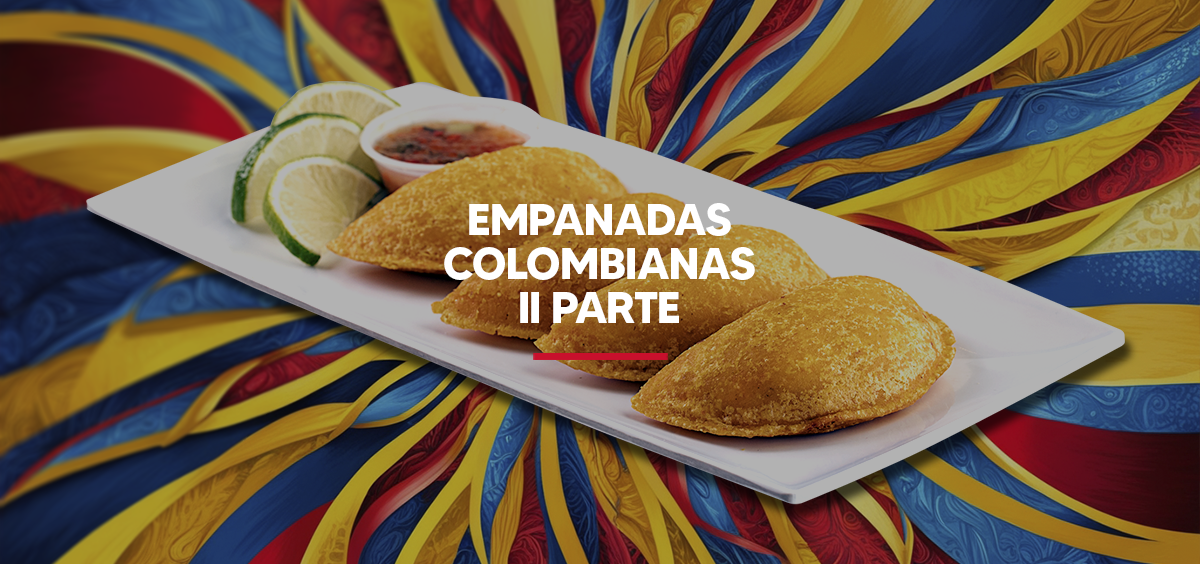
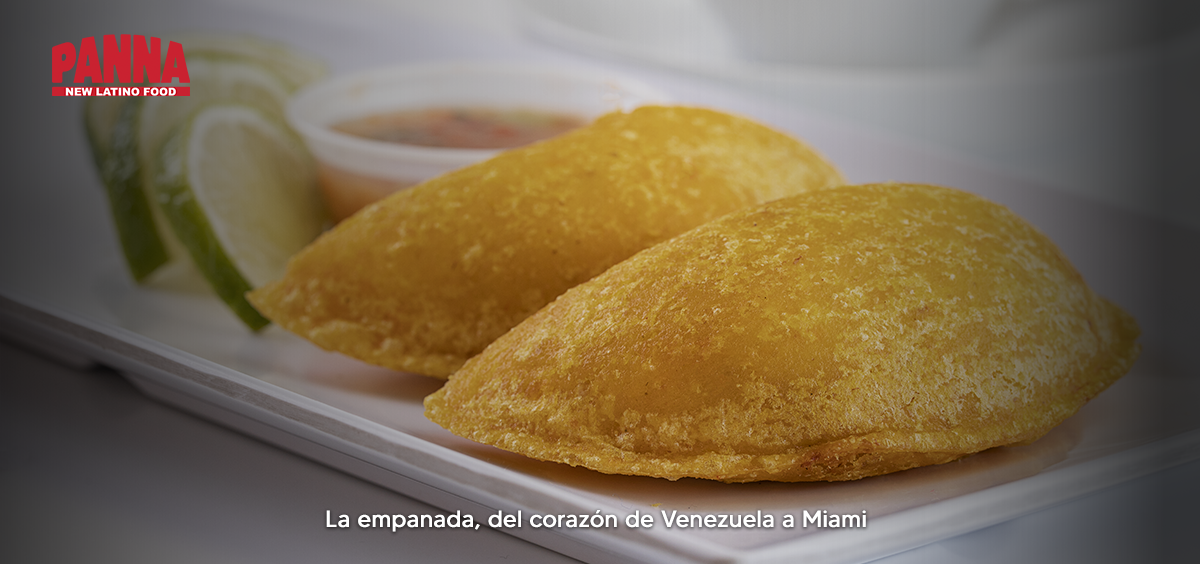
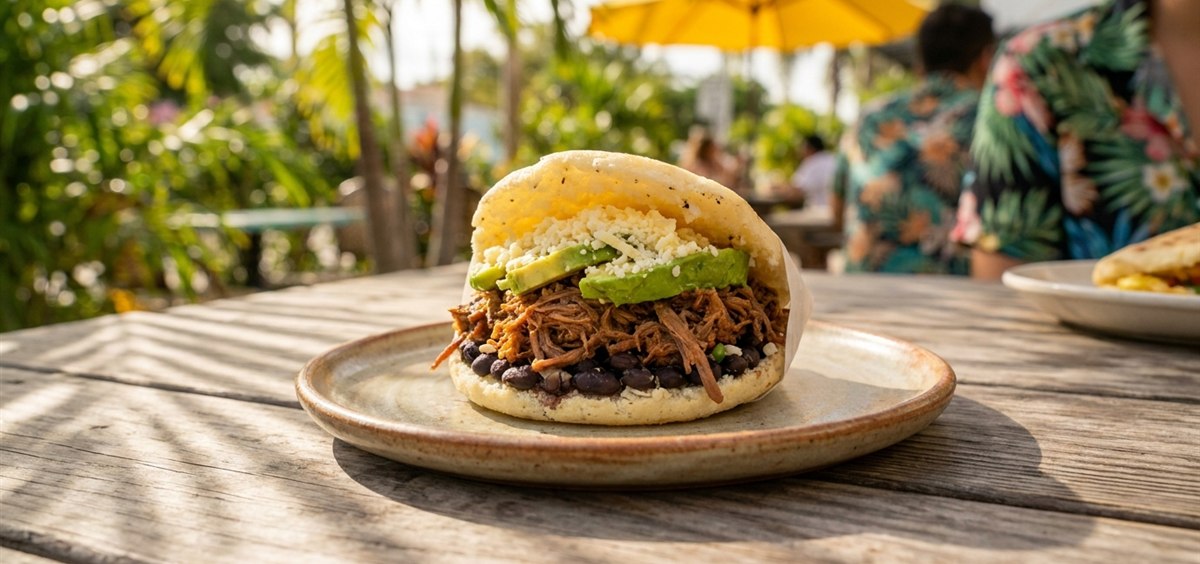
An arepa shows this clearly. In Venezuela, the arepa is often opened and filled like a pocket, turning corn into the main structure of the meal. A cachapa uses sweet corn differently, creating a soft, slightly sweet base that needs salty cheese to feel complete. An empanada turns corn dough into something fried, sealed and portable.
These formats are not random. They show how Venezuelan food moves between home cooking, street food, breakfast, lunch, parties and family meals. The same ingredients can appear in many forms, but each form has its own purpose.
That flexibility is one of the things that makes Venezuelan cuisine stand out in Miami.
Why do corn, cheese, beans and plantains connect with so many people?
Corn, cheese, beans and plantains connect with many people because they are comforting ingredients across cultures. They are not intimidating. They feel warm, familiar and generous. But Venezuelan food gives them a specific rhythm.
Corn gives the meal structure. In an arepa, it becomes a pocket. In an empanada, it becomes a fried shell. In a cachapa, it becomes sweet, soft and almost creamy. Cheese brings salt and comfort. It fills tequeños, balances cachapas, completes arepas and sharpens beans or plantains.
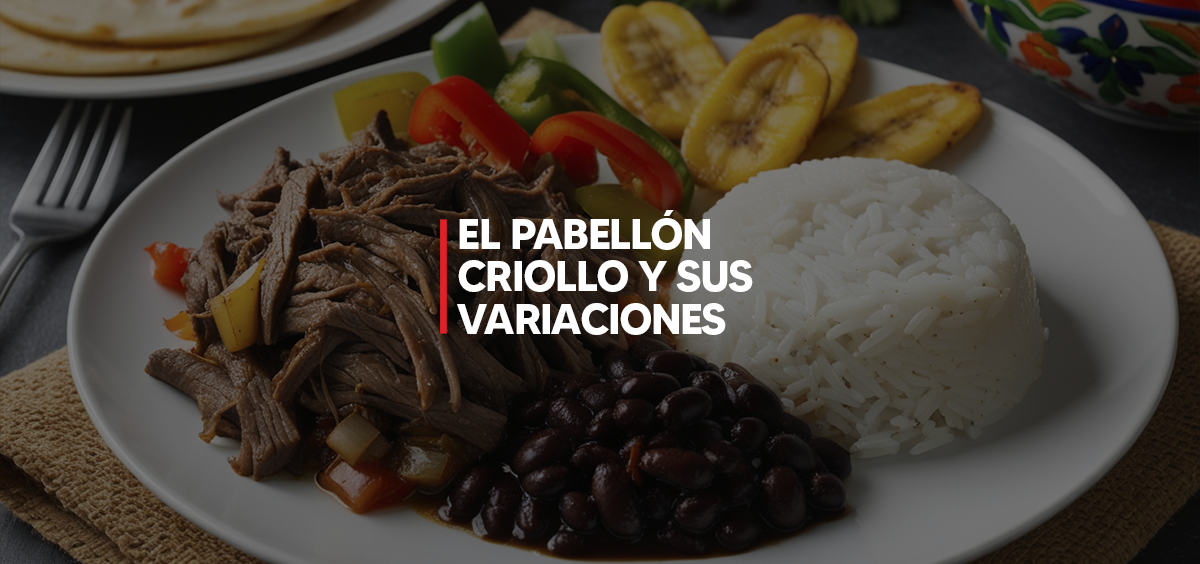
Beans, especially caraotas negras, bring depth and creaminess. They help a plate feel grounded. Plantains, when ripe and fried as tajadas, bring sweetness and softness. They do not turn a meal into dessert; they help savory flavors feel more complete.
This is why Venezuelan food can feel familiar to Cubans, Colombians, Dominicans, Puerto Ricans, Central Americans, Americans and visitors from many backgrounds, while still keeping its own identity.
How does Miami change the way people experience Venezuelan food?
Miami changes the experience because it brings different diners to the same table. A Venezuelan customer may be looking for memory: the flavor of an arepa, a tray of tequeños, a cachapa with cheese or a plate of pabellón that feels close to home. A non-Venezuelan customer may be discovering those foods for the first time.
That mix creates a different kind of restaurant experience. The food has to carry nostalgia for one person and clarity for another. It needs to be culturally precise, but also accessible. That is why dishes like tequeños, arepas and empanadas work so well in Miami. They are specific enough to represent Venezuela, but approachable enough for someone new.
Miami also gives Venezuelan food a local role. It becomes part of breakfast routines, lunch breaks, family meals, catering, quick stops and weekend cravings. The cuisine is not only something people seek out for a special occasion. It becomes part of everyday eating.
Why is Venezuelan food usually flavorful but not always spicy?
Many people assume Latin food is always spicy, but Venezuelan food is usually more about flavor than heat. Seasoning, texture and contrast matter more than aggressive spice. Garlic, onions, peppers, herbs, sauces, cheese, guisos and slow-cooked meats often do the main work.
That makes Venezuelan food easier for a wide audience in Miami. Someone who avoids spicy food can still enjoy tequeños, arepas, cachapas, empanadas, pabellón or bowls without feeling overwhelmed. If a sauce adds heat, it is often optional or used to adjust the bite.
The flavor comes from balance: sweet plantains with savory beef, salty cheese with sweet corn, creamy beans with white rice, fresh sauces with fried foods. This is why Venezuelan food can taste generous without depending on heat.
Why do Venezuelan dishes work so well for first-time visitors?
Venezuelan dishes work well for first-time visitors because they offer clear entry points. Tequeños are the easiest shared bite. Arepas are practical and customizable. Empanadas are fried, filling and familiar in format. Cachapas are memorable for anyone who likes sweet corn and cheese. Pabellón gives a complete traditional plate.
A first-time visitor does not need to understand every cultural detail before eating. The food explains itself through texture and flavor. A crisp tequeño, a warm arepa, a soft cachapa or a plate with rice, beans, beef and tajadas creates an immediate connection.
The deeper understanding can come later. First comes the comfort of the bite.
Where can you experience Venezuelan food in Miami?
For someone looking for Venezuelan food in Miami, the best experience is one that lets the cuisine show its range. One dish alone can be delicious, but Venezuelan food makes more sense when the table includes different textures and contrasts: something shareable, something corn-based, something savory, something sweet, something fresh.
At PANNA, that range is part of the experience. A table can start with tequeños, move into arepas or empanadas, add a cachapa for sweet corn and cheese, choose pabellón for a complete traditional plate, or use sauces like guasacaca to brighten the meal. The food feels familiar enough to welcome new diners, but specific enough to carry real Venezuelan identity.
Frequently Asked Questions
Why is Venezuelan food popular in Miami?
Venezuelan food is popular in Miami because it connects with the city’s Latin culture while offering something distinct: arepas, tequeños, cachapas, empanadas, pabellón, sweet plantains, cheese and sauces that feel both familiar and specific.
Is Venezuelan food similar to other Latin food?
It shares ingredients like corn, beans, rice, meats and plantains with other Latin cuisines, but Venezuelan food uses them differently. Arepas, cachapas, tequeños and pabellón show a distinct Venezuelan style.
Is Venezuelan food spicy?
Venezuelan food is usually flavorful rather than very spicy. The cuisine often focuses on corn, cheese, guisos, beans, plantains, garlic, herbs and sauces instead of strong heat.
What should I try first at a Venezuelan restaurant in Miami?
Start with tequeños if you want something shareable, an arepa if you want a handheld meal, a cachapa if you like sweet corn and cheese, or pabellón if you want a complete traditional plate.
Venezuelan food feels familiar in Miami because it speaks through ingredients many people already know. It feels different because Venezuela gives those ingredients its own rhythm: corn pockets, sweet corn folds, fried cheese, black beans, tajadas, guisos and fresh sauces. At PANNA, that balance becomes the real experience: food that welcomes you quickly, then gives you something unmistakably Venezuelan to remember.