Venezuelan breakfasts are different from American breakfasts because they often center on savory corn-based foods, cheese, shredded meats, eggs, empanadas, arepas, cachapas and coffee instead of cereal, pancakes or sweet pastries. A Venezuelan breakfast can feel more like a full meal, built around warmth, texture, saltiness and ingredients that carry you through the day.
What makes a Venezuelan breakfast different from an American breakfast?
The first difference is expectation. In the United States, breakfast is often divided between quick and sweet options, like cereal, pancakes, waffles, muffins or toast, and classic savory plates with eggs, bacon or potatoes. Venezuelan breakfast can also be quick, but it is rarely casual in flavor. Even a simple arepa with cheese carries warmth, structure and comfort.
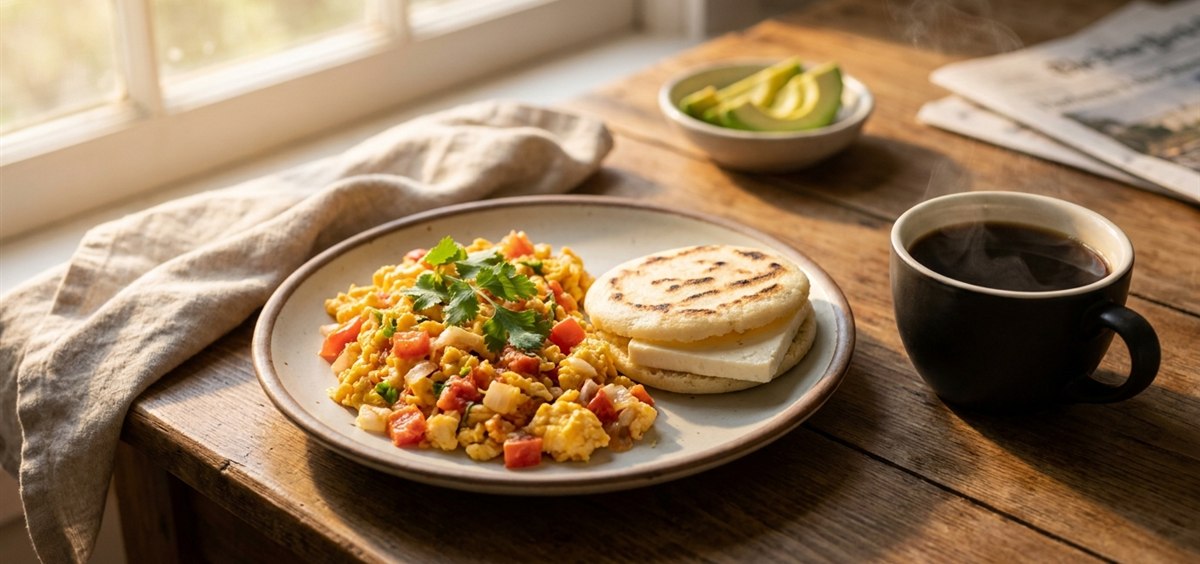
In Venezuela, breakfast is not limited to something light or sweet. It can include corn dough, fried empanadas, white cheese, shredded beef, chicken, eggs, avocado, black beans or sweet corn. The plate may be simple, but the flavors are usually more savory and filling than what many Americans expect early in the morning.
That does not mean Venezuelan breakfast is heavy by default. It means it is built differently. Instead of starting the day with sugar as the main flavor, many Venezuelan breakfasts begin with corn, salt, cheese, protein and coffee.
Why are arepas so common for breakfast in Venezuela?
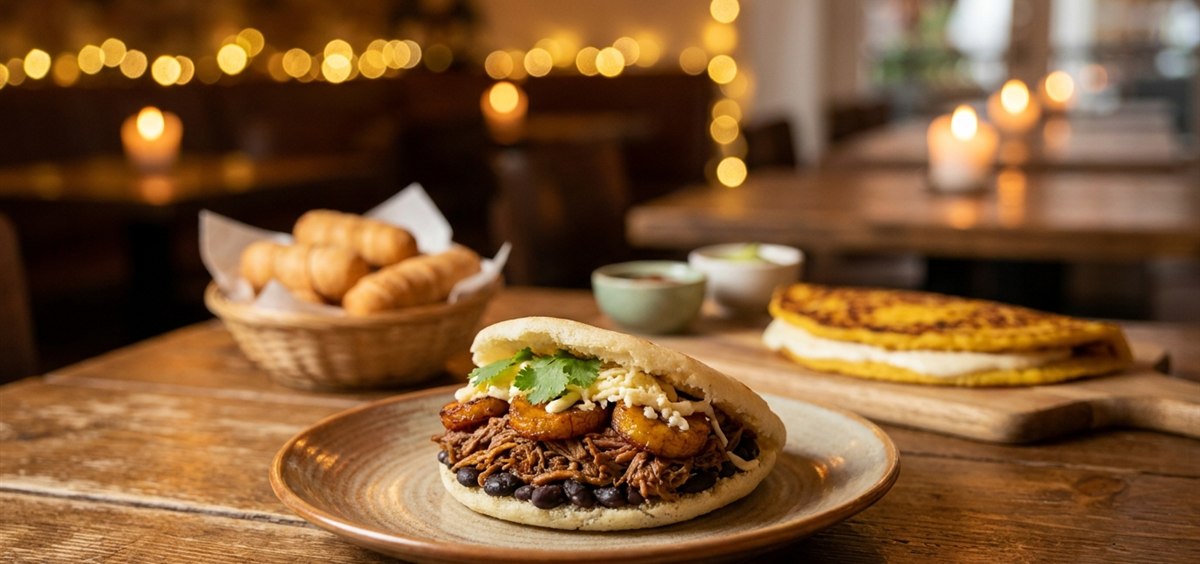
Arepas are common for breakfast because they are practical, filling and adaptable. A Venezuelan arepa is made with precooked cornmeal, shaped into a round cake, cooked and opened like a pocket. That pocket can hold a simple slice of cheese or a more complete filling with eggs, shredded beef, chicken or beans.
The arepa works especially well in the morning because it can be as light or as generous as the person wants. Some people want only cheese and butter. Others want a full arepa that feels closer to lunch. The same base can serve both needs.
Technically, breakfast arepas depend on balance. The outside should have enough structure to hold the filling, while the inside stays tender. If the dough is too dry, the arepa feels rough. If it is too dense, it becomes heavy before the filling even matters. A good breakfast arepa should feel warm, clean and satisfying.
Why do Venezuelans eat empanadas for breakfast?
Empanadas are a classic Venezuelan breakfast because they are hot, portable and filling. They are commonly made with corn dough, filled with ingredients like cheese, shredded beef, chicken or ground beef, then fried until golden. That combination makes them ideal for mornings when people want something immediate but substantial.
A Venezuelan empanada is not the same as a small baked pastry. The corn dough gives it a tender interior and crisp edge. The filling brings the main flavor. The frying creates the kind of texture that feels satisfying from the first bite.
The key is moisture control. A cheese empanada needs enough salt and creaminess. A shredded beef empanada needs juicy meat that does not flood the dough. A chicken empanada should be tender, not dry. When the filling and dough are balanced, the empanada becomes one of the most effective breakfasts in Venezuelan food.
How does cheese shape a Venezuelan breakfast?
Cheese is central to Venezuelan breakfast because it brings salt, creaminess and familiarity. It appears inside arepas, empanadas and cachapas, beside eggs, or as part of a fuller plate. In many Venezuelan breakfasts, cheese is not an extra; it is the ingredient that makes the meal feel complete.
The reason is contrast. Corn dough can be mild. Sweet corn can be naturally sweet. Eggs can be soft and neutral. Beans can be earthy. Cheese gives those ingredients definition. It sharpens the bite without overpowering it.
This is especially clear with cachapas. A cachapa is made from sweet corn batter and cooked like a thick pancake, but the cheese inside is what balances the sweetness. Without that salty, creamy center, the dish can feel too sweet for breakfast. With cheese, it becomes rich, warm and deeply Venezuelan.
Why does Venezuelan breakfast feel more savory than sweet?
Venezuelan breakfast often feels more savory because many of its core ingredients are designed to satisfy hunger, not just start the day lightly. Corn, cheese, eggs, meats and beans all bring substance. Even when sweetness appears, as in cachapas or ripe plantains, it usually works in contrast with something salty or savory.
This is one of the biggest differences from many American breakfast habits. Pancakes, waffles, syrup, sweet cereal and pastries lead with sugar. Venezuelan breakfast may include sweetness, but it rarely depends on sweetness alone.
A simple comparison helps:
- American pancakes often use sweetness as the main pleasure.
- Venezuelan cachapas use sweet corn, but balance it with cheese.
- American toast may be a side.
- Venezuelan arepas often become the main structure of the meal.
- American breakfast sandwiches use bread.
- Venezuelan breakfast often uses corn dough instead.
The result is a breakfast that feels warmer, saltier and more meal-like.
What do Venezuelans drink with breakfast?
Coffee is a natural part of Venezuelan breakfast culture. The exact style can vary by person and household, but coffee often appears beside arepas, empanadas, cachapas or pastries. It works because the food is warm and savory, and the coffee gives the morning its rhythm.
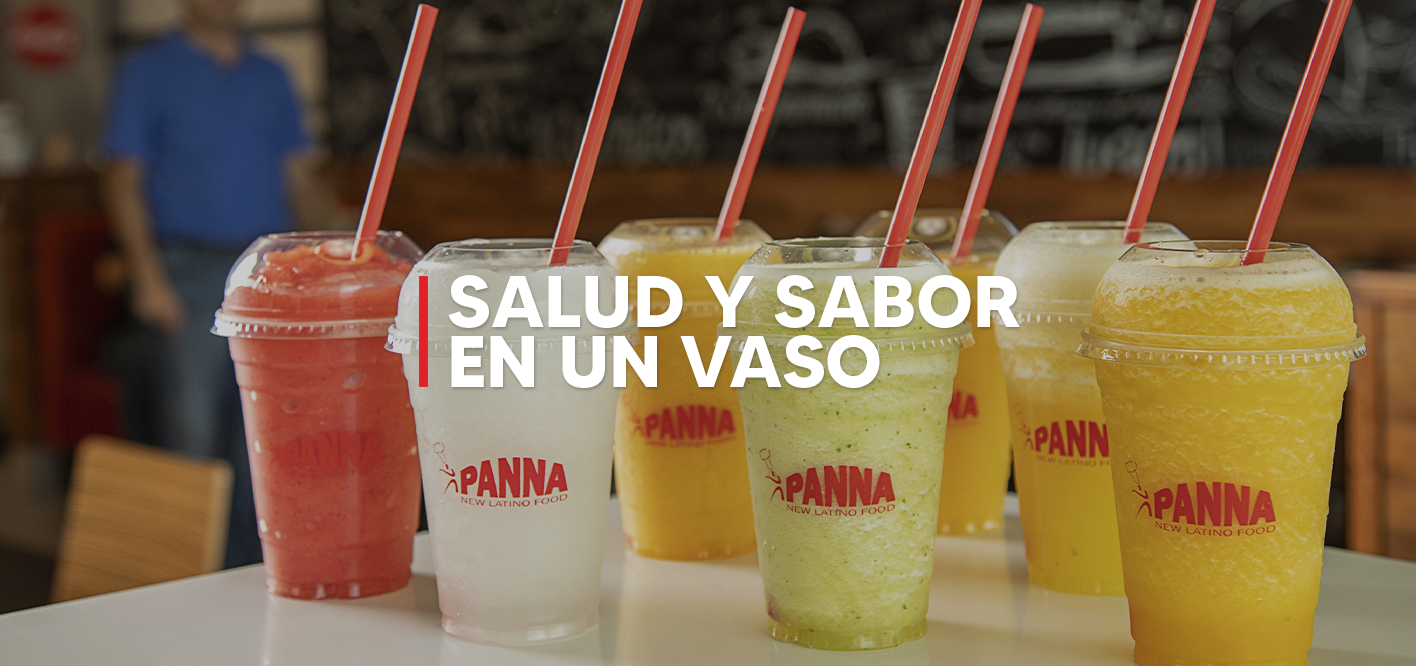
Juices can also appear, especially tropical fruit juices, but coffee has a particular place in the routine. It is not only about caffeine. It is part of the pause, the conversation and the transition into the day.
For someone trying Venezuelan breakfast in Miami, pairing coffee with an arepa or empanada can make the experience feel more complete. The food brings texture and substance; the coffee brings aroma and familiarity.
Where can you try Venezuelan breakfast in Miami?
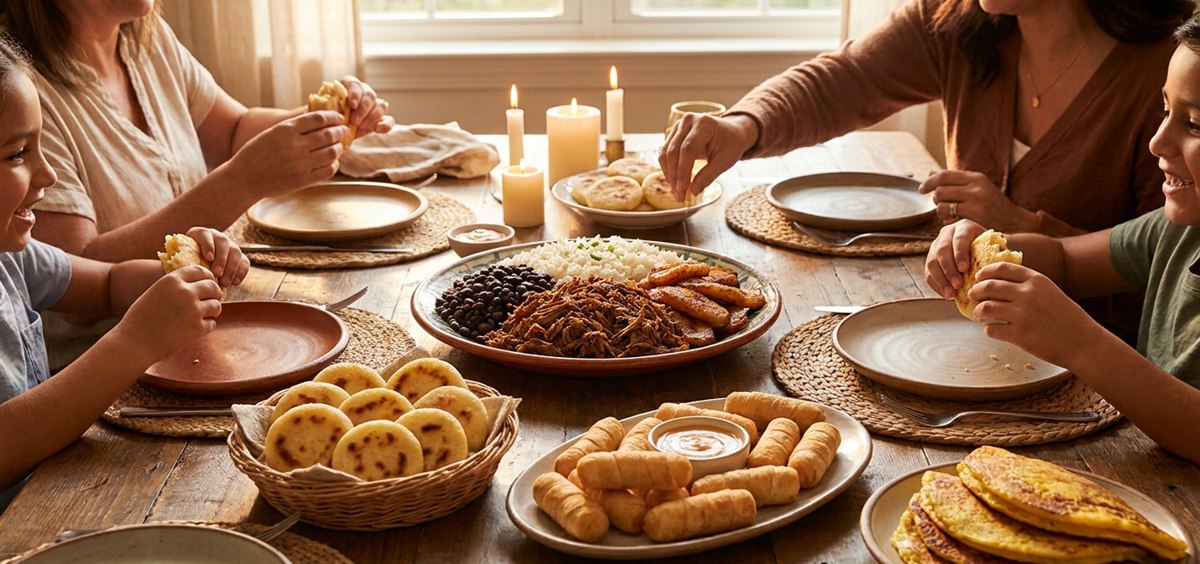
For people searching for Venezuelan breakfast in Miami, the best place to start is with dishes that show the range of the tradition: arepas, empanadas, cachapas, tequeños or breakfast-style plates. The goal is not to order everything at once, but to understand how Venezuelan breakfast works.
At PANNA, breakfast can be approached by craving. If you want something handheld and savory, choose an arepa. If you want something fried and filling, choose an empanada. If you want sweet corn with cheese, choose a cachapa. If you are sharing, start with tequeños and let the table build from there.
With locations connected to Venezuelan communities and Latin food culture, PANNA offers a breakfast experience that feels familiar to Venezuelans and easy to understand for first-time visitors.
Frequently Asked Questions
What do Venezuelans usually eat for breakfast?
Venezuelans often eat arepas, empanadas, cheese, eggs, cachapas, tequeños or savory fillings like shredded beef or chicken. The breakfast can be simple or filling, but it usually centers on warm, savory food.
Are Venezuelan breakfasts sweet or savory?
They are usually more savory than sweet. Sweet elements like cachapas or ripe plantains may appear, but they are often balanced with salty cheese, eggs, meats or other savory ingredients.
Is an arepa a breakfast food?
Yes. Arepas are commonly eaten for breakfast in Venezuela, but they are not limited to mornings. They can be filled in many ways and eaten at breakfast, lunch, dinner or late at night.
What should I order for my first Venezuelan breakfast?
Start with an arepa if you want something savory and classic, an empanada if you want something fried and filling, or a cachapa if you want sweet corn and cheese. Tequeños are a good choice for sharing.
Venezuelan breakfast feels different because it begins with comfort: warm corn, salty cheese, generous fillings, fried dough, coffee and the kind of flavors that make the morning feel less rushed. At PANNA, that difference is easy to experience through arepas, empanadas, cachapas and the Venezuelan way of starting the day with food that actually feels like a meal.