The Venezuelan patacón, especially the Zulian patacón, cannot be understood if it is treated as just a side of fried plantain. In Maracaibo, the Venezuelan patacón is something else entirely: it is structure, it is a base, it is a complete dish. That is the key difference many people miss.
Outside the Zulian context, patacón often appears as a side dish, something that accompanies. In Maracaibo’s logic, however, patacón replaces bread, organizes the plate, and holds everything together. It is not an extra; it is the core.
VENEZUELAN PATACÓN: ORIGIN AND REAL REGIONAL DIFFERENCE
Patacón exists across Latin America, from Colombia to Central America, but its evolution in the Zulia region is distinct. In Venezuela, the Zulian patacón became established as urban street food in the second half of the 20th century, particularly in Maracaibo, where nightlife culture and climate directly influence how people eat.
Studies on Venezuelan gastronomy (Cartay, Lovera) document how green plantain has long been a staple in warm regions, but it is in Zulia where it transforms into a sandwich-like structure without bread.
That is the shift: patacón stops being a side and becomes a structural base.
VENEZUELAN PATACÓN: REAL TECHNIQUE (DOUBLE FRYING AND TEXTURE CONTROL)
The technical core of patacón lies in double frying, but it is not simply about frying twice. It is about controlling moisture, temperature, and pressure.
First, green plantain is cut into thick pieces and fried at medium heat. The goal here is not browning, but softening the internal structure.
Then comes the pressing. This step defines not only the diameter but also the density. If pressed too thin, it breaks; if too thick, it fails structurally.
The second fry is what creates rigidity. This is where a crisp surface is developed, capable of holding weight without bending.
A good patacón is not just crispy; it is structurally stable.
PATACÓN AS PLATE ARCHITECTURE
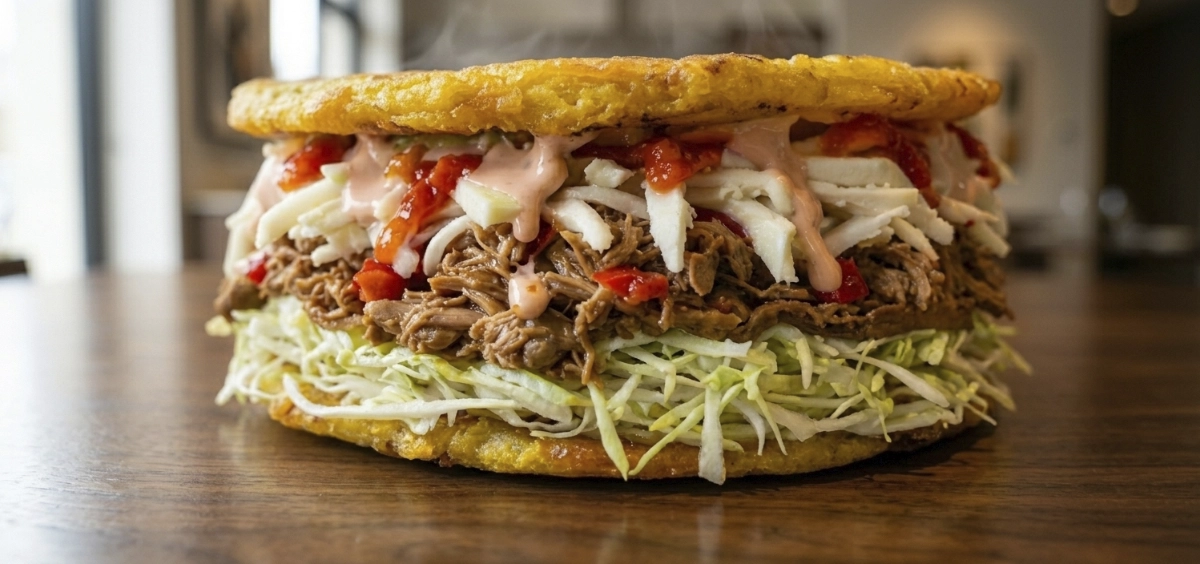
In Maracaibo, patacón is assembled like a system. Two plantain layers act as base and top, and the filling is built between them.
Here a key concept appears: load distribution.
If the filling is not balanced, the patacón collapses. If there is too much moisture, it loses integrity. If the ratio of protein, fat, and sauce is not controlled, it becomes unmanageable.
A well-made Zulian patacón is not improvised. It follows an assembly logic.
CONTRAST: ZULIAN PATACÓN VS TOSTÓN AS A SIDE
In many regions, fried plantain (tostón) is served alongside a dish, playing a secondary role by adding texture.
In Zulia, that logic does not apply. Patacón does not accompany; it supports.
This contrast is essential to understand why Zulian patacón is more demanding. It is not enough to fry well; it must be built to carry everything else.
REAL FILLINGS IN VENEZUELAN PATACÓN
Zulian patacón allows multiple fillings, but there are clear patterns documented in Maracaibo’s street food:
- Shredded beef
- Shredded chicken
- Roasted pork (pernil)
- Grated white cheese
- Ham
- Sauces such as mayonnaise, ketchup, mustard, and garlic sauce
Mixed combinations are also common, combining different proteins. This is not about minimalism; it is about controlled abundance.
The goal is not just to fill, but to create layers of flavor without losing structure.
CLIMATE AND NIGHT CULTURE
Patacón cannot be understood without Maracaibo, and Maracaibo cannot be understood without heat.
Food culture studies show that in warm climates, street food tends to be intense, complete, and practical. Patacón responds to that: it is eaten by hand, it is filling, and it solves a full meal in a single format.
COMMON MISTAKES THAT RUIN A PATACÓN
One of the most common mistakes is poor control of the first fry. If the plantain is not properly softened, the final result is tough.
Another error is failing to drain excess oil, which makes the patacón heavy.
Overloading the filling without structural thinking also breaks the balance.
And a critical one: using ripe plantains. Patacón requires green plantains; anything else changes the result entirely.
PATACÓN AS ZULIAN IDENTITY
Patacón is not just food; it is identity. It represents the personality of Maracaibo: direct, abundant, and unapologetic.
Phrases like “I’m going to Maracaibo to eat patacón” are not random. They reflect recognition of origin, not superficial food tourism.
A CURRENT APPROACH FROM PANNA
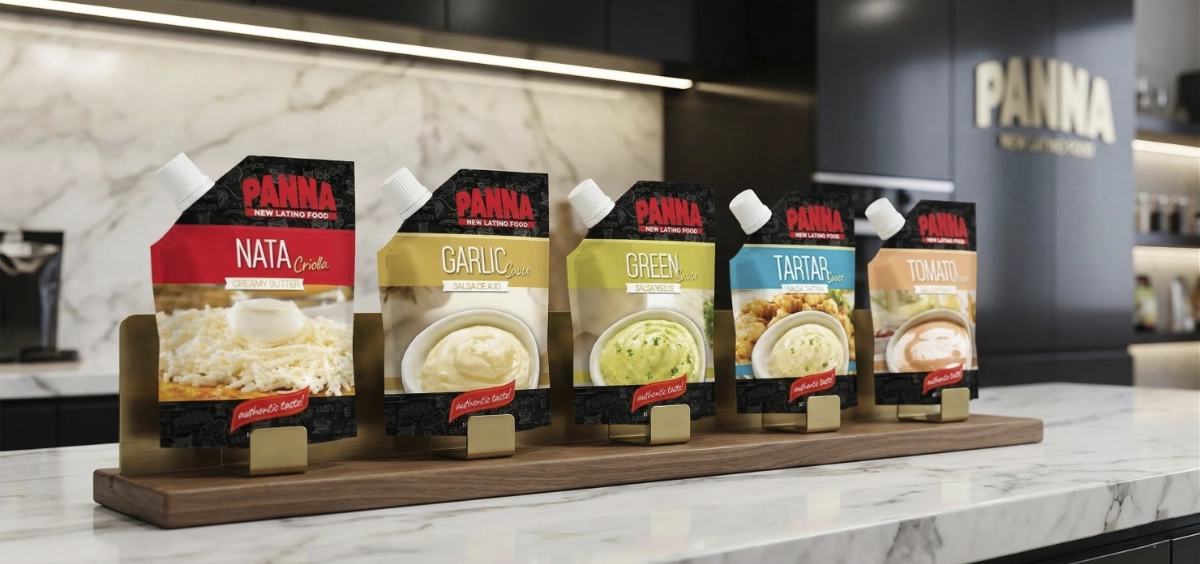
At Panna, we work with products like empanadas, arepas, cachapas, and patacones that follow this same logic: food that holds itself, that is eaten by hand, and that represents the real Venezuelan experience.
Patacón is not just a dish; it is a way of constructing food.
Understanding that is what separates making it… from making it right.