Sweet and savory in Venezuelan cuisine is not a trend or a random mix; it is a deeply rooted flavor structure that organizes many of the country’s most representative dishes. From pabellón criollo to a cachapa with queso de mano, this combination is not driven by contrast for its own sake, but by a culinary logic that seeks balance, continuity, and sustained enjoyment.
When properly understood, sweet and savory in Venezuelan cuisine does not create tension within the plate, but distributes intensity. Each element occupies a defined role and fulfills a specific sensory function; what emerges is not contrast, but a structured flavor system.
SWEET AND SAVORY IN VENEZUELAN CUISINE: HISTORICAL AND CULTURAL FOUNDATION
The use of sweet and savory combinations is rooted in the evolution of Venezuelan cuisine as a mestizo system. Ingredients such as sugarcane, introduced during Spanish colonization in the 16th century, merged with indigenous culinary bases centered on corn and root vegetables, creating new flavor relationships that became established over time.
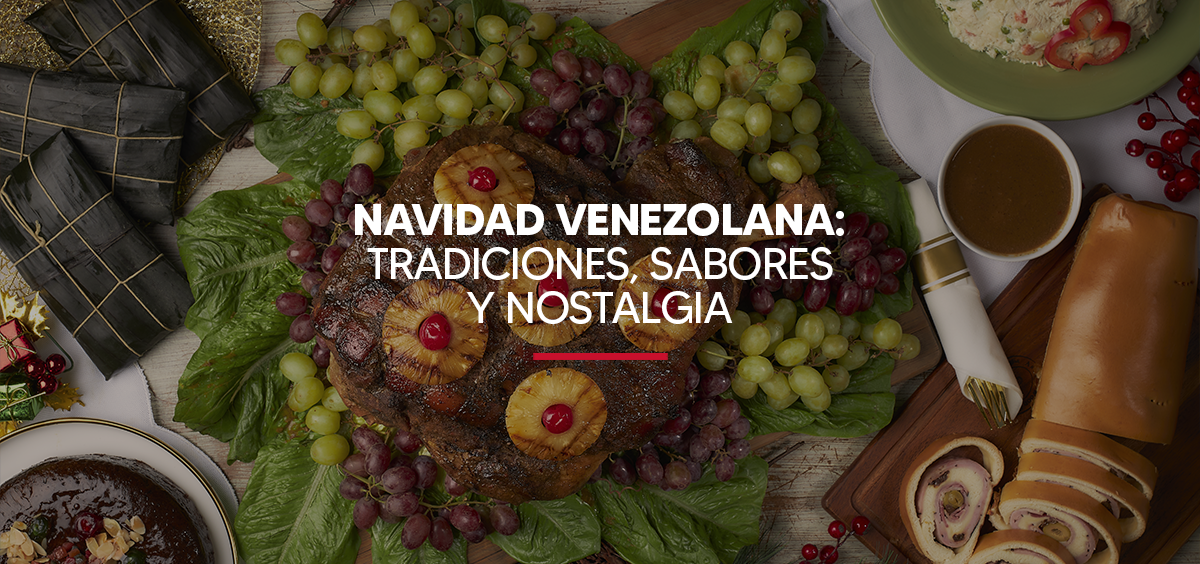
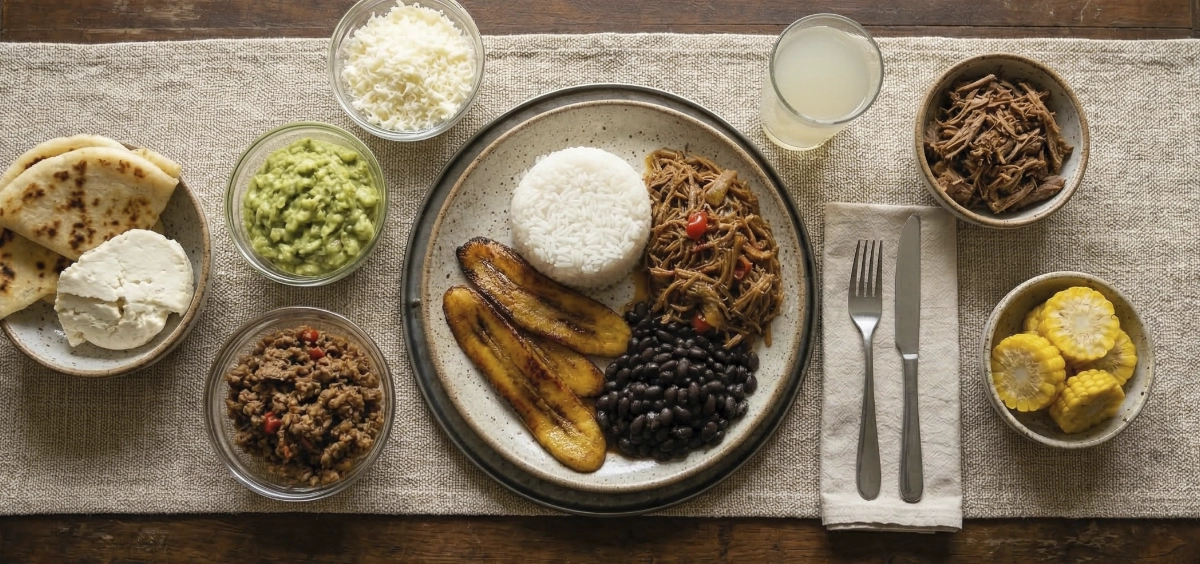
Within this context, the use of ripe plantain, widely documented in Caribbean foodways and adapted in Venezuela, became essential for balancing dishes with strong protein or salt components. It is not accidental that pabellón criollo, formally recognized in the 19th century as a national dish, integrates rice, shredded beef, black beans, and plantain; each component fulfills a defined structural role.
HOW SWEET AND SAVORY WORKS AT A TECHNICAL LEVEL
From a technical perspective, sweetness acts as a flavor modulator. The presence of natural sugars reduces the perception of saltiness and softens the impact of fat in the mouth; this phenomenon, well studied in food science, explains why Venezuelan dishes rarely feel aggressive or overwhelming.
Ripe plantains, for example, contain simple sugars that intensify as they mature. When fried, surface caramelization occurs, generating deeper sweet notes that contrast with the intensity of meats or legumes. This process is not decorative; it is functional.
In cachapas, fresh corn provides natural sweetness that balances the saltiness and fat of queso de mano or guayanés cheese. No added sugar is needed; the equilibrium comes from the ingredient itself and how it is handled.
SWEET AND SAVORY IN VENEZUELAN CUISINE: REAL DISH APPLICATIONS
Pabellón criollo is the clearest example. Without plantains, the dish becomes heavier and more linear; with them, a sensory pause is introduced, allowing the diner to continue eating without fatigue. This seemingly simple detail defines the entire experience.
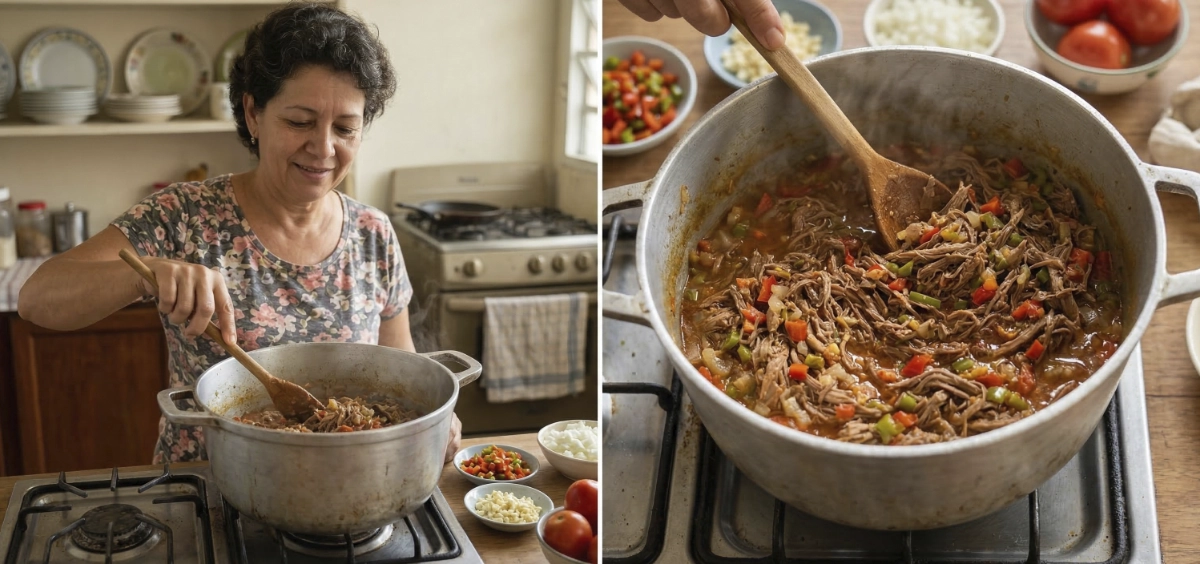
Another clear case is the cachapa with cheese. The sweetness of the corn and the fat of the cheese create a balance that requires no additional elements. The same applies to combinations like shredded beef with fried plantains, where sweetness does not accompany but stabilizes the dish.
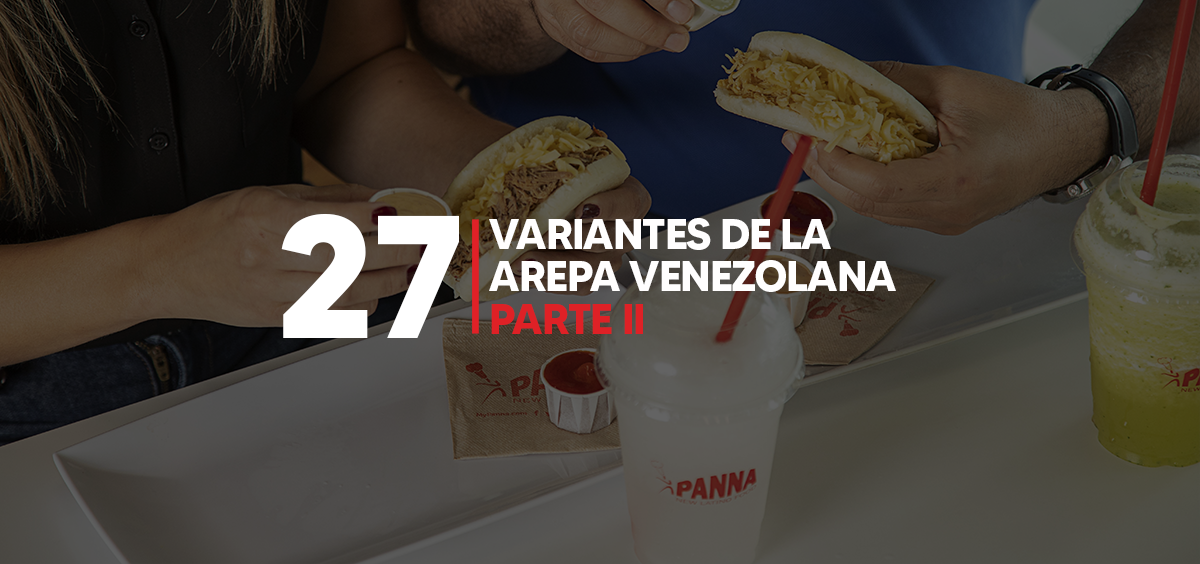
Even in more informal contexts, such as stuffed arepas that incorporate slightly sweet or caramelized elements, this structural logic remains present.
COMMON MISTAKES WHEN WORKING WITH SWEET AND SAVORY
One of the most frequent mistakes is confusing balance with excess. Adding too much sweetness disrupts the structure of the dish, creating a cloying sensation that eliminates contrast. This often happens when plantains are overly ripe or when unnecessary sugar is introduced.
Another error lies in improper cooking technique. Poorly fried plantains can absorb too much oil, losing their balancing function and becoming heavy instead of light.
It is also common to neglect the adjustment of salt levels in the rest of the dish, leading to imbalance where sweetness cannot properly compensate.
CONTRAST: WHEN SWEET AND SAVORY FAILS
Unlike other cuisines where contrast may be more aggressive or intentional, Venezuelan cuisine does not aim to shock the palate. When the difference between sweet and savory is exaggerated, the dish loses coherence.
This marks an important distinction. In Venezuelan cooking, contrast is integrated, not highlighted. It is meant to function quietly, not dominate.
A STRUCTURAL APPROACH TO FLAVOR
Sweet and savory in Venezuelan cuisine is not just about taste; it is a tool for structuring the dish and extending the eating experience. It allows flavors to alternate, prevents palate fatigue, and maintains engagement with every bite.
This explains why many Venezuelan dishes feel complete. The goal is not complexity for its own sake, but precision in how ingredients are combined.
THE DETAIL THAT DEFINES THE DIFFERENCE
When this structure is respected, the dish flows naturally. There is no need for excessive sauces or last-minute corrections. Everything is in place.
When it is not, the result feels heavy, flat, or unbalanced. And that is not a problem of the recipe, but of understanding.
A WAY TO UNDERSTAND VENEZUELAN CUISINE
Sweet and savory is one of the least obvious yet most essential principles in Venezuelan cooking. It is not a stylistic choice; it is a constant that runs through multiple preparations.
Understanding it allows not only better cooking, but also better judgment of when a dish is properly executed.
And when searching for Venezuelan food in Miami that respects this logic, it is not just about ingredients, but about how flavors are constructed.
At Panna, this structure is preserved. Because beyond what is visible on the plate, what truly matters is that everything works together, from the first bite to the last.