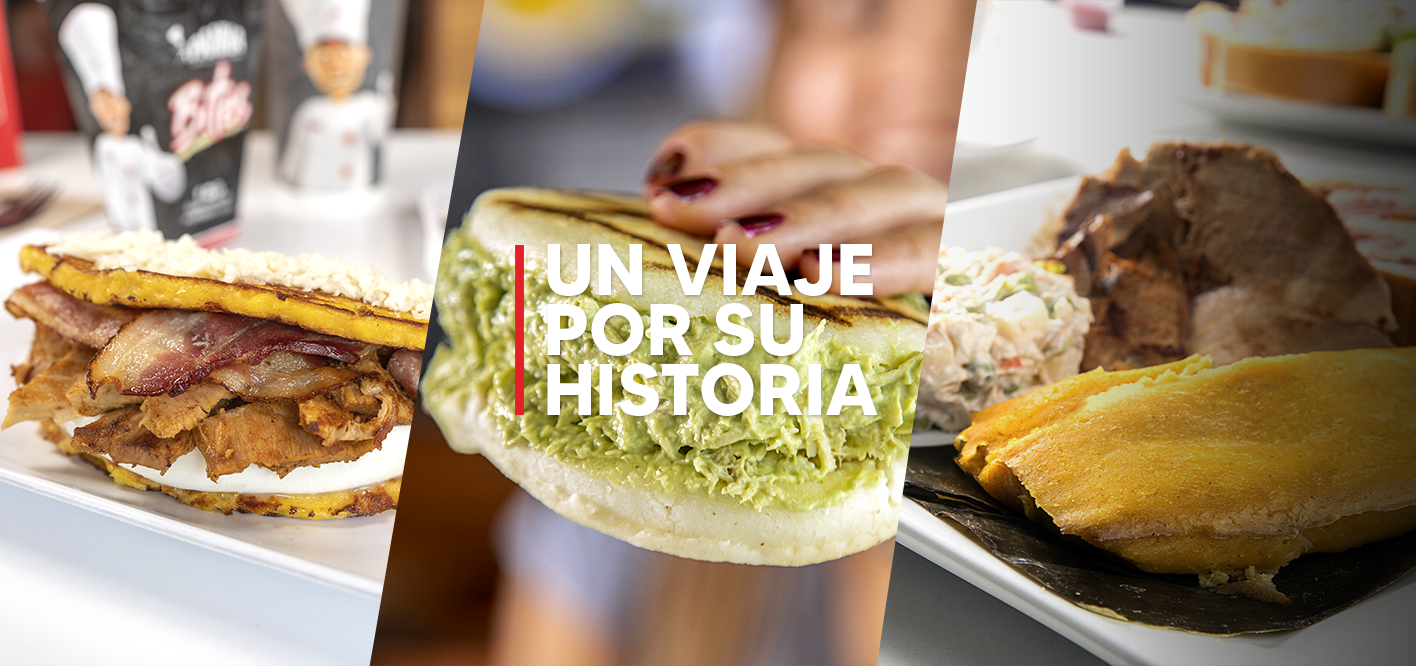
Plantain in Venezuelan cuisine is not just a side element; it is a technical ingredient that directly influences the balance of the entire dish. Its level of ripeness, the type of cut, and the cooking method determine not only its flavor, but how it interacts with the rest of the components. Understanding plantain is key to understanding why a pabellón works, why a cachapa changes, and why a combination can feel perfectly balanced or completely off.
In Venezuela, plantain is never treated as a single-stage ingredient. It is identified as green, pintón (partially ripe), ripe, or overripe, and each stage behaves differently under heat, oil, and time. This precision is not incidental; it is what allows plantain to move from a simple carbohydrate to a true flavor modulator within the plate.
PLANTAIN IN VENEZUELAN CUISINE: RIPENING STAGES AND SUGAR CONVERSION
The first technical factor is ripening. As plantain matures, its starches convert into simple sugars, mainly glucose and fructose. This process, well documented in food science, explains why a green plantain is firm and neutral, while a ripe one becomes sweet and softer.
A pintón plantain, with both green and yellow tones, still retains structure and lower sweetness, making it useful when firmness is needed. A fully ripe plantain, yellow with dark spots, is ideal for tajadas because it balances sweetness and resistance. When overripe, with a darkened peel, sugar concentration increases, but structural integrity decreases; this creates a higher risk of breakage and excessive oil absorption.
This transformation is not only sensory; it directly impacts cooking technique. The riper the plantain, the more control is required over temperature and timing.
CUTTING TECHNIQUE: HOW SHAPE CHANGES COOKING AND TEXTURE
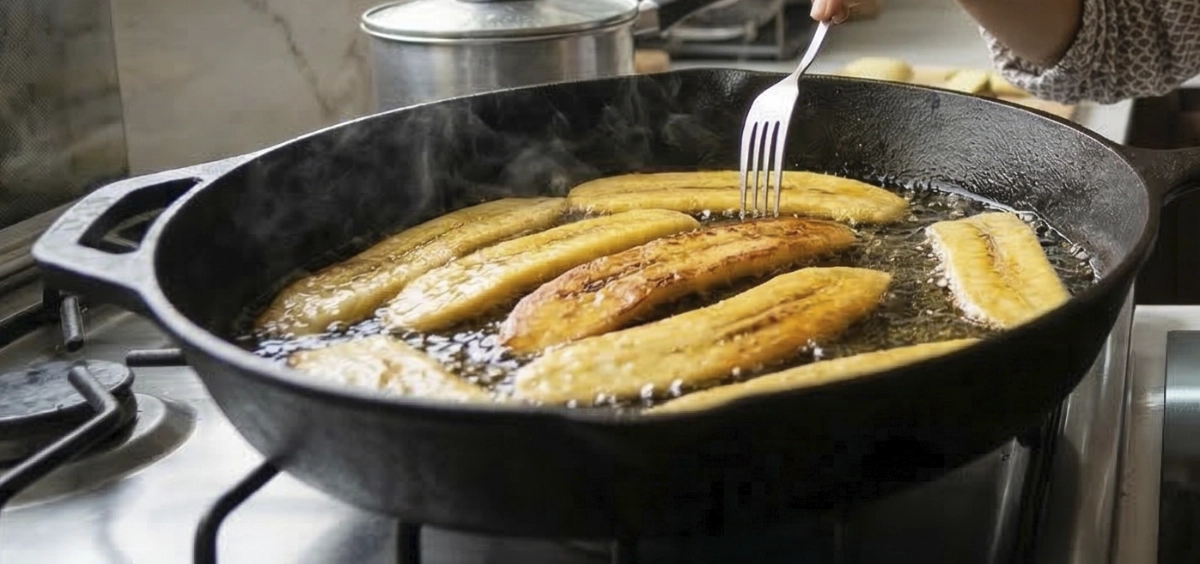
In Venezuelan cooking, cutting plantain is functional, not aesthetic. Long diagonal slices, known as tajadas, increase surface area, promoting even caramelization. This cut creates a contrast between golden edges and a soft interior, which is essential for traditional dishes.
Round slices, by contrast, concentrate volume into a smaller surface area. This produces a firmer interior and a different texture profile, but they are less common in traditional dishes like pabellón, where elongated tajadas are culturally standard.
Thickness is equally critical. Slices that are too thin burn quickly and lose structure; slices that are too thick may remain undercooked inside. The optimal thickness is approximately half a centimeter, allowing for uniform cooking.
PLANTAIN IN VENEZUELAN CUISINE: FRYING, TEMPERATURE, AND OIL ABSORPTION
Frying is the most critical stage. Oil temperature must remain between 170 and 180 °C. Below this range, plantain absorbs excess oil and becomes heavy; above it, the exterior burns before the interior cooks properly.
At this point, sugar content becomes decisive. Ripe plantains caramelize quickly, which requires constant attention. This is not an ingredient that can be left unattended.
Another common mistake is overcrowding the pan. This lowers oil temperature and disrupts cooking consistency, resulting in soft, greasy slices without structure. Proper frying requires working in batches to maintain thermal stability.
CONTRAST: WHY PLANTAIN IS USED DIFFERENTLY IN VENEZUELA
Although plantain is widely used across Latin America, its role in Venezuelan cuisine follows a specific logic. In some cuisines, plantain can be a main component or transformed into purées; in Venezuela, it is primarily used to contrast and balance.
It is not meant to dominate the dish, but to complement it. In pabellón, for instance, tajadas are not decorative; they counterbalance the savory intensity of shredded beef and the depth of black beans.
This sweet-salty contrast is a structural principle of Venezuelan cuisine. Plantain is not interchangeable because its thermal behavior and flavor profile are unique.
TECHNICAL INSIGHT: PLANTAIN AS A FLAVOR MODULATOR
The key insight is this: plantain does not accompany, it modulates. Its sugar content and texture soften the perception of salt and fat within the dish.
From a sensory perspective, sweetness reduces the intensity of other flavors, creating balance. This is linked to how the brain processes taste contrast; it is not merely cultural, but physiological.
This explains why the absence or poor execution of plantain disrupts the dish. When properly prepared, it integrates seamlessly, fulfilling its function without dominating.
COMMON ERRORS THAT ALTER THE RESULT
One of the most common mistakes is using under-ripe plantain for tajadas, resulting in a firm, low-sweetness product that does not integrate well. The opposite mistake, using overly ripe plantain, leads to slices that break apart or absorb too much oil.
Irregular cutting creates uneven cooking. Poor temperature control, as mentioned earlier, is another critical issue, as is the use of degraded oil, which negatively affects flavor.
Finally, over-salting immediately after frying can affect texture and balance. Precision is required even at this stage.
A KEY ELEMENT IN THE STRUCTURE OF VENEZUELAN FLAVOR
Plantain in Venezuelan cuisine is a technical component, not a decorative one. Its correct execution determines how the entire dish is perceived. It is not just about frying; it is about understanding when, how, and why to use it.
This level of precision separates a correct preparation from an excellent one. It is what allows traditional dishes to maintain their integrity, even outside Venezuela.
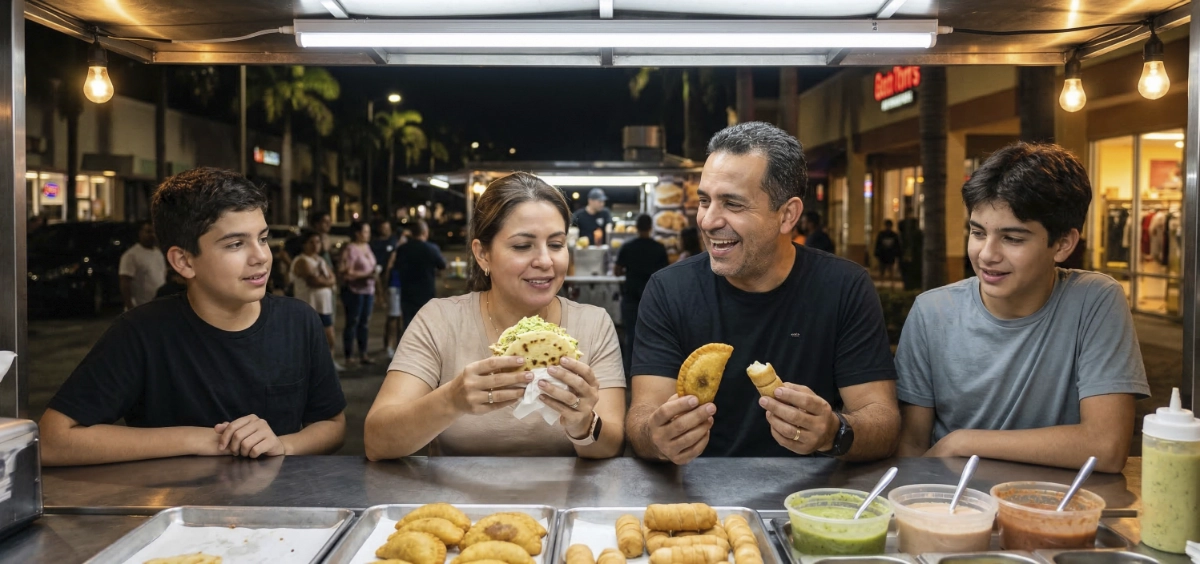
When seeking Venezuelan food in Miami that respects this structure, plantain becomes a clear indicator. Properly executed tajadas signal intention and technical understanding.
At Panna, this level of care is part of the foundation, because Venezuelan cuisine is not built on individual elements, but on how each component fulfills its role within the whole.