Talking about Venezuelan street food means going beyond just solving hunger; it means understanding a way of eating that adapts to real life, to the rhythm of the city, to late nights after a party, to a quick breakfast, or to an improvised gathering. Because if something defines Venezuelan food, both in Venezuela and abroad, it is that it can be eaten with your hands, without formalities, with direct flavor and no unnecessary steps.
In Venezuela, street food is not a separate category; it is a natural extension of what is also eaten at home. What changes is not the dish, but the context. The arepa you eat in your kitchen is the same one you buy on the street; the empanada you enjoy with your family on a Sunday is the same one that saves you at three in the morning. That is the key: it is a democratic, accessible, adaptable, and deeply functional cuisine.
VENEZUELAN STREET FOOD AS A REAL SYSTEM
When we talk about Venezuelan street food, we are not referring to isolated dishes, but to a system that responds to specific needs: speed, satisfaction, flavor, and ease of consumption. That is why formats that require no utensils dominate, foods you can hold in one hand and eat in minutes.
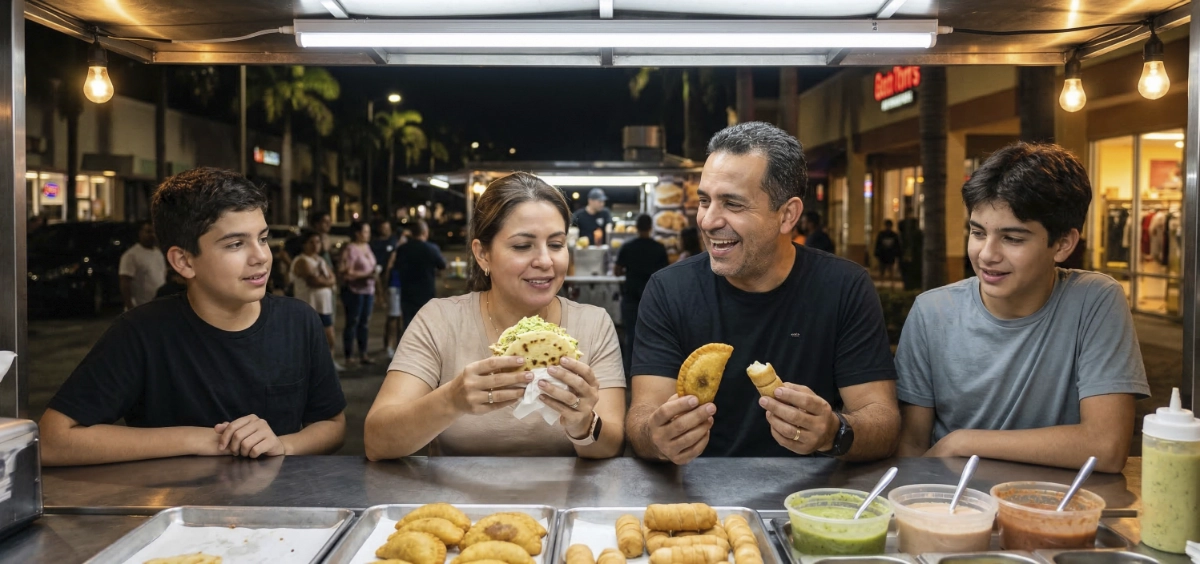
The arepa is perhaps the clearest example. Made from corn, split open and filled with whatever is available, it works at any time of day. It can be simple, with cheese or butter, or more substantial, with shredded beef, chicken, or full combinations. Its structure allows it to be eaten walking, sitting on a curb, or at a table, without losing its identity.
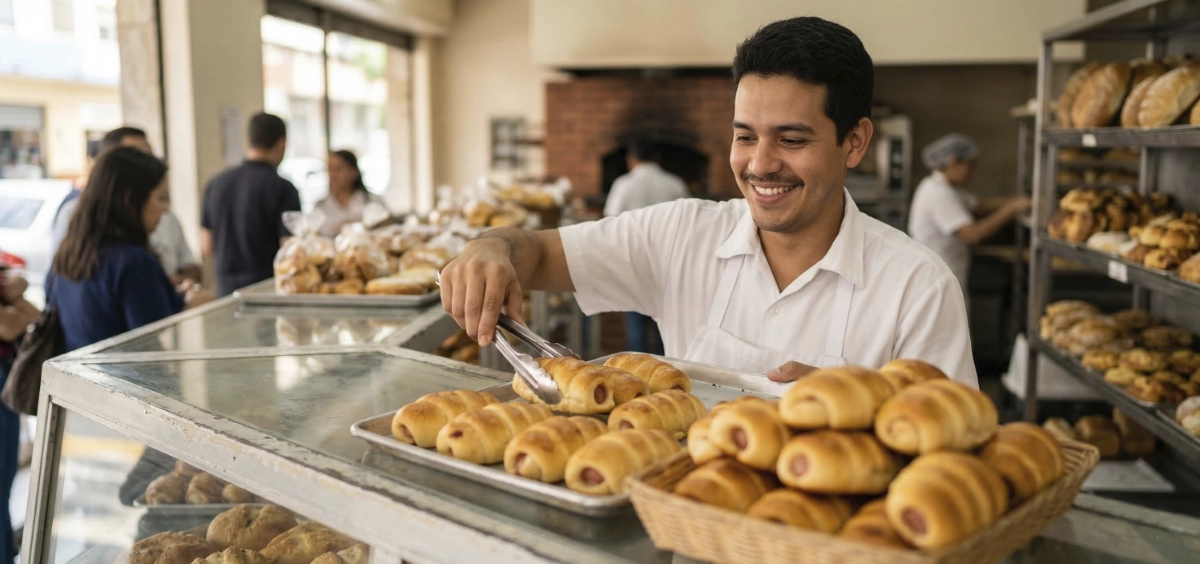
Empanadas take this logic even further. Fried, crispy, and filled with everything from cheese to shredded beef or pabellón-style fillings, they are probably the most immediate expression of Venezuelan food. They need no explanation; they are understood in the first bite.
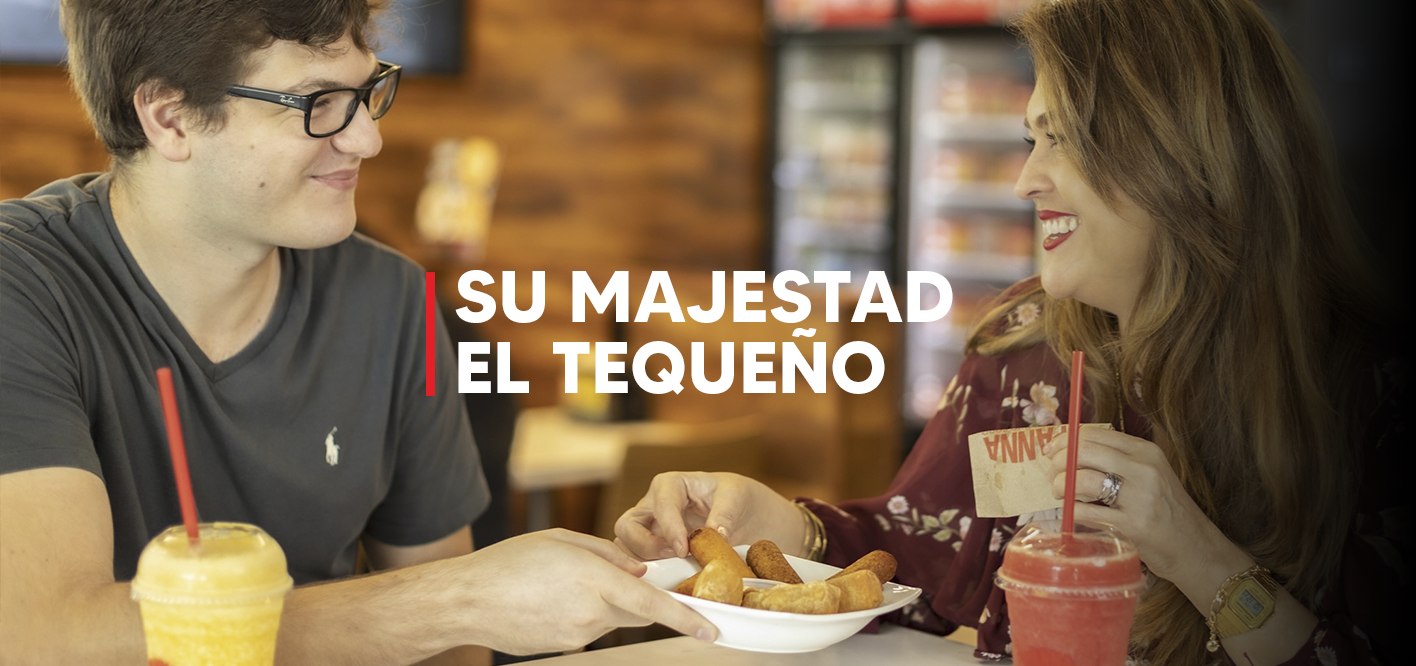
Then there are tequeños, which, although often associated with celebrations, also have a clear place in street food culture. They are practical, recognizable, and work perfectly as a quick, reliable bite. That versatility is what keeps them relevant in any context.
VENEZUELAN STREET FOOD AT NIGHT: FLAVOR THAT DELIVERS
There is a moment when this logic becomes even more evident: late at night. After a party, a long shift, or simply a busy evening, Venezuelan street food becomes a direct and almost automatic solution.
At that hour, people are not looking for delicacy or presentation; they are looking for something satisfying. That is why more intense combinations appear, with generous fillings, sauces, well-integrated fats, and bold flavors. It is not excess without purpose; it is a response to the body asking for something substantial, quick, and flavorful.
Stuffed arepas, freshly fried empanadas, and even tequeños fulfill that role with precision. There is no need to overthink it. You order, you eat, and you move on. That immediacy is part of the identity of this cuisine.
FROM THE STREET TO THE HOME: THE SAME LOGIC
What makes this even more interesting is that this way of eating does not stay on the street. In Venezuela, many of these dishes are also part of everyday home life. The difference is the pace, not the food itself.
An arepa at home might be slower, paired with coffee, enjoyed sitting down. But it is still the same structure. The same happens with empanadas or even tequeños during family gatherings. Venezuelan food does not change its essence depending on the setting; it adapts without losing coherence.
That explains why these formats have endured over time and across migration. They work because they are practical, because they meet real needs, and because they do not depend on a specific environment to make sense.
VENEZUELAN STREET FOOD ADAPTED FOR CELEBRATIONS
There is another key moment where this logic evolves without breaking: celebrations. Instead of disappearing, Venezuelan street food reorganizes itself. It becomes smaller, easier to handle, but keeps its essence intact.
This is where mini versions appear: mini arepas, mini empanadas, mini cachapas, trays of tequeños. It is not reinvention; it is adaptation. The flavor, technique, and identity remain, but the format adjusts for sharing.
This type of presentation allows a table to offer multiple options while maintaining the informal spirit that defines this cuisine. There is no need for rigid protocols; everyone takes, tastes, and combines. It is still a close, approachable way of eating, even in a more organized setting.
WHY IT WORKS: SIMPLE, DIRECT, AND HONEST
The reason Venezuelan street food remains so strong is simple: it works. It does not rely on trends or complex reinterpretations. It is built on solid principles: bold flavor, practical formats, and combinations that make sense.
Corn-based doughs, properly executed frying, juicy fillings, and balanced textures make each bite complete. There is no need for unnecessary decoration. The experience lies in execution.
There is also an emotional factor that cannot be ignored. Eating with your hands, sharing, solving hunger quickly, repeating without overthinking… all of this reflects a natural relationship with food that remains, even outside Venezuela.
A LIVING EXPERIENCE
Today, this way of eating continues to exist, even far from home. Venezuelan street food does not disappear; it transforms, adapts, and finds new ways to stay relevant without losing what makes it recognizable.
Because in the end, it is not only about what is eaten, but how it is eaten. And in that “how,” Venezuelan cuisine has a very clear identity: close, direct, uncomplicated, and always meant to be truly enjoyed.
So if you are looking for Venezuelan food in Miami that respects that logic, that can be shared, eaten with your hands, and enjoyed without formality, at Panna that experience is still alive, from a well-made empanada to full platters that bring together the best of our cuisine in a format designed to share.