Talking about fish in Venezuela is not about a single category, but about specific species shaped by geography, availability, and technique. Fish in Venezuela is not cooked from a recipe, it is cooked from the product itself. That distinction is what separates a correct execution from improvisation.
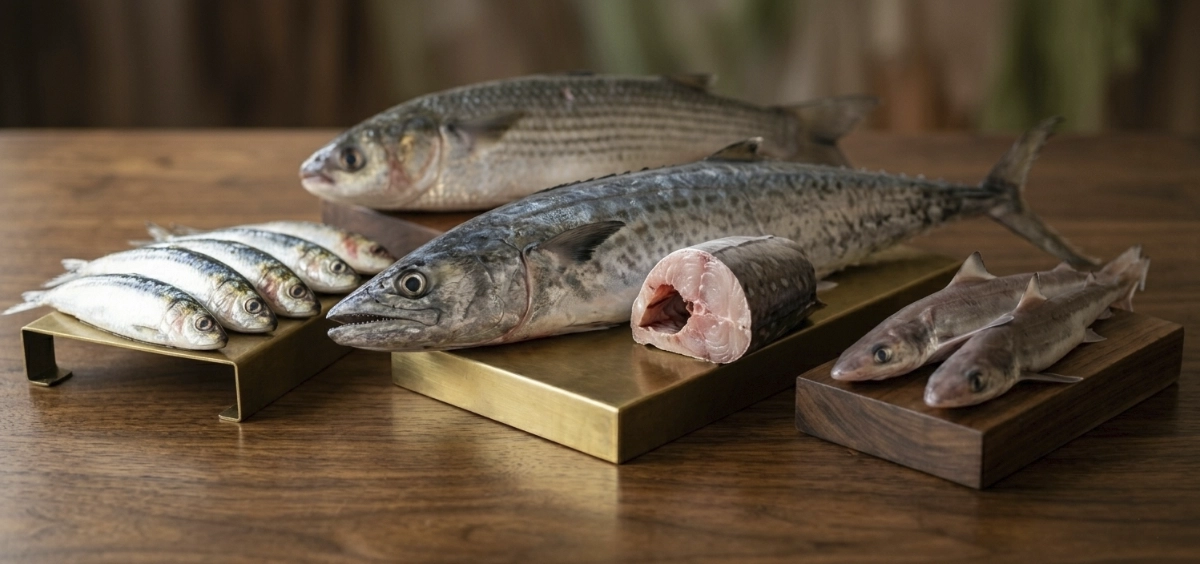
According to data from organizations such as the FAO and regional fisheries reports, species like sardines, king mackerel, and small shark (cazón) are central to coastal consumption, while mullet (lebranche) appears in estuarine ecosystems such as Lake Maracaibo and the Orinoco Delta. This context is not decorative, it defines the technique.
Sardines: technique for a delicate, high-fat fish
Sardines are among the most consumed fish in Venezuela, especially in states like Sucre and Nueva Esparta. Their accessibility makes them a staple of everyday cooking, but their execution requires precision.
They are small, high in fat, and structurally fragile. This means their proteins coagulate quickly and break apart easily if mishandled.
Frying is the most common technique, but it demands real temperature control, ideally between 170 and 180 °C. If the oil is too cold, sardines absorb fat; if too hot, they burn on the outside without cooking evenly.
They are also used in stews, where their natural fat integrates with tomato, onion, and ají dulce. The technical point here is to avoid overcooking, as they lose structure quickly.
Sardines do not tolerate improvisation; they require precision from the first contact with heat.
Lebranche (mullet): managing a stronger flavor profile
Lebranche, from the Mugilidae family, is typical of brackish waters and estuaries. In Venezuela, it is found mainly in Lake Maracaibo, eastern regions, and the Orinoco Delta.
Its flesh is firm, but its flavor is more pronounced due to its feeding habits in sediment-rich environments. This factor completely conditions how it should be cooked.
Traditionally, it is butterflied and cooked over open flame or in the oven, allowing direct heat to balance its volatile compounds.
A common mistake is trying to “correct” it with heavy sauces or excess fat, which only intensifies its flavor rather than balancing it.
Lebranche is not disguised; it is handled with precision to preserve its character without overwhelming the dish.
King mackerel (carite): structure, cuts, and timing control
Carite, related to species from the Scombridae family, is common in Venezuelan coastal markets. Its firm white flesh makes it one of the most versatile fish from a technical standpoint.
It is used in fried steaks, grilled preparations, or sauced dishes. Its structure allows handling without falling apart, making it suitable for multiple formats.
However, this advantage has limits. Carite is relatively lean, so prolonged cooking leads to dryness and loss of texture.
Here, control is not about temperature, but time. Overcooking it ruins its main attribute.
Cazón (small shark): why it requires prior transformation
Cazón, a small shark widely used in eastern Venezuelan cuisine, follows a completely different logic. It is not cooked as a fillet; it is transformed.
This fish contains nitrogenous compounds such as urea, which can produce strong flavors if not properly processed. That is why cazón is boiled before any further preparation.
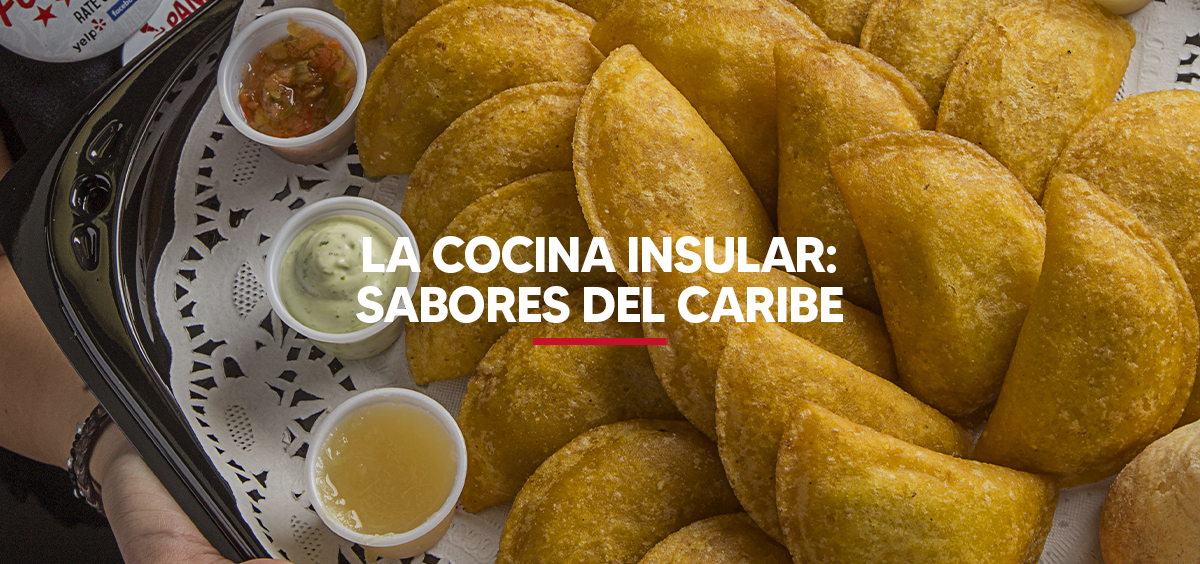
This step cleans, stabilizes flavor, and prepares the meat for shredding. From there, it is incorporated into stews with ají dulce, onion, and tomato, forming the base for empanadas and traditional dishes like cuajao.
There are no shortcuts here. Either the process is respected, or the result fails.
Four species, four different culinary logics
The real value of this analysis is not the list of fish, but what they represent:
- Sardines demand speed and temperature control
- Lebranche demands flavor management
- Carite demands precise timing
- Cazón demands prior transformation
They are not interchangeable. They do not respond to the same cooking logic. Treating them as if they do is the most common mistake.
Common mistakes when cooking fish
One of the most frequent errors is applying the same technique to all fish. This leads to inconsistent and often poor results.
Another common issue is overcooking. Fish has a different protein structure than red meat and deteriorates quickly when exposed to excessive heat.
It is also common to ignore factors such as fat content, fiber size, and water composition, all of which determine how each species should be handled.
Geography, availability, and real cooking
Fish cooking in Venezuela is deeply shaped by geography. In the eastern regions, sardines and cazón dominate; in western and lake areas, lebranche; in general markets, carite.
This explains why there is no single way to cook fish in Venezuela. Each region develops techniques based on what is available.
Beyond recipes: understanding the product
The true level of a cuisine is not defined by following instructions, but by understanding the product.
In the case of fish, this is decisive. Technique is not an accessory; it is the foundation.
A perspective from Panna
At Panna, we may not work directly with these fish, but we do work with the logic that defines Venezuelan cuisine: respect for ingredients, technical control, and consistency in execution.
Because in the end, whether it is fish, empanadas, or arepas, the difference is not in the ingredients… it is in how they are understood.