Venezuelan street food is comforting and practical because it is warm, portable, generous and built around familiar ingredients like corn dough, cheese, shredded meats, beans, fried dough and sweet plantains. Dishes like arepas, empanadas, tequeños and cachapas are easy to eat, easy to share and satisfying without needing a formal table.
What is Venezuelan street food?
Venezuelan street food is the kind of food that solves hunger quickly without feeling careless. It is usually warm, filling and easy to understand from the first bite. An arepa can become a handheld meal. An empanada can be eaten on the go. Tequeños can open a gathering before anyone sits down. A cachapa can turn sweet corn and cheese into something rich, simple and memorable.
The most important detail is that Venezuelan street food does not feel small in spirit. Even when the format is casual, the flavors are generous. Corn, cheese, meats, beans, sauces and plantains appear in combinations that feel practical but complete.
This is why street food has such a strong place in Venezuelan eating culture. It works for breakfast, lunch, late-night cravings, quick stops, family outings and informal meals. It is food made for movement, but it still carries memory.
Why are arepas so practical as street food?
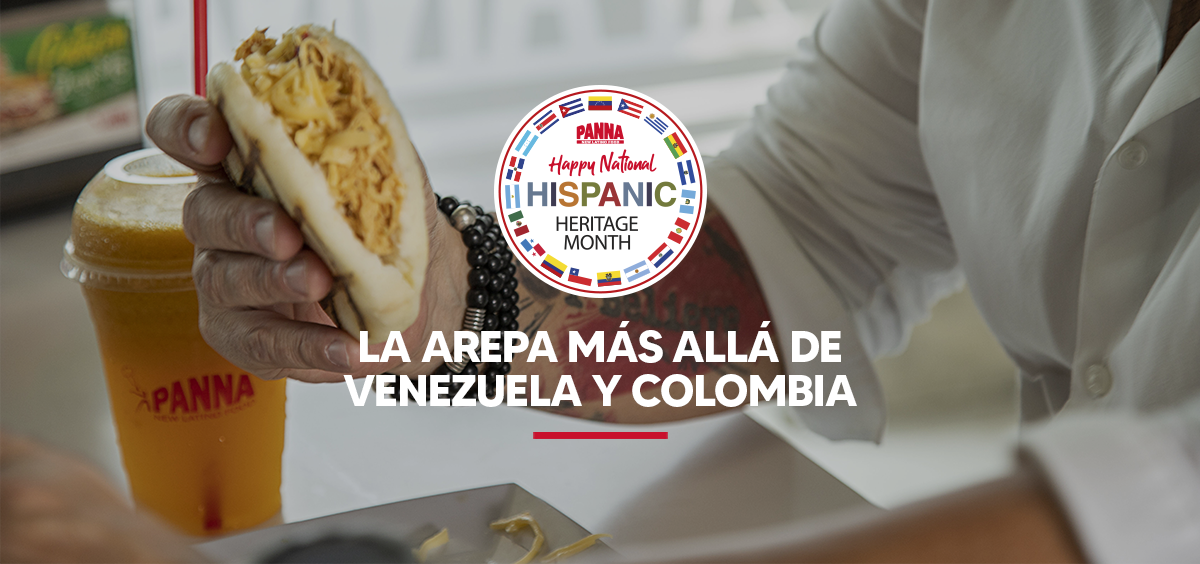
Arepas are practical because they are built like edible containers. A Venezuelan arepa is made from precooked cornmeal, shaped, cooked and opened like a pocket. That pocket can hold cheese, carne mechada, shredded chicken, black beans, eggs, avocado or combinations that turn it into a full meal.
The structure matters. A good arepa should be firm enough to hold its filling, but tender enough to bite without breaking apart. If the dough is too dry, the arepa cracks. If it is too dense, it feels heavy. If it is too thin, it cannot support a generous filling.
As street food, the arepa works because it adapts to appetite. Someone can order a simple cheese arepa in the morning or a more complete arepa with meat and beans later in the day. It is fast, handheld and satisfying, but still unmistakably Venezuelan.
Why are empanadas such a strong part of Venezuelan casual food?
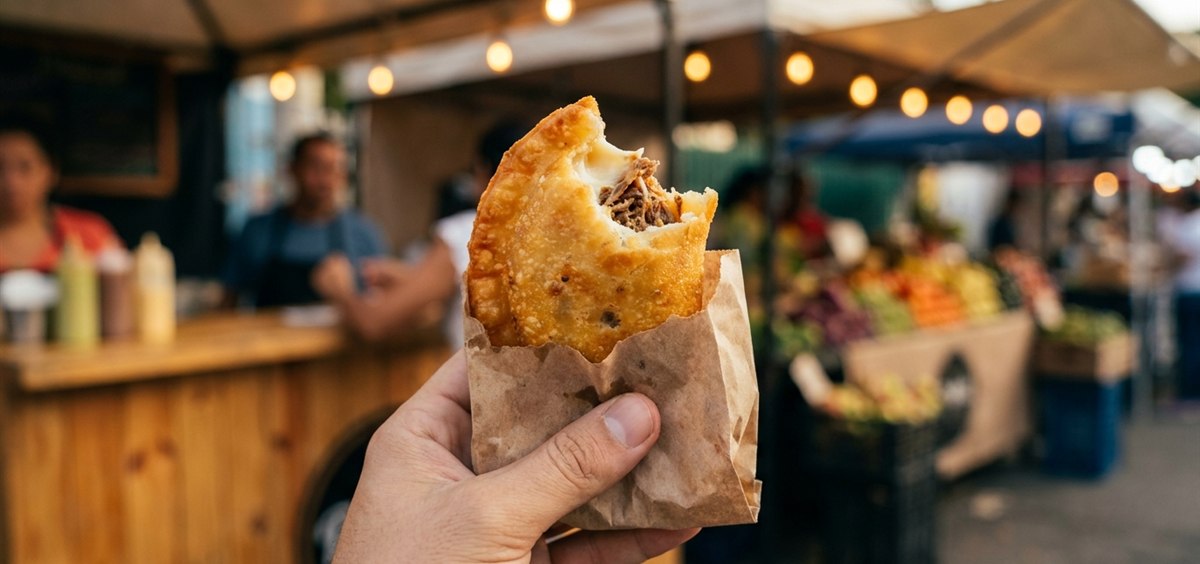
Empanadas are one of the clearest examples of Venezuelan food designed for real life. They are hot, sealed, portable and filling. In Venezuela, empanadas are strongly connected to breakfast, beach days, counters, casual stops and mornings when something quick still needs to feel substantial.
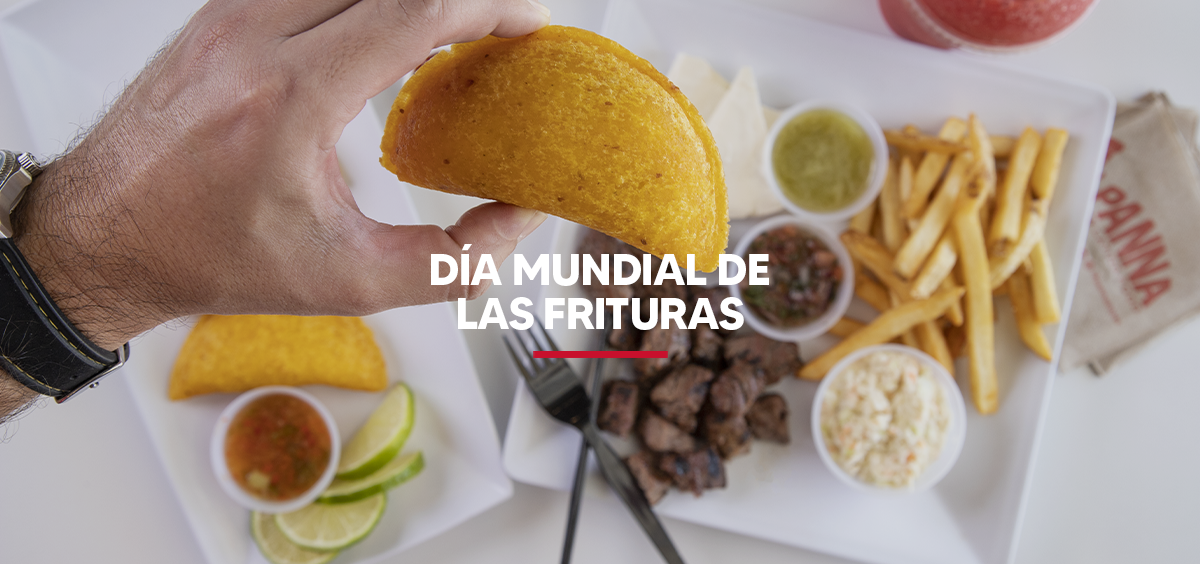
Unlike baked wheat empanadas from other traditions, Venezuelan empanadas are commonly made with corn dough and fried. That gives them a golden outside, a tender interior and a flavor that connects them to the broader Venezuelan corn tradition.
A good Venezuelan empanada depends on balance:
- The dough must be soft enough to fold.
- The edge must seal well.
- The filling must be moist but controlled.
- The outside should be golden, not greasy.
- The first bite should include both dough and filling.
The filling is important, but the dough cannot be treated as a simple wrapper. The corn shell is part of the flavor. That is what makes the empanada feel Venezuelan before the filling even speaks.
Why do tequeños work so well for sharing?
Tequeños are practical in a different way. They are not a full meal like an arepa, and they are not as filling as an empanada. Their power is that they are easy to share. Cheese wrapped in dough and fried until golden is a simple idea, but the technique behind it matters.
The dough must wrap the cheese properly so it does not leak during frying. The cheese must soften without disappearing. The outside should be crisp and the inside warm. When those details are right, tequeños become almost automatic: people take one, then another, and the tray empties quickly.
As street food or casual food, tequeños are perfect because they do not interrupt conversation. They do not require utensils or explanation. They are warm, salty, crisp and familiar. That makes them one of the easiest introductions to Venezuelan food for first-time visitors.
How do cachapas fit into Venezuelan street food?
Cachapas fit into Venezuelan street food because they transform corn into something warm, sweet, savory and satisfying. A cachapa is made from sweet corn batter, cooked like a thick pancake and commonly folded with cheese. It is softer and sweeter than an arepa, which makes it feel more indulgent.
The cachapa is practical, but not in the same way as a tequeño. It is not something people usually eat in one bite while standing in a crowd. Its practicality comes from being direct: sweet corn, heat, cheese and a folded format that feels complete without many extras.
The key is contrast. The corn brings sweetness and moisture. The cheese brings salt and creaminess. If the cheese is too mild, the cachapa can feel flat. If the batter is too dry, it loses its tenderness. A good cachapa needs both softness and balance.
Why does Venezuelan street food feel more complete than fast food?
Venezuelan street food often feels more complete than generic fast food because it is built from recognizable meal elements: corn, cheese, meats, beans, eggs, plantains and sauces. Even when served quickly, the food carries the logic of a full plate.
An arepa can hold the same kind of ingredients that might appear on a lunch plate. An empanada can carry cheese, beef, chicken or pabellón-style fillings. A cachapa can deliver sweet corn and cheese in one warm fold. Tequeños can begin the meal with texture and salt.
That is the difference. Venezuelan street food may be fast, but it is not empty. It is practical because the format works; it is comforting because the ingredients still feel close to home.
Why does Venezuelan street food work so well in Miami?
Venezuelan street food works especially well in Miami because the city understands food that moves between cultures, schedules and cravings. People may be looking for a quick breakfast, a casual lunch, something to share with family or a familiar Latin flavor that does not feel generic.
For Venezuelans in Miami, these foods bring memory. For people discovering Venezuelan food for the first time, they offer an easy entry point. You do not need to know every regional detail to enjoy a hot empanada, a cheese-filled tequeño, a generous arepa or a cachapa with sweet corn and cheese.
At PANNA, that accessibility matters. Venezuelan street food becomes part of a broader restaurant experience: casual enough for everyday cravings, but prepared with the care needed for the food to keep its identity.
Frequently Asked Questions
What are the most popular Venezuelan street foods?
Some of the most popular Venezuelan street foods include arepas, empanadas, tequeños and cachapas. Depending on the place, fillings may include cheese, shredded beef, chicken, black beans, eggs or pabellón-style combinations.
Is Venezuelan street food spicy?
Venezuelan street food is usually flavorful rather than very spicy. The focus is often on corn, cheese, meats, beans, sauces and fried textures. Some sauces may add heat, but spice is not the main feature.
What Venezuelan street food should I try first?
Start with tequeños if you want something easy to share, an arepa if you want a savory handheld meal, an empanada if you want something fried and filling, or a cachapa if you want sweet corn and cheese.
Is an arepa considered street food?
Yes. Arepas can be homemade, restaurant food or street food. Their handheld format, flexible fillings and satisfying structure make them one of the most practical Venezuelan foods for eating casually.
Venezuelan street food is practical because it fits real life: quick breakfasts, shared tables, casual cravings and meals that do not need formality to feel complete. But it is comforting because it still carries the essentials of Venezuelan cooking: corn, cheese, guisos, fried dough, warmth and generosity. At PANNA, that combination becomes easy to experience, whether you start with tequeños, choose an arepa, order an empanada or let a cachapa remind you how much comfort can fit inside one simple fold.