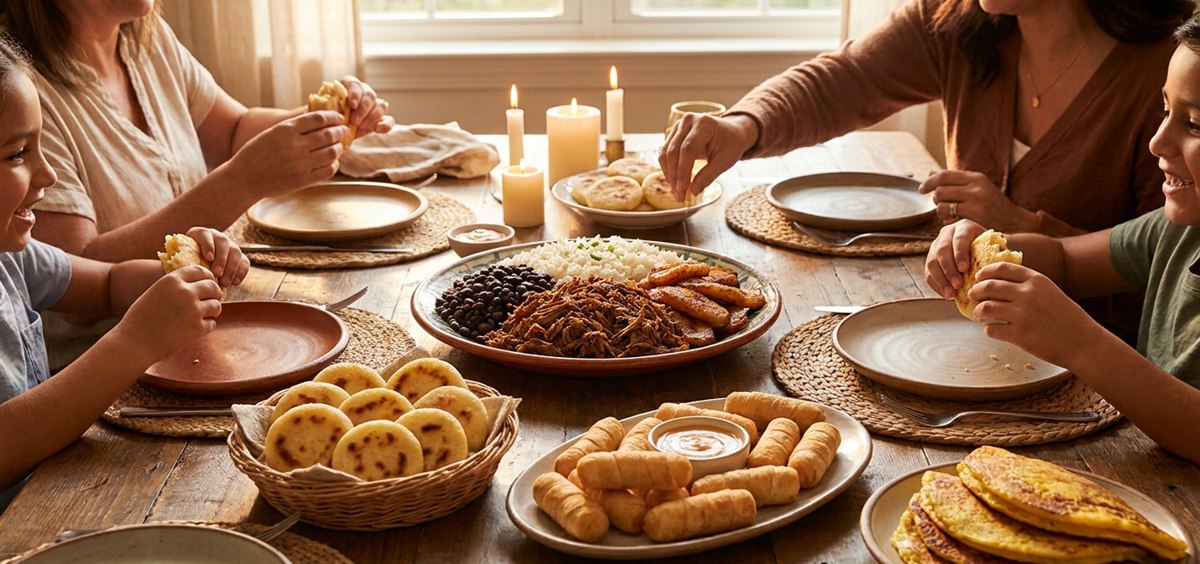
Venezuelan flavors balance sweet, salty and savory elements by using contrast with intention. Sweet plantains, salty cheese, corn dough, black beans, shredded meats and fresh sauces work together so no single flavor dominates. The result is food that feels generous, warm and complete, with each bite moving between comfort, depth and brightness.
Why do Venezuelan dishes use sweet and savory flavors together?
Venezuelan food often feels satisfying because it does not depend on one flavor at a time. It builds plates through contrast. A bite can be savory from carne mechada, earthy from caraotas negras, sweet from tajadas, salty from cheese and fresh from guasacaca or another sauce. The pleasure comes from how those elements meet.
This is not random abundance. Venezuelan food has a practical sense of balance. Corn dough can be mild, so it needs fillings with flavor. Black beans can be earthy, so they work well with rice, cheese or sweet plantains. Fried foods can be rich, so they benefit from fresh sauces. Sweet corn can feel soft and sweet, so salty cheese gives it structure.
That is why dishes like pabellón, cachapas, arepas, empanadas and tequeños feel different from one another but still belong to the same culinary language. They all understand contrast.
How do tajadas balance shredded beef and black beans?
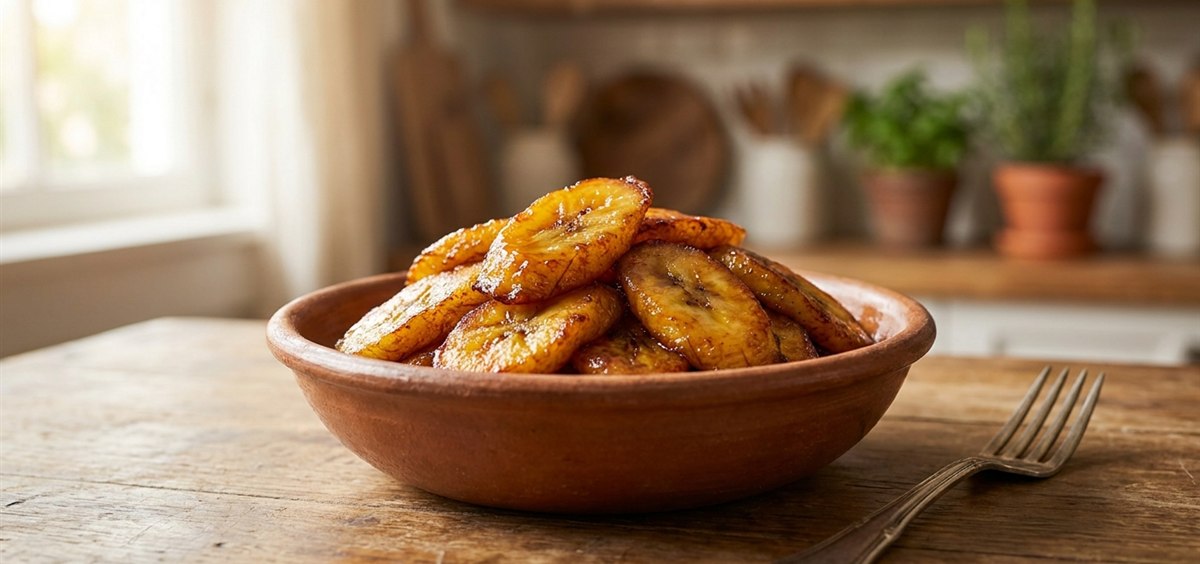
Tajadas are one of the clearest examples of sweet-savory balance in Venezuelan food. They are made from ripe plantains, sliced and fried until tender, golden and naturally sweet. Their role is not to turn a meal into dessert. Their role is to soften and brighten savory ingredients.
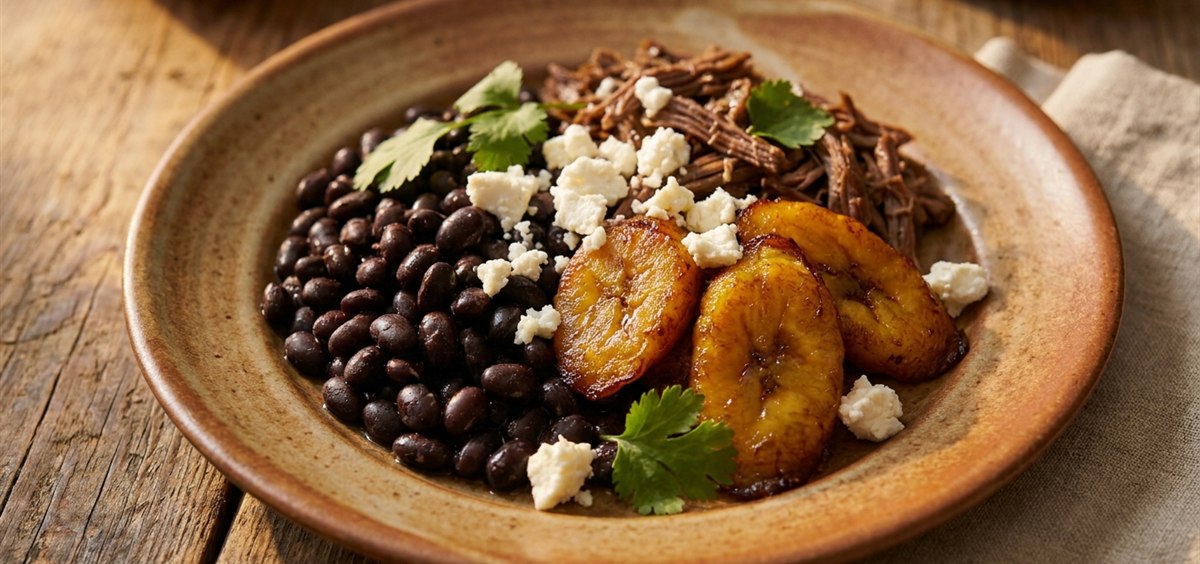
With carne mechada, tajadas bring relief. Shredded beef is savory, seasoned and textured. The sweetness of ripe plantain gives the bite a softer edge, making the beef taste deeper instead of heavier. With caraotas negras, tajadas create contrast between earthiness and sweetness. The beans feel creamier and more grounded, while the plantains bring warmth and lightness.
This is why tajadas are so important in pabellón criollo. Without them, the plate can still be good, but it loses movement. The sweet element helps the savory elements feel more complete.
Why does salty cheese work so well with sweet corn?
Salty cheese works beautifully with sweet corn because each ingredient corrects the other. Sweet corn brings softness, moisture and natural sugar. Cheese brings salt, fat and definition. Together, they create a bite that feels rich but balanced.
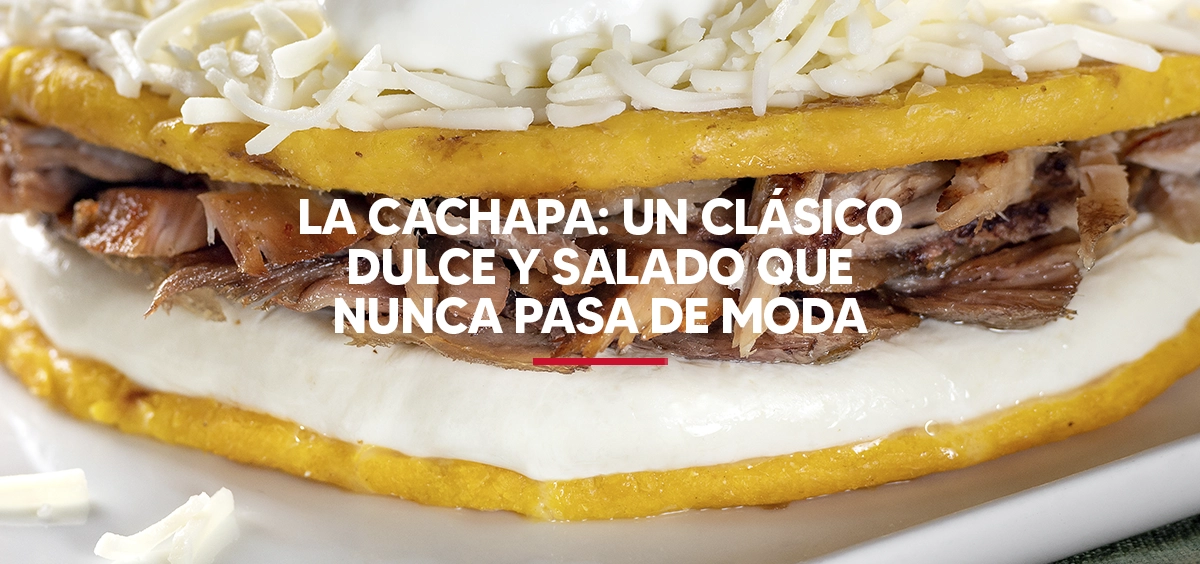
Cachapas show this perfectly. A cachapa is made with sweet corn batter and cooked like a thick pancake. On its own, it can taste tender and sweet, but it may feel incomplete. Once cheese is folded inside, the dish changes. The cheese makes the corn taste deeper, and the corn makes the cheese taste saltier and creamier.
The same logic appears in arepas and empanadas, although the corn behaves differently. Arepa dough is more neutral, so cheese gives it immediate character. Fried corn empanadas use cheese as a warm, salty center that balances the shell. In each case, the relationship works because corn and cheese do not compete; they complete each other.
How do black beans create depth in Venezuelan food?
Caraotas negras bring depth because they add earthiness, creaminess and a slower kind of flavor. They are not sharp like sauce, sweet like tajadas or salty like cheese. They are grounding. That makes them essential in plates that need body.
With white rice, caraotas become softer and more complete. The rice absorbs some of the bean broth, while the beans give the rice flavor. With cheese, they become saltier and brighter. With tajadas, they gain contrast. With carne mechada, they help create a full meal instead of a single-protein plate.
Texture is important here. Caraotas should not be watery or dry. They need enough body to hold their place on the plate and enough creaminess to connect with rice, meat or corn dough. When the texture is right, they make the meal feel warmer and more complete.
How do sauces add freshness to rich Venezuelan food?
Sauces add freshness by cutting through richness. Venezuelan food often includes fried dough, cheese, meats, beans and warm corn. Those ingredients are comforting, but they can feel heavy if nothing brightens the bite. A sauce like guasacaca brings herbs, garlic, acidity and moisture.
With empanadas, sauce helps balance the fried corn shell. With tequeños, it can lighten the warm cheese and dough. With arepas, it connects the filling to the corn pocket. With grilled meats or bowls, it gives the meal movement.
The key is that Venezuelan sauces usually support the food rather than cover it. They are often flavorful without being aggressively spicy. Their job is to make the next bite easier, fresher and more interesting.
Why does texture matter as much as flavor?
Texture matters because Venezuelan food is very physical. You feel the crisp edge of an empanada, the soft fold of a cachapa, the tender pocket of an arepa, the creamy beans, the strands of carne mechada and the warm cheese inside a tequeño. Flavor alone does not explain why the food is so satisfying.
A balanced Venezuelan meal often includes several textures:
- Crispness from fried dough.
- Softness from corn, beans or plantains.
- Creaminess from cheese or caraotas.
- Juiciness from guisos or shredded meats.
- Freshness from sauces.
- Structure from rice or arepa dough.
When those textures work together, the food feels generous without becoming messy. The bite has contrast, but still makes sense.
How does Venezuelan food avoid feeling too heavy?
Venezuelan food avoids feeling too heavy when contrast is handled correctly. A meal with only fried items can feel dense. A meal with only soft elements can feel flat. A meal with only savory flavors can become tiring. Balance keeps the food alive.
That is why a plate with carne mechada, rice, caraotas and tajadas works so well. It has savory intensity, neutral structure, creamy depth and sweet contrast. Add cheese or sauce, and the plate gains even more definition. The same happens with a cachapa and cheese, or tequeños served with a fresh sauce.
The secret is not making everything lighter. The secret is giving each rich element something to answer it.
Why do Venezuelan flavors feel familiar but memorable?
Venezuelan flavors feel familiar because the ingredients are easy to recognize: corn, cheese, beef, chicken, beans, rice, plantains and sauces. They feel memorable because of how those ingredients are arranged. Corn becomes a pocket, a fold or a fried shell. Cheese becomes a center, a contrast or a salty finish. Plantains become sweetness inside a savory meal.
This is especially true in Miami, where many people already know Latin ingredients but may not know Venezuelan combinations. The food welcomes them with familiar flavors, then surprises them with the balance.
At PANNA, that balance is part of the experience. The table is not only about one dish. It is about tasting how sweet, salty, savory, creamy and fresh elements can work together in a way that feels unmistakably Venezuelan.
Frequently Asked Questions
Why does Venezuelan food mix sweet and savory flavors?
Venezuelan food uses sweet and savory contrast to make meals feel balanced. Sweet plantains, salty cheese, savory meats and earthy beans work together so the plate feels complete instead of one-dimensional.
Are Venezuelan dishes usually spicy?
Venezuelan food is usually flavorful rather than very spicy. The cuisine often focuses on corn, cheese, guisos, beans, plantains, garlic, herbs and sauces instead of strong heat.
What is the best example of sweet and savory Venezuelan food?
Pabellón criollo is one of the best examples because it combines savory carne mechada, earthy black beans, neutral rice and sweet tajadas. Cachapas with cheese are another clear sweet-salty example.
Why is cheese so important in Venezuelan flavor?
Cheese adds salt, creaminess and structure. It balances sweet corn, fills tequeños, completes arepas and sharpens beans or plantains, making many Venezuelan dishes feel more rounded.
Venezuelan food balances flavor by letting each ingredient do a job: tajadas bring sweetness, cheese brings salt, carne mechada brings savory depth, caraotas bring earthiness, corn gives structure and sauces add freshness. At PANNA, that balance becomes something you can taste across the table, in food that feels warm, generous and carefully built without losing the comfort that makes it Venezuelan.