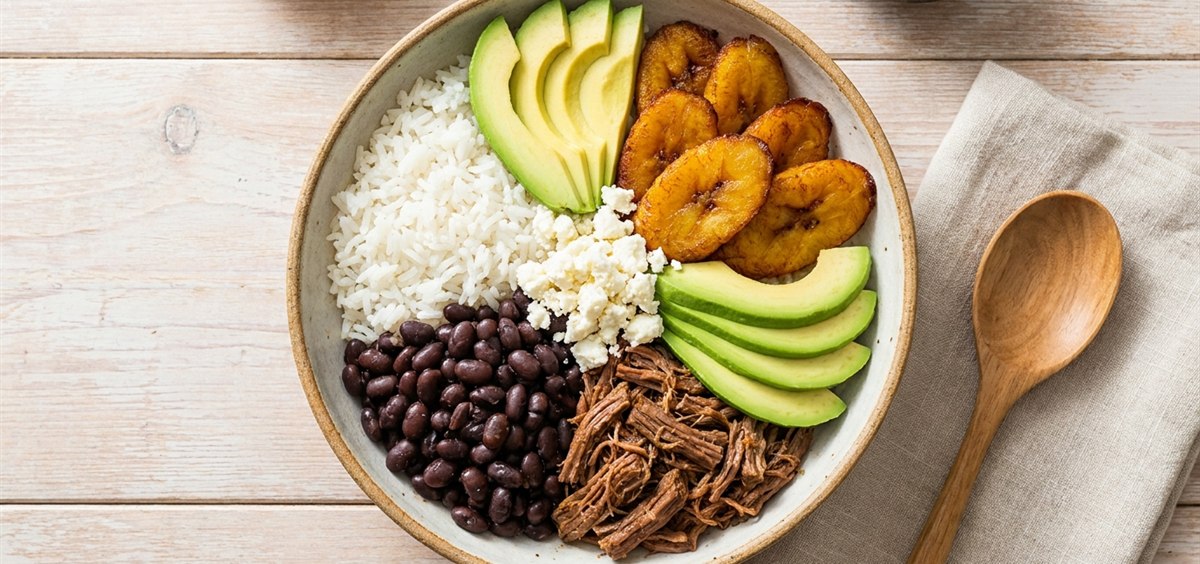
A Venezuelan bowl is a modern way to bring traditional Venezuelan flavors into one practical format. It may include rice, black beans, shredded beef or chicken, sweet plantains, cheese, sauces and fresh toppings. It is not a historic Venezuelan dish, but it uses familiar ingredients to create a balanced, complete meal.
What is a Venezuelan bowl?
A Venezuelan bowl is best understood as a contemporary format inspired by traditional Venezuelan food. It takes ingredients that already belong to Venezuelan cooking and arranges them in a bowl so they are easy to eat together: rice, caraotas negras, carne mechada, shredded chicken, tajadas, cheese, sauces or other toppings depending on the restaurant.
That distinction matters. A Venezuelan bowl should not be presented as if it were an old national dish. It is not pabellón criollo, an arepa or a cachapa. It is a newer way to serve familiar flavors in a practical structure that fits modern dining habits, especially for people who want something complete, customizable and easy to order.
The value of a bowl is that it lets someone taste several parts of Venezuelan food in one place. Instead of choosing only a handheld arepa or one full traditional plate, the bowl can bring together rice, beans, protein, sweet contrast, cheese and sauce in a single meal.
How is a Venezuelan bowl different from pabellón criollo?
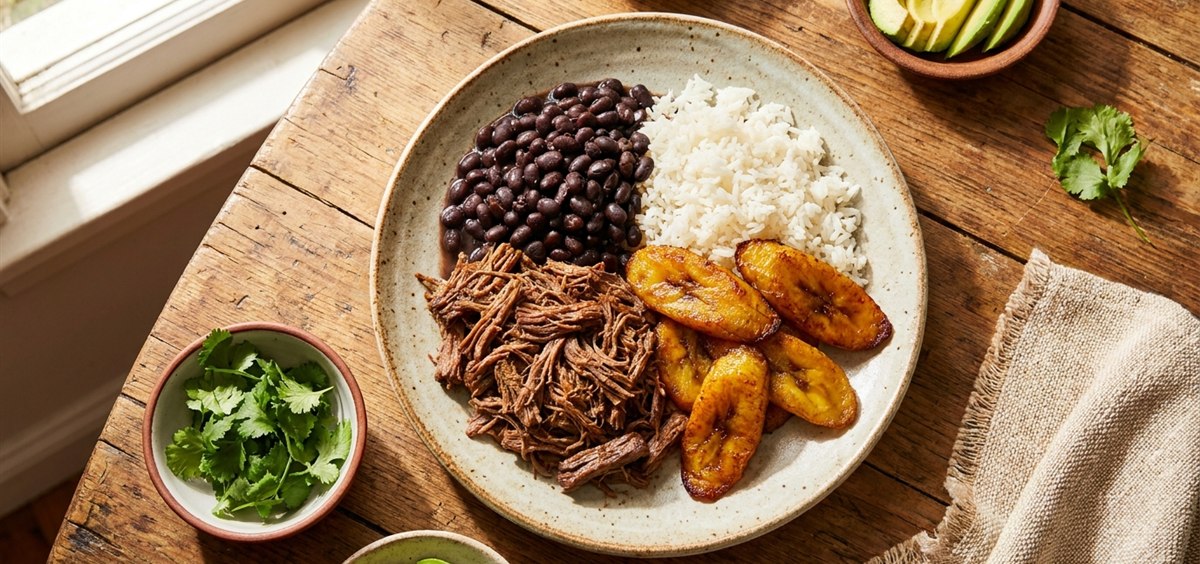
A Venezuelan bowl can borrow some logic from pabellón criollo, but it should not be confused with it. Pabellón criollo has a classic structure: carne mechada, caraotas negras, white rice and tajadas. Its identity comes from that specific balance and cultural recognition.
A bowl is more flexible. It may include similar ingredients, but it can also use chicken, extra toppings, different sauces, greens or other combinations that make it more adaptable. Pabellón is a traditional plate. A bowl is a practical format.
The difference can be understood this way:
- Pabellón criollo is a traditional Venezuelan dish.
- A Venezuelan bowl is a modern serving format.
- Pabellón has a classic structure.
- A bowl can be customized.
- Pabellón is usually served as a plate.
- A bowl brings the elements into one contained meal.
This makes the bowl useful for people who want traditional flavor without necessarily ordering a full classic plate.
What ingredients make a Venezuelan bowl balanced?
A balanced Venezuelan bowl needs more than quantity. It needs contrast. Venezuelan food works well when savory, sweet, creamy, fresh and structured elements support each other. A bowl should follow that same logic.
The most important components usually include:
- A base, such as white rice.
- A legume, such as caraotas negras.
- A protein, such as carne mechada or shredded chicken.
- A sweet element, such as tajadas.
- A salty or creamy element, such as cheese.
- A sauce, such as guasacaca or another Venezuelan-style sauce.
- A fresh element when the bowl needs lift.
The goal is not to add everything randomly. Each ingredient should have a job. Rice gives structure. Beans bring depth. Protein adds savory character. Tajadas add sweetness. Cheese adds salt. Sauce adds freshness, acidity or creaminess. When those parts are balanced, the bowl feels complete instead of crowded.
Why do rice and black beans work so well in a Venezuelan bowl?
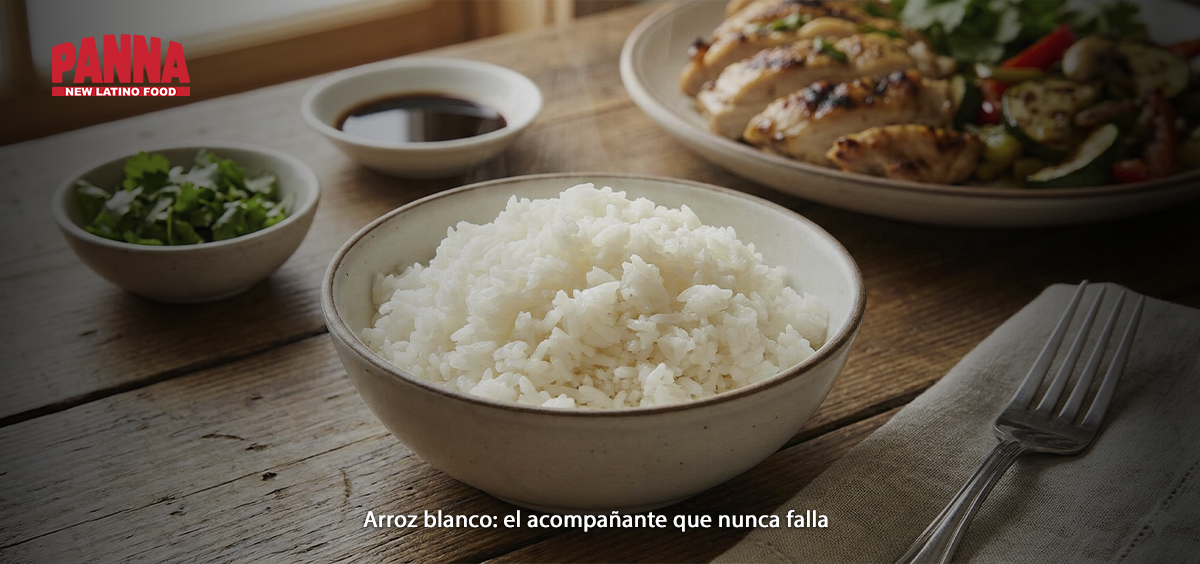
Rice and black beans work well because they create the foundation of the bowl. White rice gives a neutral base that can absorb juices, sauces and bean broth. Caraotas negras bring creaminess, earthiness and depth. Together, they make the bowl feel grounded.
This pairing is familiar in Venezuelan food because it appears in traditional plates and home meals. In a bowl, the function stays similar. The rice keeps the structure clean. The beans prevent the meal from feeling dry or flat.
The technical detail is moisture. Beans that are too watery can make the bowl heavy or messy. Beans that are too dry lose their comfort. The right texture should be creamy enough to connect with the rice, but not so loose that the whole bowl loses definition.
How do shredded meats change the flavor of a Venezuelan bowl?
Shredded meats bring the savory center of a Venezuelan bowl. Carne mechada gives depth, seasoning and texture. Shredded chicken can make the bowl feel softer and more familiar. Both work because they distribute flavor through the bowl instead of sitting as one solid piece of protein.
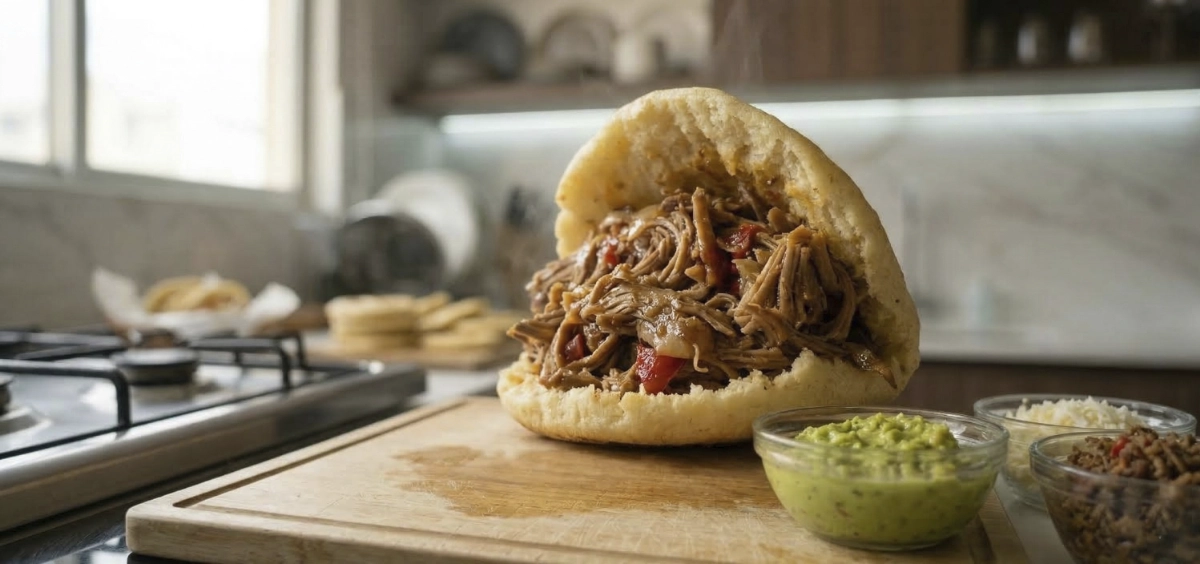
Carne mechada is especially effective because the strands mix naturally with rice, beans, cheese and sauce. It should be juicy, but not watery. If it is too dry, the bowl feels less generous. If it is too saucy, it can overwhelm the other ingredients.
Shredded chicken works differently. It can absorb sauce well and pair easily with cheese, corn-based sides or fresh toppings. The key is keeping it tender and seasoned enough to hold its place in the bowl.
Why do tajadas and cheese matter in a Venezuelan bowl?
Tajadas and cheese matter because they bring contrast. Without them, a bowl can become only savory, earthy and soft. Tajadas add sweetness, tenderness and warmth. Cheese adds salt, creaminess and definition.
This sweet-salty relationship is central to many Venezuelan combinations. Ripe plantains do not make the bowl taste like dessert. They make the savory ingredients feel deeper. Cheese keeps the sweetness from becoming too soft and gives the bite a clearer edge.
A good Venezuelan bowl should not treat tajadas as decoration. They have a real function. The same is true for cheese. Both ingredients help the bowl feel Venezuelan, not just like rice, beans and protein placed together.
How do sauces complete a Venezuelan bowl?
Sauces complete a Venezuelan bowl because they connect the ingredients. Guasacaca or another Venezuelan-style sauce can add herbs, garlic, acidity, creaminess or freshness. In a bowl, sauce is especially important because every bite may include several ingredients at once.
The sauce should lift the bowl without covering it. If it is too strong, it can hide the carne mechada, beans or tajadas. If it is too thin, it can disappear. If it is balanced, it brings movement and makes the bowl easier to keep eating.
This is where the modern format works well. A bowl allows sauce to touch rice, beans, protein and toppings in a controlled way. It lets the person mix flavors without losing the identity of each component.
Why are bowls a practical way to try Venezuelan food?
Bowls are practical because they give first-time visitors an easy way to taste several Venezuelan flavors at once. Someone may not know whether to order pabellón, an arepa, empanadas or cachapa. A bowl can offer a more familiar structure while still introducing ingredients like caraotas, tajadas, carne mechada, cheese and guasacaca.
For people in Miami looking for Venezuelan food, this can be especially useful. The bowl format feels familiar to modern diners, but the flavors still come from Venezuelan cooking. It becomes a bridge: easy to understand, but rooted in real ingredients.
At PANNA, this kind of format makes sense when it respects the food. The bowl should not erase tradition. It should make Venezuelan flavors easier to explore in a way that feels generous, balanced and practical.
Frequently Asked Questions
Is a Venezuelan bowl a traditional dish?
No. A Venezuelan bowl is a modern format inspired by traditional Venezuelan ingredients. It may include rice, black beans, shredded meats, sweet plantains, cheese and sauces, but it is not a historic dish like pabellón criollo.
What goes in a Venezuelan bowl?
A Venezuelan bowl may include rice, caraotas negras, carne mechada or chicken, tajadas, cheese, guasacaca and fresh toppings. The best bowls balance savory, sweet, creamy and fresh elements.
Is a Venezuelan bowl similar to pabellón?
It can be similar if it includes rice, black beans, shredded beef and tajadas, but pabellón criollo is a traditional plate with a classic structure. A bowl is more flexible and modern.
What should I order in a Venezuelan bowl?
Choose a balanced combination: rice for the base, caraotas for depth, carne mechada or chicken for protein, tajadas for sweetness, cheese for salt and guasacaca or another sauce for freshness.
A Venezuelan bowl works when it respects the logic of the food: rice for structure, caraotas for depth, shredded meats for savory flavor, tajadas for sweetness, cheese for salt and sauce for freshness. At PANNA, this modern format can become a simple way to experience Venezuelan flavors together, with the warmth, balance and generosity that make the cuisine feel familiar from the first bite.