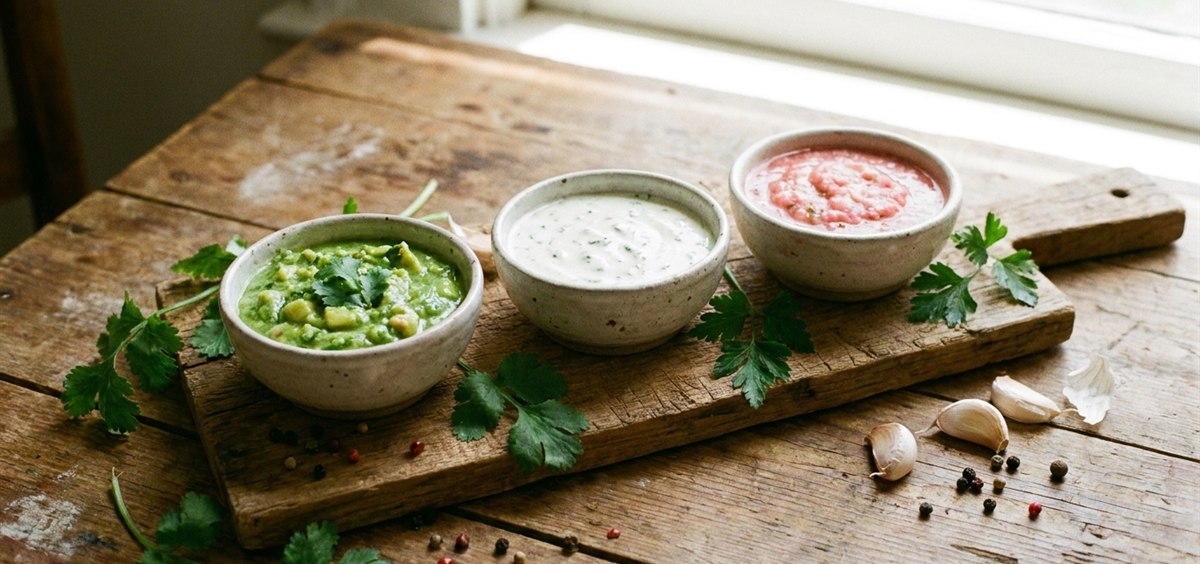
Venezuelan sauces are different because they usually focus on freshness, garlic, creaminess, acidity and balance rather than extreme heat. They are made to support foods like arepas, empanadas, tequeños, grilled meats and street food, adding moisture and flavor without hiding the corn, cheese, meats or fillings underneath.
What makes Venezuelan sauces different?
Venezuelan sauces are not usually built around showing off how spicy they can be. Some may have heat, and every kitchen has its own preferences, but the broader Venezuelan sauce culture tends to focus on usefulness. A sauce should freshen a bite, add moisture, bring garlic, balance fried dough, soften a savory filling or make a plate feel more complete.
That is why Venezuelan sauces often feel generous but not aggressive. They are meant to be added to food people are already enjoying: an empanada just out of the fryer, an arepa with carne mechada, tequeños at a table, grilled chicken, steak, yuca or a casual plate with several elements. The sauce is not there to erase the dish. It is there to help the dish eat better.
This is an important distinction. In some Latin American food traditions, sauces may be strongly tied to chile heat, smoke or a very specific regional flavor. Venezuelan sauces often move in another direction: green, garlicky, creamy, tangy, fresh or lightly spicy, depending on the food.
Are Venezuelan sauces usually spicy?
Venezuelan sauces are usually flavorful rather than very spicy. That does not mean Venezuelans avoid spice entirely. It means heat is often optional, added through a sauce on the side rather than built into every dish. The main food may be seasoned, savory and aromatic without being hot.
This matters for first-time visitors. Someone trying Venezuelan food in Miami may expect Latin food to be spicy by default. Venezuelan food often surprises them because the pleasure comes from corn, cheese, guisos, fried dough, beans, plantains, garlic, herbs and sauces that create contrast.
A Venezuelan sauce may include:
- Garlic for aroma and sharpness.
- Herbs for freshness.
- Oil or creaminess for body.
- Vinegar or lime for acidity.
- Pepper or ají for mild heat.
- Salt to make the flavors clear.
The goal is balance. A sauce that is only hot can cover the filling. A sauce with acidity, garlic and body can make the whole bite stronger without flattening it.
Why are sauces so important with arepas?
Sauces matter with arepas because arepas are filled, layered and built around texture. The corn dough gives structure, but the filling decides the personality of the meal. A sauce can connect the two.
If the arepa has carne mechada, a fresh or garlicky sauce can brighten the savory beef. If it has chicken, a creamy sauce can make the filling feel softer and more complete. If it has beans and cheese, a sauce with acidity can cut through the richness. The right sauce makes the arepa easier to keep eating from the first bite to the last.
The texture of the sauce also matters. A sauce that is too watery can make the arepa messy. A sauce that is too thick can sit heavily on top of the filling. A good arepa sauce should cling, spread and bring flavor without breaking the structure of the corn pocket.
Why do empanadas need sauces differently than arepas?
Empanadas need sauces differently because they are sealed and fried. The sauce is not inside the dough from the beginning; it is added bite by bite. That changes its function.
A Venezuelan empanada already has contrast: crisp corn shell, tender interior and warm filling. What the sauce adds is freshness and moisture. With cheese empanadas, sauce can bring garlic or herbs. With shredded beef or chicken, it can add acidity and make the filling feel juicier. With a pabellón-style empanada, it can help balance the richness of beans, beef, plantain and cheese.
The key is not to drown the empanada. The corn shell should stay present. Too much sauce can soften the crisp edge and make the bite less clean. The best use is controlled but generous enough to bring brightness.
What sauces work best with tequeños?
Tequeños are already simple and strong: cheese wrapped in dough and fried until golden. Because of that, the sauce should support the cheese, not compete with it. A sauce that is too heavy can make the tequeño feel greasy. A sauce that is too acidic or sharp can dominate the mild dough and salty cheese.
Good sauce pairings for tequeños usually bring one of three things:
- Freshness, to lighten the fried dough.
- Creaminess, to echo the cheese.
- Mild acidity, to keep the bite from feeling heavy.
Guasacaca can work because it adds herbs, garlic and brightness. Other creamy or garlicky sauces can also work when they are balanced. The important thing is that the tequeño should still taste like a tequeño. The sauce should make people want the next bite, not distract from the first one.
How do Venezuelan sauces work with grilled meats and casual plates?
With grilled meats, Venezuelan sauces often act as a fresh counterpoint. Grilled beef, chicken or pork can be savory, smoky and salty. A green, garlicky or acidic sauce cuts through that intensity and keeps the plate lively.
This is where sauces show their practical side. They can fix dryness, add aroma, connect meat to sides and give a plate more movement. A sauce beside grilled food does not need to be complicated. It needs to be clear: fresh enough to lift, seasoned enough to matter, and balanced enough not to cover the meat.
On casual plates, sauces also help connect different components. Fried items, corn dough, cheese, beans, rice, meats and plantains all have different textures. A sauce gives the diner a way to adjust each bite.
Why does sauce texture matter in Venezuelan food?
Texture matters because Venezuelan food often includes handheld formats. Arepas, empanadas and tequeños all need sauces that behave well. If the sauce is too loose, it drips everywhere. If it is too dense, it feels heavy. If it is too oily, it can make fried food taste tired.
A good Venezuelan sauce should match the food:
- For arepas, it should spread without soaking the dough.
- For empanadas, it should cling without softening the shell too quickly.
- For tequeños, it should be light enough to support the cheese.
- For grilled meats, it can be more pourable.
- For shared plates, it should be easy to dip or spoon.
This is where sauce becomes technical. Flavor matters, but behavior matters too. The best sauce is the one that makes the food easier and better to eat.
How do Venezuelan sauces connect to hospitality?
Venezuelan sauces connect to hospitality because they make the table more personal. A sauce on the side lets each person adjust the bite. More garlic, more freshness, more creaminess, more acidity, more heat if available. That small freedom fits the Venezuelan way of eating: abundant, informal and generous.
At PANNA, sauces belong naturally beside Venezuelan food because the dishes are already built around contrast. Corn, cheese, guisos, fried dough, beans, meats and plantains all benefit from the right fresh or creamy accent. The sauce does not need to shout. It just needs to make the table feel complete.
Frequently Asked Questions
Are Venezuelan sauces spicy?
Most Venezuelan sauces are flavorful rather than very spicy. Some may include heat, but many focus on garlic, herbs, acidity, creaminess and balance.
What sauce do Venezuelans eat with arepas?
It depends on the filling, but Venezuelans often use sauces that add freshness, garlic, creaminess or mild acidity. Guasacaca is one well-known option, especially when the arepa needs brightness.
What sauce goes well with tequeños?
Tequeños work well with sauces that are fresh, creamy or lightly tangy. The sauce should support the cheese and fried dough without overpowering them.
Why are sauces important in Venezuelan food?
Sauces add moisture, freshness and contrast. They help balance fried foods, grilled meats, corn dough, cheese and savory fillings, making the whole bite feel more complete.
Venezuelan sauces are different because they are practical, generous and built for balance. They lift fried foods, brighten arepas, support tequeños, freshen grilled meats and let each person shape the bite. At PANNA, that sauce culture becomes part of the experience: warm Venezuelan food served with the freshness, garlic, creaminess and contrast that make every dish feel alive.