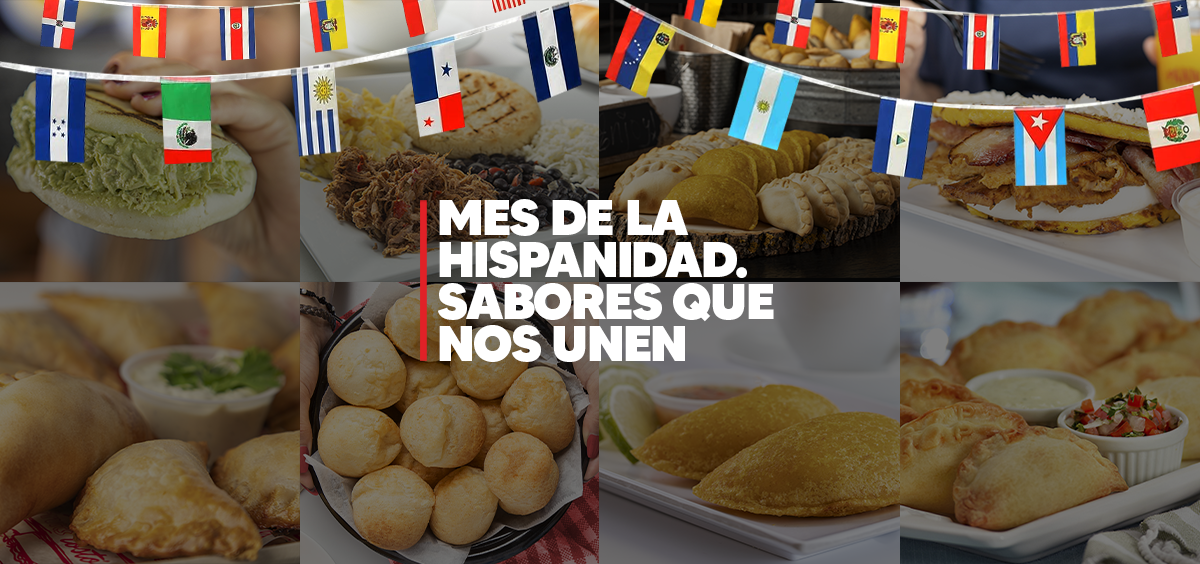
Cheese is important in Venezuelan food because it balances corn, fried dough, sweet plantains, beans and slow-cooked fillings with saltiness, creaminess and texture. It is not just an extra topping; in many Venezuelan dishes, cheese helps the whole bite make sense, from arepas and cachapas to tequeños, empanadas and breakfast plates.
Why does Venezuelan food use so much cheese?
In Venezuelan cooking, cheese is rarely decorative. It has a job. It cuts through sweetness, softens savory fillings, adds salt to mild corn dough, and gives a familiar flavor to dishes built around contrast. That is why cheese appears in breakfasts, snacks, street food, party trays and full plates.
The relationship between Venezuelan food and cheese is especially clear when corn is involved. Arepas, cachapas and empanadas all start from a corn base, but corn alone can be neutral, sweet or earthy depending on the preparation. Cheese gives that base a second voice: it can make an arepa more satisfying, turn a cachapa into a complete craving, or make an empanada feel richer.
Venezuelan food is generous, direct and built for sharing. Cheese fits that spirit because it makes food warmer, more comforting and easier to love. A tray of tequeños does not need a long explanation. A cachapa with melted cheese arrives, stretches, balances the sweetness, and everyone understands.
What kind of cheese is common in Venezuelan dishes?
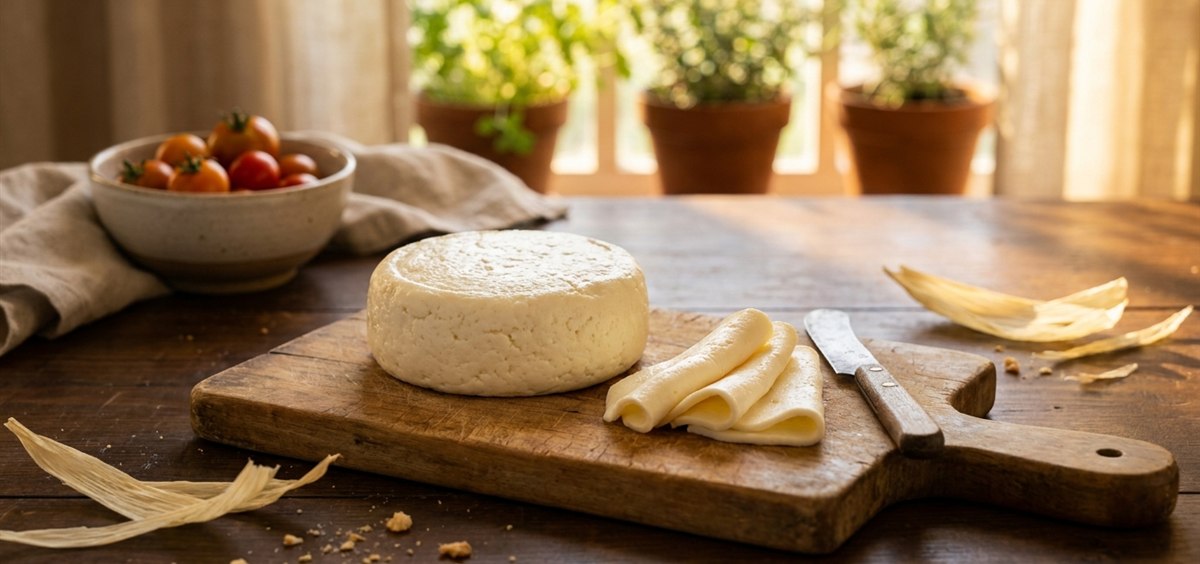
Venezuelan food often uses white cheeses that are salty, fresh or semi-soft. The exact name and style can vary depending on the dish, the region and what is available outside Venezuela, but the role is usually the same: bring salt, creaminess and structure without hiding the flavor of corn, beef, chicken, beans or plantains.
Common cheese roles in Venezuelan food include:
- Fresh white cheese for arepas, breakfast plates and simple fillings.
- Soft, melty cheese for cachapas, where the contrast with sweet corn matters.
- Firm or semi-firm cheese for grating over beans or traditional plates.
- Cheese sticks wrapped in dough for tequeños.
- Creamy combinations that make a filling feel smoother and richer.
The important detail is that Venezuelan cheese is often chosen by behavior, not just by name. Does it melt? Does it stretch? Does it stay firm? Does it crumble? Does it bring enough salt? Those answers matter because each dish needs a different cheese personality.
A cheese that works in a cachapa may be too soft for a tequeño. A cheese that grates well over beans may not give the same creamy bite inside an arepa. This is why replacing Venezuelan-style cheese carelessly can change the dish completely.
How does cheese change the texture of Venezuelan food?
Texture is one of the main reasons cheese is so important. Venezuelan food often plays with crisp edges, soft centers, juicy fillings and warm doughs. Cheese connects those textures. It can stretch inside a tequeño, melt into a cachapa, crumble into beans, or sit inside an arepa as a clean, salty layer.
In a tequeño, cheese must hold its shape long enough to survive the fryer, but still soften inside the dough. If the cheese melts too fast, it can leak out. If it does not soften enough, the tequeño loses its pleasure. The ideal bite depends on the dough, the frying temperature and the cheese’s ability to become creamy without disappearing.
In a cachapa, the cheese has another job. It must balance moisture and sweetness. A cachapa is tender, slightly sweet and naturally soft because of the corn. The cheese adds salt and richness, but also gives the folded cachapa a center. Without it, the cachapa can feel too sweet or incomplete.
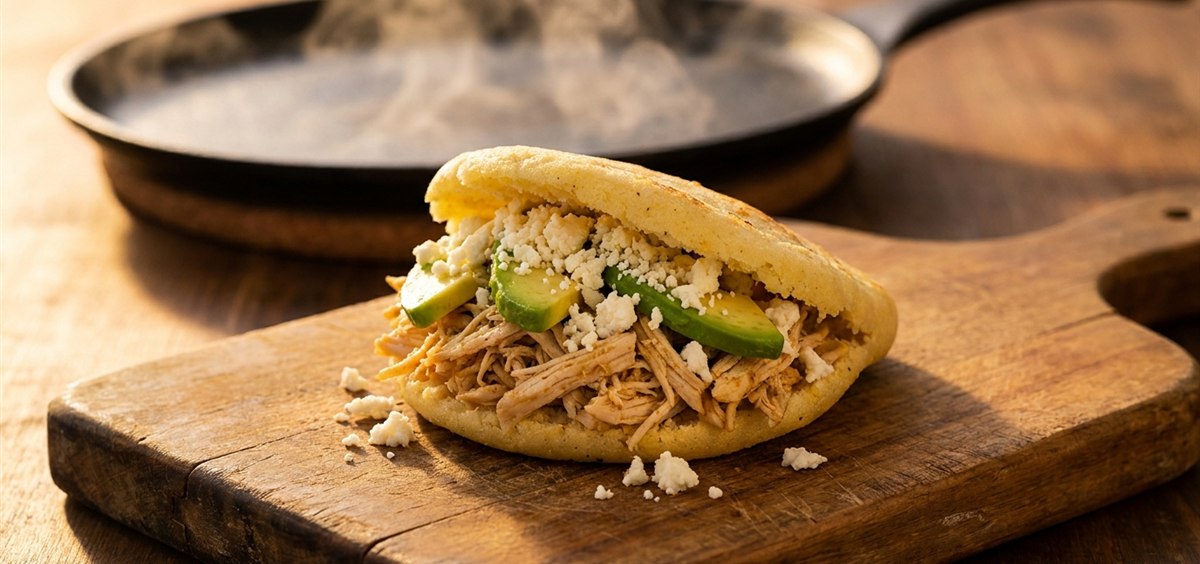
In an arepa, cheese can be the main filling, a companion to shredded beef or chicken, or a salty contrast to beans and avocado. The arepa’s neutral dough lets the cheese decide whether the bite feels simple, creamy, fresh or indulgent.
Why does cheese work so well with corn in Venezuelan food?
Corn and cheese work well together because they solve each other’s weaknesses. Corn brings body, warmth and a gentle sweetness. Cheese brings salt, fat and depth. When they meet, the result feels complete.
This is especially true because corn is used in different forms. Precooked cornmeal in arepas gives structure. Sweet corn in cachapas gives moisture and natural sugar. Corn dough in empanadas gives crispness when fried. Cheese adapts to each version.
The pairing works in three main ways:
- Salt balances sweetness, especially in cachapas.
- Creaminess softens dry or firm doughs, especially in arepas.
- Fat carries flavor, making simple ingredients feel more satisfying.
That is why a cheese arepa can feel complete with very few ingredients. It is also why a cachapa without cheese feels like something is missing. The dish may still be good, but it loses the contrast that makes the Venezuelan version so memorable.
Why is cheese essential in tequeños?
Tequeños may be the clearest example of cheese doing structural and emotional work at the same time. Technically, the cheese is the filling. Culturally, it is the reason the tequeño exists.
A tequeño depends on proportion. The dough must be thin enough to crisp, but strong enough to wrap the cheese. The cheese must be large enough to feel generous, but not so large that it bursts through the dough. The frying must create a golden outside while warming the inside just enough.
That balance is why tequeños are so loved at gatherings. They are easy to share, easy to recognize and difficult to leave on the tray. A dry tequeño, a hollow tequeño or a tequeño with leaked cheese is not the same experience.
At PANNA, tequeños are part of that Venezuelan instinct to start the table with something warm, salty and familiar. They are not just appetizers; they are the opening note of a meal.
How does cheese balance sweet plantains, beans and savory fillings?
Cheese also matters outside corn-based dishes. It often appears beside ingredients that need contrast: sweet plantains, black beans, shredded beef, rice, avocado or eggs. With sweet plantains, cheese adds salt and keeps the bite from becoming dessert-like. With black beans, it adds richness. With shredded beef or chicken, it softens the intensity of the filling.
This is the quiet intelligence of Venezuelan food. The plate may look abundant, but the combinations are not random. Sweetness, salt, softness, crispness and moisture are being managed at the same time.
Frequently Asked Questions
What cheese is used in Venezuelan arepas?
Venezuelan arepas often use white cheese, fresh, grated, sliced or melted depending on the filling. The best choice depends on saltiness, creaminess and structure.
Why is cheese served with cachapas?
Cheese balances the sweetness and moisture of the cachapa. A salty, creamy cheese creates the contrast that makes the dish feel complete.
Are tequeños always filled with cheese?
The classic Venezuelan tequeño is filled with cheese wrapped in wheat dough and fried. Some modern versions may vary, but cheese is the traditional center.
Is Venezuelan cheese the same as mozzarella?
No. Mozzarella can melt, but it does not always bring the same saltiness, firmness or cultural flavor expected in Venezuelan dishes.
Cheese in Venezuelan food is not a garnish placed at the end; it is part of the architecture of the bite. It gives arepas more character, cachapas their sweet-salty center, tequeños their reason to exist and traditional plates their balance. At PANNA, that difference becomes clear through warm corn, generous fillings, crisp dough, melted cheese and Venezuelan comfort served the way it should feel.