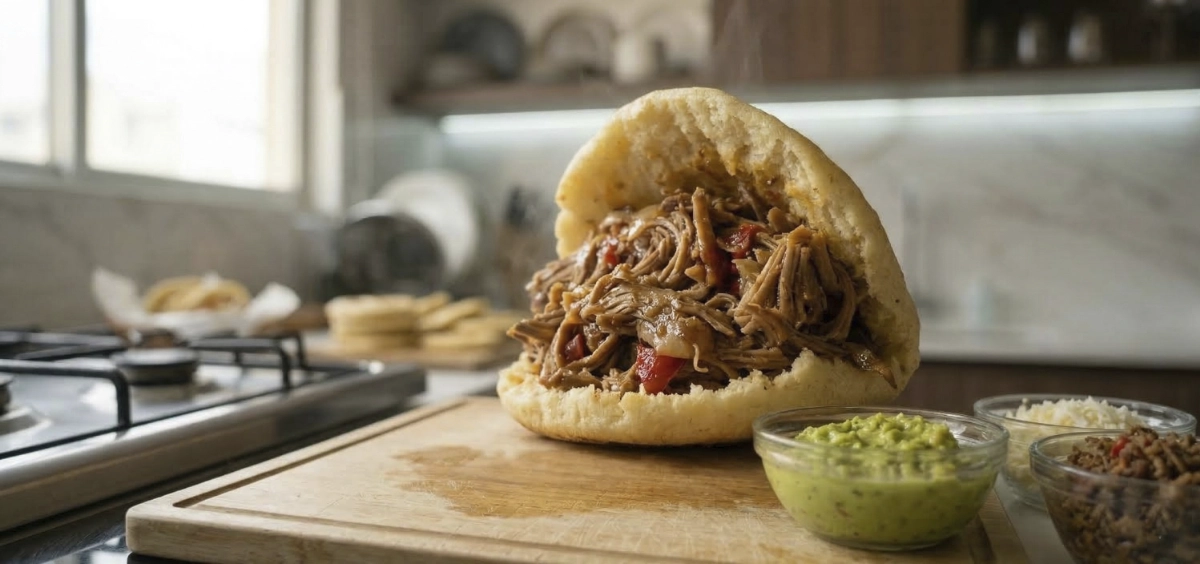
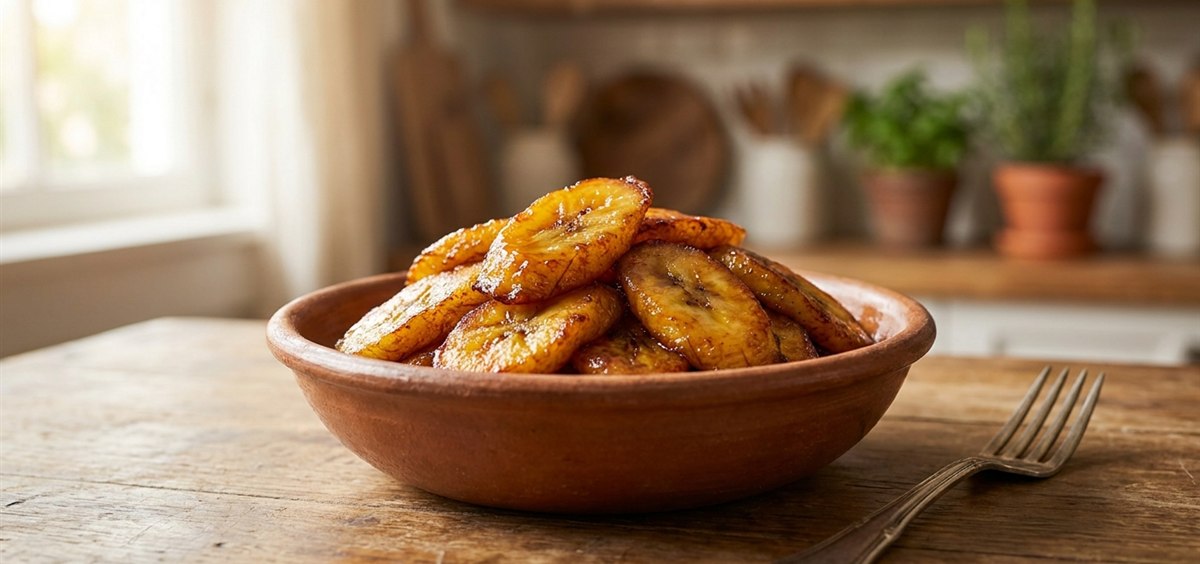
Sweet plantains matter in Venezuelan food because they bring sweetness, softness and contrast to savory dishes. When ripe plantains are sliced and fried as tajadas, they balance black beans, shredded beef, rice, cheese and corn-based foods. They are not a decorative side; they help the whole plate feel complete.
Why are sweet plantains so common in Venezuelan food?
In Venezuelan cooking, sweet plantains appear because they solve a very specific problem: they bring balance to plates that are savory, salty, earthy or rich. A Venezuelan meal often works through contrast, not through one dominant flavor. Rice softens, beans deepen, shredded beef brings savoriness, cheese adds salt, and tajadas give the sweet note that ties everything together.
That is why sweet plantains are so present in traditional plates, casual meals and home cooking. They do not need to be the center of the dish to matter. In many cases, their job is quieter but essential: they make a plate feel rounded.
This is especially clear in pabellón criollo. Without tajadas, the plate can still include rice, black beans and shredded beef, but it loses one of its most important contrasts. The sweetness of ripe plantain changes the rhythm of each bite. It gives relief, warmth and a soft edge to ingredients that can otherwise feel heavy.
What are tajadas in Venezuelan food?
Tajadas are ripe plantains sliced lengthwise or diagonally and fried until tender, golden and lightly caramelized. In Venezuelan Spanish, calling them tajadas matters because the word describes more than “fried plantains.” It points to a specific cut, a familiar texture and a role on the plate.
A good tajada should be soft inside, slightly golden outside and sweet without tasting burnt. It should bend easily, not crack like a chip. The goal is tenderness and caramelization, not crunch. That detail separates tajadas from other plantain preparations that may be thinner, greener or crispier.
The plantain must be ripe. Green plantain is starchy and firm, better for preparations like tostones. Ripe plantain is sweeter, softer and more aromatic. As the peel darkens, the starches convert into sugars, which is why a mature plantain browns beautifully in the pan and develops that deep sweetness Venezuelans expect in tajadas.
How ripe should plantains be for Venezuelan tajadas?
For Venezuelan tajadas, the plantain should be ripe enough to taste sweet and cook tender. A yellow peel with dark spots is usually a good sign. A mostly black peel can also work if the fruit is still firm enough to slice and handle. If the plantain is too green, the tajadas will taste starchy and dry. If it is too soft, it may fall apart in the pan.
The best point depends on what the dish needs. For a plate like pabellón, a sweeter plantain works beautifully because it can stand up to black beans and shredded beef. For breakfast-style plates with cheese or eggs, a slightly firmer ripe plantain may be easier to handle and less sweet.
The most common mistake is using the wrong stage of ripeness. A plantain that looks neat and yellow may not be sweet enough yet. Venezuelan tajadas need maturity. The dark spots are not a defect; they are part of the flavor.
Why do sweet plantains work so well with black beans and shredded beef?
Sweet plantains work with black beans and shredded beef because each element pushes the other into balance. Black beans are earthy and creamy. Shredded beef is savory, seasoned and often deeply cooked. Rice is neutral. Cheese is salty. Tajadas add sweetness and softness, creating contrast without interrupting the plate.
This is the architecture of pabellón criollo. Every component has a purpose:
- White rice gives a clean base.
- Black beans bring depth and creaminess.
- Shredded beef adds savory intensity.
- Tajadas bring sweetness and tenderness.
- Cheese, when present, adds salt and freshness.
When the tajadas are well made, the plate does not taste sweet overall. Instead, it tastes balanced. That is the key. Venezuelan food often uses sweetness in a controlled way, not to turn a savory meal into dessert, but to make the savory flavors easier to enjoy.
Are sweet plantains the same as bananas?
No. Plantains and bananas are related, but they are not used the same way in the kitchen. Plantains are starchier, larger and usually cooked before eating. Bananas are softer and sweeter when raw, and they are usually eaten as fruit.
This distinction matters because the behavior in the pan is different. A ripe plantain has enough structure to be sliced and fried while still becoming soft and caramelized. A banana would collapse too quickly and bring the wrong texture. Venezuelan tajadas depend on that balance between firmness and sweetness.
It is also important not to confuse ripe plantains with green plantains. Green plantains are firm, starchy and better for preparations that need crispness. Ripe plantains are sweeter and better for tajadas, where softness is part of the point.
How do sweet plantains connect to Venezuelan comfort food?
Sweet plantains connect to Venezuelan comfort food because they carry familiarity. Many Venezuelans associate tajadas with home plates, lunch counters, family meals and the kind of food that does not need to be explained. They are simple, but they have emotional weight.
There is also something generous about them. A plate with tajadas feels more complete, more abundant and more Venezuelan. They bring color, sweetness and memory. For people eating Venezuelan food outside Venezuela, especially in places like Miami, that detail can make a meal feel closer to home.
At PANNA, this is why ingredients like sweet plantains matter beyond their place on the plate. They are part of a larger Venezuelan language made of corn, cheese, beans, shredded meats, sauces and contrasts. When each element is handled with care, the food feels familiar even before someone can explain why.
Frequently Asked Questions
What are tajadas made of?
Tajadas are made from ripe plantains sliced and fried until soft, golden and sweet. In Venezuelan food, they are commonly served with savory dishes like pabellón criollo, rice, black beans, shredded beef or cheese.
Are tajadas sweet or savory?
Tajadas are naturally sweet because they are made with ripe plantains, but they are usually served with savory food. Their purpose is to balance salty, earthy and rich flavors on the plate.
Can green plantains be used for tajadas?
Green plantains are not ideal for tajadas because they are too starchy and firm. Ripe plantains are better because they become soft, sweet and lightly caramelized when fried.
Why are sweet plantains served with pabellón criollo?
Sweet plantains balance the savory beef, earthy black beans and neutral rice in pabellón criollo. They add softness and sweetness, making the whole plate feel more complete.
Sweet plantains may look like a side, but in Venezuelan food they carry technique, memory and balance. They turn a savory plate into something warmer and more complete. At PANNA, that Venezuelan sense of contrast is part of the experience: corn, cheese, beans, shredded meats and tajadas working together in the kind of meal that feels generous from the first bite.