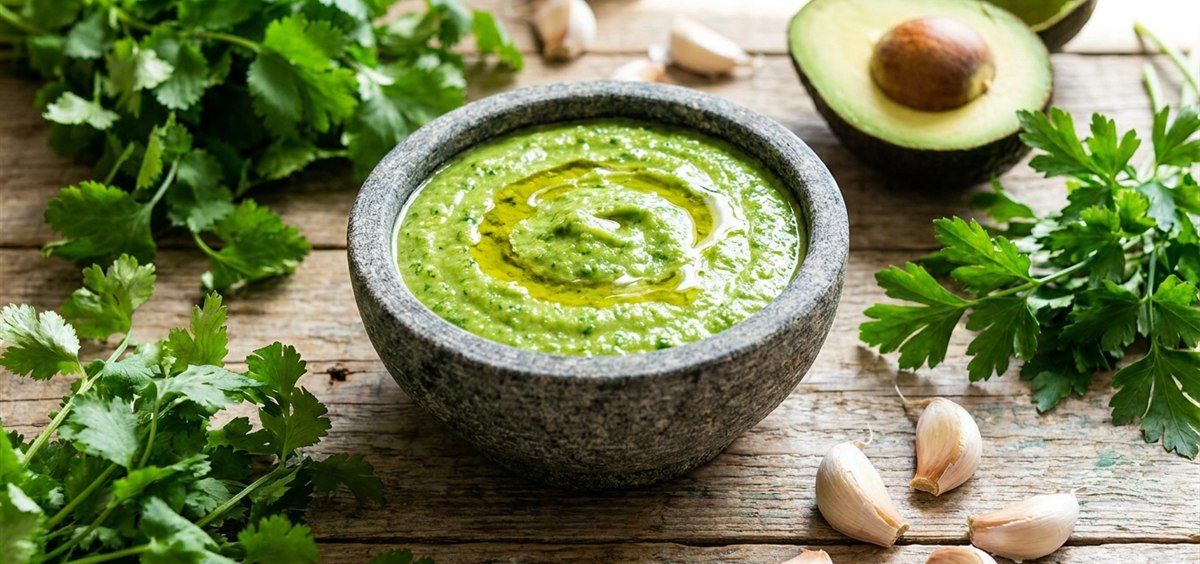
Guasacaca is a Venezuelan green sauce made with herbs, garlic, acidity, oil and, in some versions, avocado. It is used to brighten grilled meats, empanadas, arepas, tequeños and casual foods. Venezuelans love it because it adds freshness, moisture and flavor without hiding the dish underneath.
What is guasacaca in Venezuelan food?
Guasacaca is one of the most useful sauces in Venezuelan cooking because it does not belong to only one dish. It can appear beside grilled meats, fried empanadas, tequeños, arepas, yuca, chicken, steak or casual plates that need a fresh lift. Its role is not to decorate the food; its role is to make the bite more alive.
The base can vary from kitchen to kitchen, which is why guasacaca does not always look exactly the same. Some versions are more liquid and herb-forward. Others are creamier, especially when avocado is included. Some lean more on vinegar or lime. Others are softer, with garlic and herbs doing most of the work. What stays consistent is the purpose: green, fresh, savory, slightly acidic and easy to put on almost everything.
That flexibility is part of its Venezuelan identity. It is practical, generous and direct, the kind of sauce people add because the food simply tastes better with it.
Is guasacaca the same as guacamole?
No. Guasacaca is not the same as guacamole, even when avocado appears in the recipe. The comparison is common because both can be green and both may include avocado, but they behave differently on the table.
Guacamole is usually thicker and built around mashed avocado as the main ingredient. Guasacaca is more of a sauce or condiment. It often includes herbs, oil, vinegar or lime, garlic and seasonings, and it can be blended until pourable. In many Venezuelan versions, the herbs and acidity matter as much as the avocado, sometimes even more.
The difference is important because calling guasacaca “Venezuelan guacamole” makes it easier to explain quickly, but it also makes it less precise. Guasacaca is not meant only for chips or as a dip. It is made to move across hot foods, fried foods, grilled foods and stuffed foods. It can be spooned, drizzled or used generously without turning the dish into an avocado dish.
What ingredients usually go into guasacaca?
There is no single household formula for guasacaca, but the sauce usually depends on a few functional ingredients. Each one has a job. Herbs bring freshness. Garlic adds sharpness. Acid keeps the sauce bright. Oil gives body. Salt makes the flavors clear. Avocado, when used, adds creaminess.
Common guasacaca elements include:
- Fresh herbs such as cilantro or parsley.
- Garlic for aroma and intensity.
- Vinegar or lime juice for acidity.
- Oil for texture and body.
- Salt and pepper for balance.
- Avocado in creamier versions.
- Green pepper or onion in some preparations.
The exact flavor depends on proportion. Too much garlic can dominate. Too little acid can make the sauce feel flat. Too much oil can make it heavy. Too much avocado can turn it into something closer to a dip than a bright sauce. A good guasacaca should feel fresh, balanced and easy to keep eating.
Why does guasacaca work so well with fried foods?
Guasacaca works beautifully with fried foods because it cuts through richness. Fried dough, cheese and corn-based foods can be delicious, but they often need freshness and acidity to keep the bite from feeling too heavy. Guasacaca brings that lift.
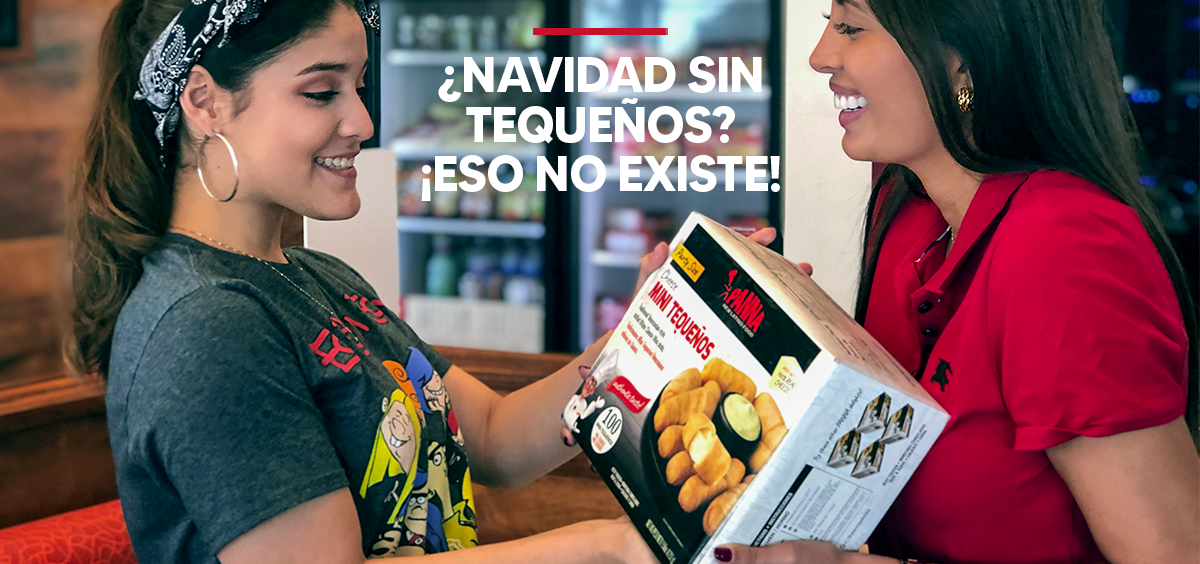
With empanadas, the sauce adds moisture and brightness to the corn shell and filling. With tequeños, it can contrast the warm cheese and crisp dough. With fried yuca or other casual foods, it gives the bite a sharper, greener note. The sauce does not erase the fried texture; it makes it easier to enjoy another bite.
This is one reason guasacaca feels so natural in Venezuelan street food. Many Venezuelan foods are warm, golden, cheesy, savory or fried. Guasacaca brings the opposite energy: fresh, herbal, acidic and light. That contrast is exactly why it works.
Why does guasacaca work with grilled meats and savory plates?
Guasacaca also works with grilled meats because it adds freshness to smoky, salty and savory flavors. A grilled steak, chicken or mixed plate can be rich and intense. Guasacaca gives it a green, acidic counterpoint that keeps the dish balanced.
The sauce behaves almost like a bridge. It connects meat to sides, fried items to fillings, and heavy elements to lighter ones. If the food is salty, guasacaca can make it feel brighter. If the food is dry, it adds moisture. If the plate is abundant, it helps each bite feel less dense.
That is why Venezuelans often use sauces generously. The sauce is not separate from the experience. It is part of how the food is meant to be eaten.
What is the right texture for guasacaca?
The right texture depends on the version, but guasacaca should usually be smooth enough to spread or pour and thick enough to cling to food. A watery sauce can disappear into the plate. A sauce that is too thick may sit heavily on top of the food instead of blending into the bite.
For empanadas and tequeños, a slightly thicker texture helps the sauce stay where it should. For grilled meats, a more pourable texture can work well because it spreads across the surface. If avocado is included, the sauce becomes creamier and softer. If herbs and oil lead the recipe, it may feel brighter and lighter.
The important thing is balance. Guasacaca should not taste oily, dull or harsh. It should make the food feel fresher.
How does guasacaca connect to Venezuelan hospitality?
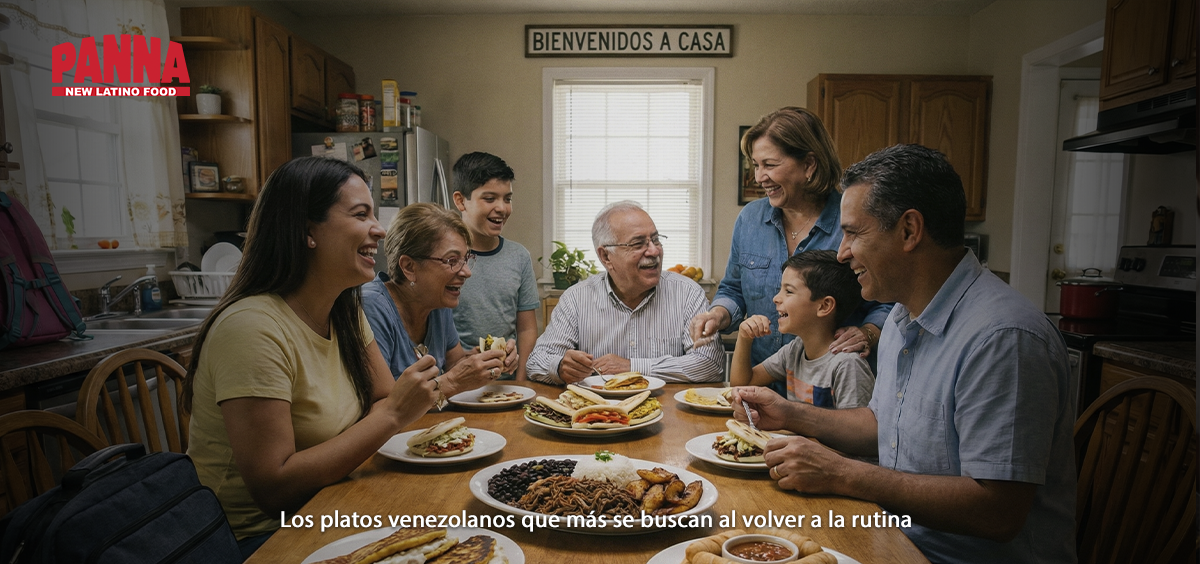
Guasacaca connects to Venezuelan hospitality because it invites people to adjust the bite. A bottle or small cup of sauce on the table says: add more if you want, make it yours, keep eating. That small gesture fits the Venezuelan way of serving food generously and without overcomplication.
At PANNA, sauces like guasacaca make sense because Venezuelan food is built around contrast: corn, cheese, guisos, fried dough, grilled flavors and fresh accents. When the sauce is right, it does not compete with the food. It makes the experience more complete.
Frequently Asked Questions
What is guasacaca made of?
Guasacaca is usually made with herbs, garlic, oil, vinegar or lime juice, salt and seasonings. Some versions include avocado for creaminess, while others are more herb-based and pourable.
Is guasacaca spicy?
Guasacaca is fresh and savory rather than spicy. Some versions may include heat, but the classic purpose is more about herbs, acidity, garlic and balance.
Is guasacaca served with arepas?
Yes. Guasacaca can be served with arepas, especially when the filling needs freshness or moisture. It also works with empanadas, tequeños, grilled meats, chicken and fried foods.
Is guasacaca the same as guacamole?
No. Guasacaca may include avocado, but it is usually a Venezuelan sauce with herbs, acidity, garlic and oil. Guacamole is thicker and more avocado-centered.
Guasacaca matters because it shows how Venezuelan food uses sauces with purpose. It freshens fried dough, lifts grilled meats, adds moisture to stuffed foods and makes a generous table feel even more alive. At PANNA, that kind of sauce belongs naturally beside the flavors people come for: warm corn, cheese, guisos, crisp bites and Venezuelan comfort served with the brightness that keeps you going back for one more bite.