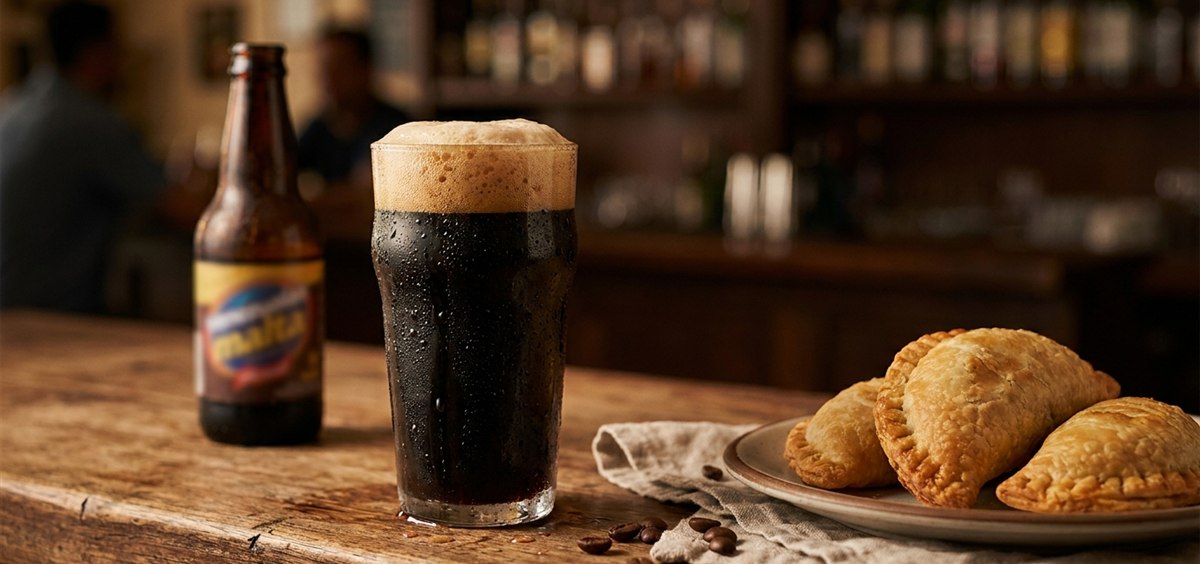
Malta is a sweet, dark, non-alcoholic malt beverage popular in Venezuela and other Latin American countries. It has a toasted, caramel-like flavor and is often served cold with empanadas, arepas, street food, breakfast or casual meals. Venezuelans love malta because it feels filling, familiar and connected to everyday food culture.
What is malta?
Malta can surprise people the first time they see it on a Venezuelan menu. It looks dark, almost like a stout, but it is not treated like an alcoholic drink. In Venezuelan food culture, malta is a cold, sweet malt beverage often served with empanadas, arepas, tequeños and strong breakfasts.
Its flavor is difficult to explain if someone has never tried it. Malta is sweet, toasted, slightly bitter in the background and heavier than a soda. It has a malted cereal character that makes it feel more substantial than a typical soft drink.
For many Venezuelans, malta is not just a beverage. It belongs to a specific kind of memory: school snacks, bakery counters, beach stops, empanadas in the morning, road trips and casual meals that did not need to be fancy to feel complete.
Is malta an alcoholic drink?
Malta is generally consumed as a non-alcoholic malt beverage. Its dark color and malt base can make first-time visitors think of beer, but in Venezuelan everyday culture, malta is treated more like a soft drink, not like alcohol.
The confusion comes from the word “malt.” Malt is also used in beer production, but malta as a drink has a different role. It is sweet, carbonated in many commercial versions, and served cold with food. People drink it with breakfast, snacks and casual meals, including moments where alcohol would not make sense.
That is part of why malta has such a strong place in Venezuela. It is not limited to nightlife or adult occasions. It can be part of a family meal, a quick breakfast or an afternoon craving.
What does malta taste like?
Malta tastes sweet, toasted and malty, with a deep caramel color and a flavor that feels more rounded than a regular soda. It can remind people of molasses, caramel, cereal, dark bread or a very sweet malted drink. The finish may have light bitterness, but sweetness is usually the first thing people notice.
Texture also matters. Malta often feels fuller than many soft drinks. It is not just bubbly and light; it has body. The sweetness contrasts with cheese, corn dough, fried empanadas and savory fillings, while the cold temperature helps refresh the bite.
For people trying malta for the first time, the reaction can be strong. Some love it immediately. Others need a few sips. Venezuelans who grew up with it simply know it belongs next to certain foods.
Why do Venezuelans drink malta with empanadas?
Malta and empanadas are one of those practical pairings that make sense through contrast. A Venezuelan empanada is usually made with corn dough, filled with cheese, shredded beef, chicken or another savory filling, then fried until golden. It is warm, salty, crisp at the edge and filling. Malta brings cold sweetness and toasted depth.
That contrast is exactly why the pairing works. The empanada gives salt, fat, corn and heat. The malta gives sweetness, coldness and body. Together, they create a breakfast or snack that feels complete without needing many extras.
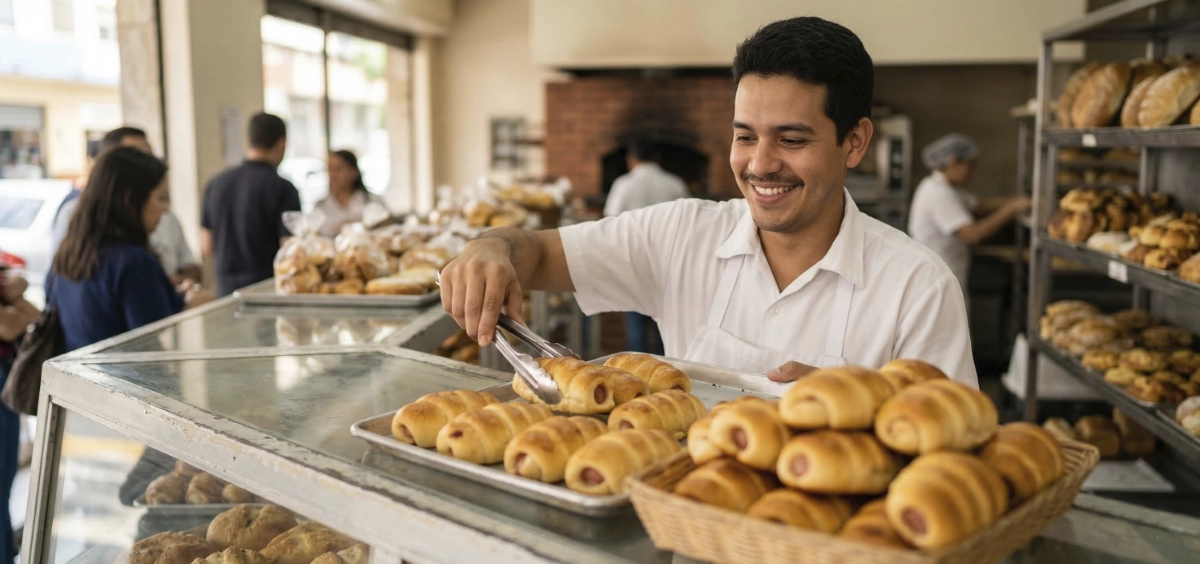
This pairing is especially common in bakeries, counters, beach mornings, quick stops or street-food-style meals. It is about satisfaction. The combination feels Venezuelan because it is direct, abundant and easy to remember.
Why does malta work with Venezuelan street food?
Malta works with Venezuelan street food because many Venezuelan casual dishes are warm, savory, fried, cheesy or corn-based. Arepas, empanadas, tequeños and cachapas all have enough texture and flavor to stand beside a drink with body. A lighter soda may refresh, but malta adds another layer of familiarity.
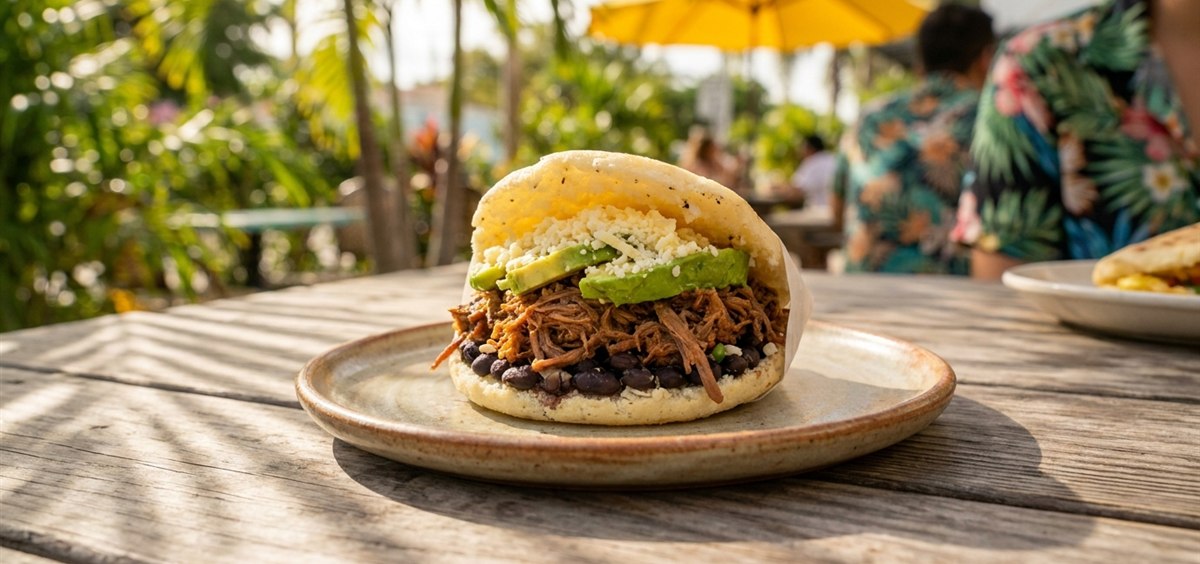
With tequeños, malta balances salty cheese and fried dough. With arepas, it can accompany a filling like carne mechada, chicken or cheese without feeling too delicate. With cachapas, the pairing becomes sweeter, because both the drink and the dish carry sweetness, while the cheese keeps the meal grounded.
The key is that malta is not neutral. It has personality. That is why it does not work like water or a simple sparkling drink. It becomes part of the eating experience, especially when the food is casual, warm and comforting.
How is malta different from soda or beer?
Malta sits in its own space. It is not beer because it is commonly consumed as a non-alcoholic beverage in Venezuelan food culture. It is not a regular soda because its flavor is darker, maltier and more filling. It is sweet and carbonated in many cases, but it has a toasted depth that makes it different from cola or lemon-lime drinks.
The easiest way to understand it is by function:
- Like soda, it is usually served cold.
- Like a malt drink, it has toasted cereal depth.
- Unlike beer, it is generally consumed as non-alcoholic.
- Unlike many sodas, it feels heavier.
- Unlike juice, it brings sweetness without fruit acidity.
That unusual position makes malta memorable for visitors. It does not fit neatly into familiar categories.
Why does malta feel nostalgic for Venezuelans?
Malta feels nostalgic because it is tied to ordinary moments, not only special occasions. Many Venezuelan food memories are not about formal meals. They are about buying an empanada, opening a cold drink, eating after school, stopping during a trip, sharing food at a counter or ordering something quick that still feels like home.
Malta belongs to that world. It is sweet, familiar and instantly recognizable. For Venezuelans outside Venezuela, seeing it on a menu can bring back a whole setting: the sound of a bakery, the smell of fried empanadas, the cold bottle or can, the first sip with something salty and hot.
At PANNA, drinks like malta help complete the Venezuelan experience because they connect the food to the way people actually eat it. The dish matters, but the pairing makes the memory stronger.
Frequently Asked Questions
What is malta made from?
Malta is a malt-based beverage with a sweet, toasted flavor. Versions vary by brand, but the drink is known for its dark color, malty body and sweet taste.
Is malta alcoholic?
Malta is generally consumed as a non-alcoholic beverage in Venezuelan food culture. Its dark color and malt flavor may remind people of beer, but it is commonly treated like a soft drink.
What food goes well with malta?
Malta goes well with Venezuelan empanadas, arepas, tequeños, cachapas and casual street food. It pairs especially well with salty, fried, cheesy or corn-based dishes.
Does malta taste like beer?
Malta can have a toasted malt flavor that reminds some people of beer, but it is much sweeter and usually consumed as a non-alcoholic drink. Its flavor is closer to a sweet malt beverage than a typical beer.
Malta matters because Venezuelan food culture is not only about the dish on the plate. It is also about what sits beside it: the cold drink with the hot empanada, the sweetness next to salty cheese, the familiar sip that makes a casual meal feel complete. At PANNA, trying malta with Venezuelan food is one more way to understand the experience as it is lived: warm, generous, familiar and full of everyday flavor.