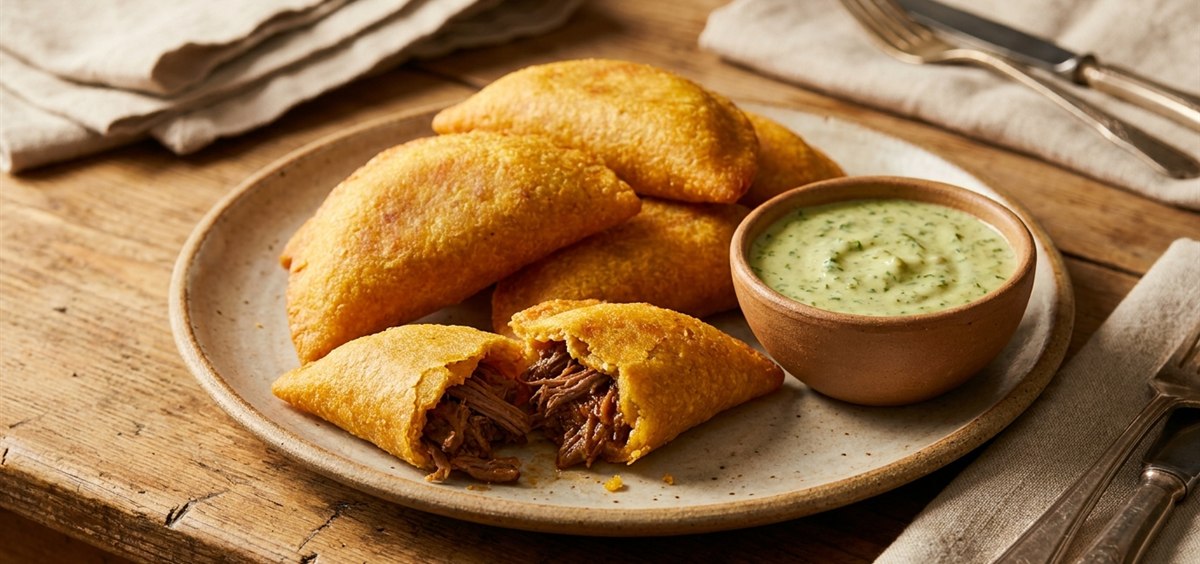
Venezuelan empanadas are different from many other Latin American empanadas because they are usually made with corn dough, fried until crisp outside and filled with savory ingredients like cheese, shredded beef, chicken, black beans or pabellón. Their texture is more tender and corn-forward than baked wheat empanadas, with a golden shell that bends before it breaks.
Why do Venezuelan empanadas stand apart from other empanadas?
Almost every Latin American country has its own empanada, and that is exactly why the word can be confusing. An empanada in one place may be baked, made with wheat flour, sealed like a pastry and eaten as a snack. In Venezuela, the most recognizable empanada is usually made with corn dough, fried, generously filled and served hot, often as breakfast or street food.
The difference is not only cultural; it is technical. Corn dough behaves differently from wheat dough. It does not stretch in the same way, it does not form flaky layers, and it does not need the same handling. A Venezuelan empanada is not trying to be a pastry. It is softer inside, crisp at the edges, and built around the flavor of corn.
What is the dough of a Venezuelan empanada made from?
The dough for a Venezuelan empanada is commonly made with precooked cornmeal, water, salt. Some cooks may add a little sugar or seasoning depending on the style, but the base is simple. What matters is hydration, texture and how the dough is shaped before frying.
The dough should be soft enough to fold without cracking, but firm enough to hold the filling. If it is too dry, the empanada opens at the edges or breaks when folded. If it is too wet, it becomes difficult to seal and may absorb too much oil. The right dough feels smooth and slightly moist, not sticky or crumbly.
This corn-based dough gives Venezuelan empanadas their identity. It creates a shell that is different from wheat pastry: less flaky, more tender, and connected to the same corn tradition that gives Venezuela its arepas and cachapas.
How are Venezuelan empanadas cooked?
Venezuelan empanadas are fried, which is one of the reasons their texture is so distinctive. The hot oil sets the outside quickly, creating a golden surface while the inside stays tender. The best empanadas are crisp but not hard, sealed but not dry, and filled enough to feel generous without bursting.
Frying also demands balance. If the oil is not hot enough, the dough can absorb too much oil and feel heavy. If it is too hot, the outside may brown before the filling warms properly.
A well-made Venezuelan empanada usually has:
- A thin but strong corn shell.
- A sealed edge that holds the filling.
- A golden exterior with slight crispness.
- A warm, moist interior.
- Enough filling to make every bite complete.
What are the most common Venezuelan empanada fillings?
Venezuelan empanadas are loved because the dough works with many fillings. The corn shell is mild enough to support cheese, meats, beans and combinations without competing with them. Still, the filling must have the right moisture. Too dry, and the empanada feels empty; too wet, and the dough can soften or break.
Common fillings include:
- Cheese, usually salty and simple.
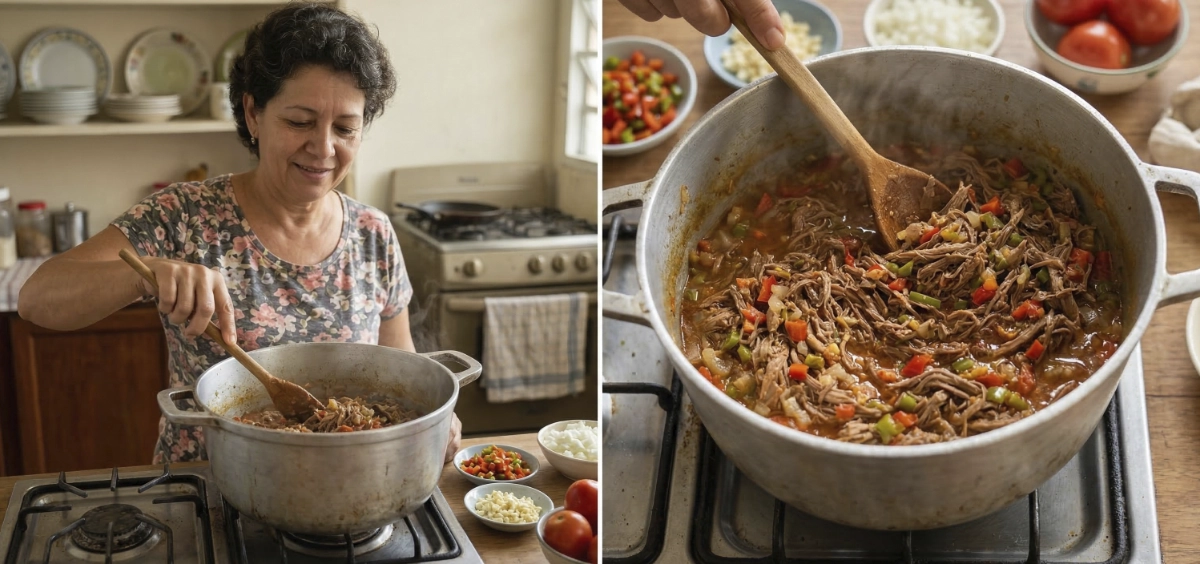
- Shredded beef, juicy and deeply savory.
- Shredded chicken, seasoned and tender.
- Ground beef, practical and flavorful.
- Black beans, often paired with cheese.
- Pabellón-style combinations, with beef, beans, plantains and cheese.
The pabellón empanada is a good example of Venezuelan logic in one bite. Sweet plantains, salty cheese, black beans and beef create contrast inside a crisp corn shell, turning the elements of a traditional plate into something portable.
How are Venezuelan empanadas different from Colombian empanadas?
Venezuelan and Colombian empanadas can both be corn-based and fried, so the difference is not always as simple as corn versus wheat. The distinction usually comes through size, filling style, seasoning and cultural use.
Colombian empanadas are often smaller and may include potato or a seasoned meat-and-potato filling, depending on the region. Venezuelan empanadas are frequently larger, more associated with breakfast or beach-style eating, and often feature fillings like cheese, shredded beef, chicken, cazón in coastal areas, black beans or pabellón combinations.
The point is not to turn the comparison into a competition. Both traditions are valuable. But if someone orders a Venezuelan empanada expecting a small pastry or a potato-heavy bite, they may be surprised by the size, corn flavor and generous filling.
How are Venezuelan empanadas different from baked wheat empanadas?
Baked wheat empanadas, common in several Latin American traditions, usually have a firmer pastry-like shell. Depending on the recipe, they may be flaky, buttery or bread-like. Venezuelan empanadas, by contrast, are commonly fried and corn-based, so the shell has a different bite.
A baked wheat empanada often emphasizes the pastry. A Venezuelan corn empanada emphasizes the relationship between the shell and the filling. The corn flavor is part of the dish, not just a container.
The difference can be understood this way:
- Wheat dough stretches; corn dough is shaped more gently.
- Baked empanadas can be flaky; Venezuelan empanadas are usually crisp and tender.
- Wheat pastry can taste buttery; corn dough tastes more earthy and direct.
- Baked empanadas are often oven-finished; Venezuelan empanadas are usually fried.
- Venezuelan empanadas often feel more like a full meal than a small pastry.
When do Venezuelans usually eat empanadas?
In Venezuela, empanadas are strongly connected to breakfast, casual meals and street food. They are the kind of food people eat standing up, at a counter, near the beach, on the way to work, or during a relaxed weekend morning. They are practical, but they also carry memory.
Part of their appeal is that they are immediate. You do not need a formal table to enjoy an empanada. You need it hot, well-filled and freshly fried. That is why the first bite matters so much: the crisp edge, the steam from the filling, the saltiness of the cheese or the richness of the meat.
At PANNA, empanadas fit naturally into that Venezuelan way of eating: familiar, generous and made for the moment when you want something warm, savory and unmistakably comforting.
Frequently Asked Questions
Are Venezuelan empanadas made with corn or wheat?
Most traditional Venezuelan empanadas are made with precooked cornmeal dough, not wheat pastry. This gives them their characteristic corn flavor, tender interior and fried golden shell.
Are Venezuelan empanadas fried or baked?
Venezuelan empanadas are usually fried. Frying creates the crisp outside and warm, soft interior that define the classic Venezuelan style.
What is the most popular Venezuelan empanada filling?
Cheese, shredded beef, shredded chicken and ground beef are very common. Pabellón-style empanadas are also popular because they combine several classic Venezuelan flavors in one filling.
Are Venezuelan empanadas gluten free?
Because many Venezuelan empanadas are made with corn dough, they may not contain wheat in the dough. However, gluten-free status depends on the full recipe, filling and kitchen handling, so it should always be confirmed directly with the restaurant.
A Venezuelan empanada is not just a folded snack. It is corn, filling, heat, texture and memory working together. At PANNA, that difference is part of the experience: the kind of food that feels casual at first, then reminds you why Venezuelan flavors are so easy to crave again.