Venezuelan comfort food is food built around warmth, abundance and familiar contrasts: corn, cheese, beans, shredded meats, fried dough, sweet plantains and sauces. It feels familiar because it connects everyday meals with memory, family, texture and generosity. The comfort comes not from one dish, but from how the flavors work together.
What does comfort food mean in Venezuelan cuisine?
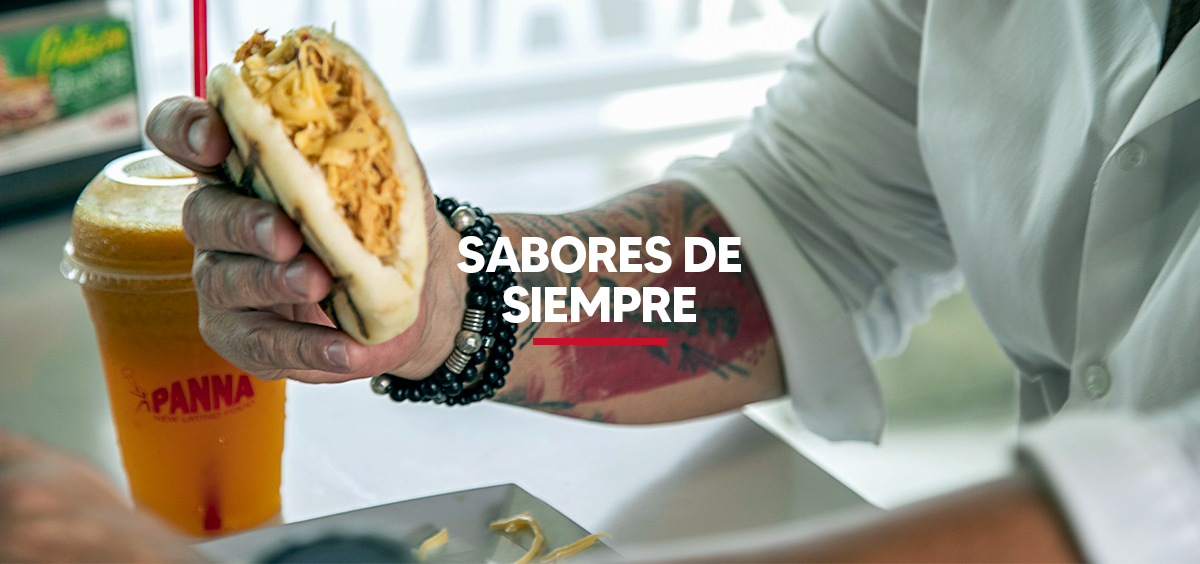
Comfort food in Venezuelan cuisine is not only about eating something heavy or nostalgic. It is about recognizing a structure of flavors that feels close, even when the plate is simple. A warm arepa with cheese, a plate of pabellón, a cachapa folded around salty cheese, or tequeños passed around the table all carry the same idea: food that welcomes you quickly.
Venezuelan comfort often begins with ingredients that are humble but deeply expressive. Corn becomes arepas, cachapas and empanadas. Beans become a creamy, earthy base. Beef or chicken becomes shredded, seasoned and soft enough to mix into every bite. Plantains turn sweet when ripe and balance savory plates. Cheese adds salt, creaminess and familiarity.
That is why Venezuelan comfort food feels direct. It does not need complicated presentation to create emotion. It depends on warmth, proportion and contrast.
Why do corn and cheese appear so often in Venezuelan comfort food?
Corn and cheese appear so often because they create one of the most reliable balances in Venezuelan cooking. Corn brings body, softness and a mild sweetness or earthiness depending on the preparation. Cheese brings salt, fat and texture. Together, they make dishes feel complete without needing too much else.
In an arepa, the corn dough is neutral enough to hold many fillings. Add cheese, and the arepa becomes simple but satisfying. In a cachapa, sweet corn is already expressive, but cheese prevents the dish from feeling too sweet. In a tequeño, cheese is the center of the experience, wrapped in dough and fried until golden.
The technique changes from dish to dish, but the logic stays the same:
- Corn gives structure.
- Cheese adds salt and richness.
- Heat softens both.
- Texture makes the bite memorable.
- Contrast keeps the dish from feeling flat.
This is one reason Venezuelan food travels well emotionally. Even outside Venezuela, the combination of warm corn and cheese can feel familiar almost immediately.
How do slow-cooked fillings create comfort?
Slow-cooked fillings create comfort because they bring depth and moisture. Shredded beef, shredded chicken and beans are not only ingredients; they are textures that hold seasoning and spread flavor through the whole dish.
Carne mechada, for example, is not just beef pulled apart. Its pleasure comes from cooking the meat until it is tender enough to shred, then seasoning it so the flavor reaches the fibers instead of sitting only on the surface. If it is too dry, it loses comfort. If it is too wet, it can make an arepa or empanada collapse. The right point is juicy but controlled.
Chicken works in a similar way. It needs tenderness, seasoning and enough moisture to feel generous without overwhelming the corn base. Black beans bring another kind of comfort: earthy, creamy and grounding. They soften the intensity of meats and pair beautifully with rice, cheese or sweet plantains.
Why are fried foods so connected to Venezuelan comfort?
Fried foods are connected to Venezuelan comfort because they bring immediacy. A hot empanada, a tequeño just out of the fryer or a crisp edge on a corn dough tells you the food is ready to be eaten now. The sound, smell and texture all matter.
But good frying is not about making food oily. It is about creating contrast. The exterior should set quickly, becoming golden and structured, while the inside stays warm and tender. If the oil is too cool, the food absorbs too much oil and feels heavy. If it is too hot, the outside darkens before the inside is right.
That technical detail is part of the comfort. A Venezuelan empanada should have a crisp edge, but it should not become hard. A tequeño should be golden outside, with cheese softened inside. Fried food feels comforting when the texture is controlled, not when it is careless.
Why do sweet plantains make savory Venezuelan dishes feel complete?
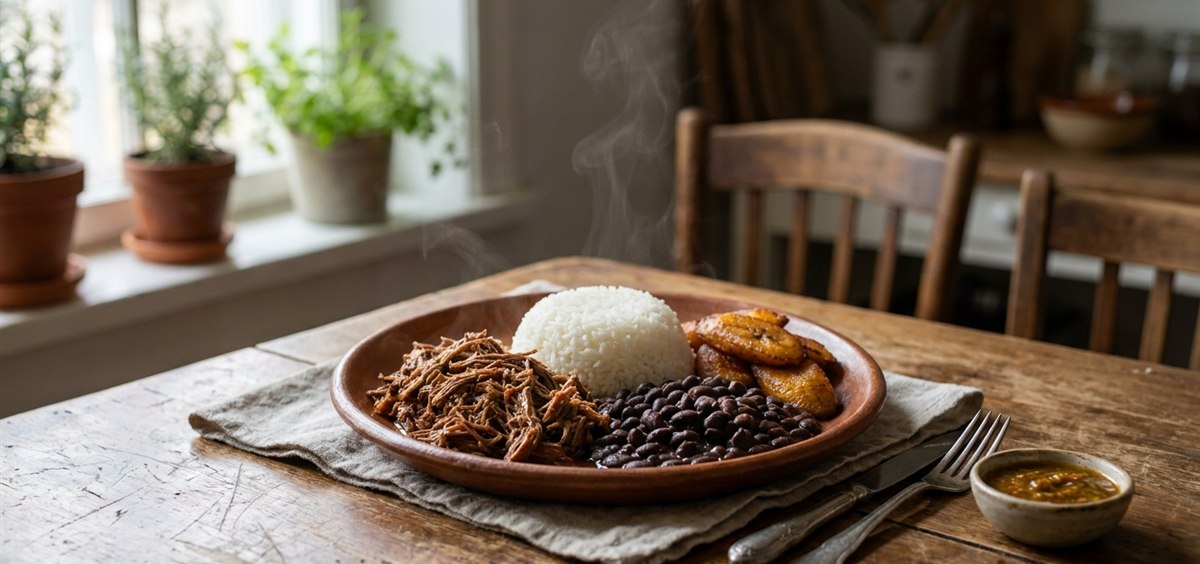
Sweet plantains, especially tajadas, make savory Venezuelan dishes feel complete because they add softness and sweetness where the plate needs relief. In pabellón criollo, for example, rice, black beans and shredded beef create a savory, earthy foundation. Tajadas bring a sweet, tender note that changes the rhythm of the plate.
This does not mean the dish becomes sweet overall. The plantain works as contrast. It makes the beans taste deeper, the beef feel more savory and the cheese, when present, taste saltier. That is the intelligence of many Venezuelan combinations: no element has to do everything alone.
A good tajada depends on ripeness. Green plantain is too starchy for this role. Ripe plantain, with dark spots on the peel, has the sweetness and softness needed for caramelization. When fried correctly, it becomes tender, golden and naturally sweet without turning into dessert.
Why does Venezuelan comfort food feel familiar even to people trying it for the first time?
Venezuelan comfort food can feel familiar to first-time visitors because it uses universal signals of comfort: warm dough, melted cheese, slow-cooked fillings, crisp edges, rice, beans and sweet-savory balance. Even if someone does not know the names, the sensations are easy to understand.
That is especially true in places like Miami, where many people come from different Latin American backgrounds. They may recognize corn, plantains, beans or fried dough from their own food memories, but Venezuelan cuisine arranges those elements in its own way. The result feels both new and close.
At PANNA, this is part of the experience. A table with arepas, tequeños, empanadas, cachapas or a complete plate already tells the story: Venezuelan food is generous, warm and built to be shared.
Frequently Asked Questions
What is considered Venezuelan comfort food?
Venezuelan comfort food includes dishes like arepas, cachapas, empanadas, tequeños, pabellón criollo, shredded meats, black beans, cheese and sweet plantains. These foods feel comforting because they combine warmth, texture, abundance and familiar flavors.
Is Venezuelan comfort food always heavy?
Not always. Some dishes are rich and filling, but comfort in Venezuelan food also comes from balance. An arepa with cheese, a cachapa with sweet corn or a bowl with rice, beans and protein can feel comforting without being excessive.
Why is corn so important in Venezuelan comfort food?
Corn is important because it forms the base of many Venezuelan classics, including arepas, cachapas and empanadas. It gives structure, warmth and a familiar flavor that works with cheese, meats, beans and sauces.
What Venezuelan dish should I try if I want comfort food?
Start with an arepa if you want something handheld and savory, a cachapa if you want sweet corn and cheese, tequeños if you want something shareable, or pabellón if you want a complete traditional plate.
Venezuelan comfort food feels familiar because it is built with intention: corn for warmth, cheese for salt and creaminess, guisos for depth, tajadas for sweetness and fried dough for texture. At PANNA, that comfort becomes a real table experience, the kind that lets you taste Venezuela through generous food, familiar contrasts and dishes made to be shared.