Venezuelan tequeños and mozzarella sticks are both fried cheese appetizers, but they are not the same. Tequeños are made by wrapping firm white cheese in thin wheat dough, then frying until golden. Mozzarella sticks are usually coated in breadcrumbs. The difference is in the dough, cheese texture, flavor, and cultural role.
Are tequeños the same as mozzarella sticks?
Tequeños are often compared to mozzarella sticks because both are warm, cheesy and fried. For someone discovering Venezuelan food in the United States, the comparison is understandable. They both arrive golden, they both make sense as appetizers, and they both satisfy the same basic craving: crisp outside, soft cheese inside.
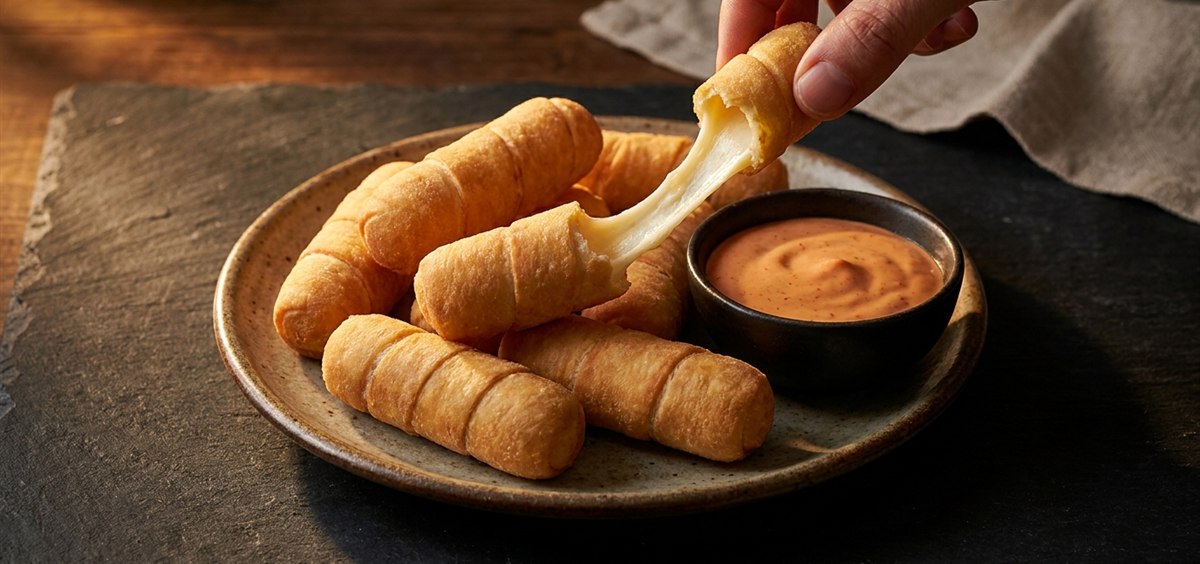
But the experience is different. A mozzarella stick is usually a cheese stick coated in flour, egg and breadcrumbs before frying. A Venezuelan tequeño is a piece of cheese wrapped in a strip of dough. That wrapping changes the texture completely. Instead of a breadcrumb crust, the tequeño has a smooth, thin, golden dough layer that protects the cheese and gives the bite a different structure.
The cultural role is also different. Mozzarella sticks are familiar bar food or casual appetizers in the United States. Tequeños are tied to Venezuelan parties, birthdays, family gatherings, school events, breakfast counters and shared tables. They are not just “fried cheese”; they are one of the first things people expect to see when Venezuelans gather.
How is tequeño dough different from breadcrumb coating?
The dough is one of the clearest differences between tequeños and mozzarella sticks. A tequeño is wrapped, not breaded. The dough is usually wheat-based, rolled thin and cut into strips that spiral around the cheese. This creates a continuous cover that seals the cheese inside while frying.
Breadcrumb coating behaves differently. It creates a rougher, crispier crust that is separate from the cheese. It can be crunchy, but it does not have the same soft-to-crisp transition as tequeño dough. In a tequeño, the outside should be golden and lightly crisp, but not crumbly. The dough should feel integrated with the cheese, not like a separate shell.
The wrap also affects technique. If the dough is too thick, the tequeño feels heavy and bready. If it is too thin or poorly sealed, the cheese can leak out. A good tequeño depends on overlap, pressure and closed tips. The dough is not decoration; it is the structure that allows the cheese to soften without escaping.
Why does the cheese matter so much in Venezuelan tequeños?
The cheese in a tequeño needs to behave differently from the mozzarella in a mozzarella stick. Mozzarella is known for melting and stretching, which is exactly what many mozzarella sticks want. A tequeño usually needs a firmer white cheese with enough salt and structure to hold its shape during frying.
If the cheese melts too quickly, it can break through the dough and leak into the oil. If it does not soften at all, the tequeño feels stiff and disappointing. The ideal tequeño cheese warms, softens and becomes creamy while still staying inside the dough.
Flavor also matters. Mozzarella is mild. A Venezuelan-style tequeño cheese should bring more salt and presence. Since the dough is simple, the cheese has to carry much of the flavor. A bland cheese can make the whole tequeño taste flat, even if the wrapping and frying are correct.
A good tequeño cheese should:
- Hold its shape during frying.
- Soften without disappearing.
- Bring a clean salty flavor.
- Balance the mild dough.
- Create a warm center without leaking everywhere.
That cheese behavior is one reason tequeños are not just a Venezuelan version of mozzarella sticks.
How does the frying change the final texture?
Frying tequeños and mozzarella sticks may look similar from the outside, but the textures develop differently. In a mozzarella stick, the breadcrumb coating becomes the main exterior texture. In a tequeño, the dough becomes golden, smooth and lightly crisp.
The oil temperature matters for both, but tequeños are especially sensitive because the dough must cook and the cheese must soften at the same time. If the oil is too cool, the dough can absorb oil and feel heavy. If it is too hot, the outside browns too quickly before the cheese warms properly. If the ends are not sealed, the cheese may escape.
A well-fried tequeño should not feel greasy. It should be golden outside, warm inside and easy to bite. The dough should give a little resistance, then the cheese should soften the bite. The goal is not an explosive cheese pull; the goal is balance.
Why are tequeños so important at Venezuelan parties?
Tequeños have a social role that mozzarella sticks usually do not carry. In Venezuelan culture, tequeños are strongly associated with celebration and hospitality. They appear at birthdays, weddings, school events, office gatherings, family weekends and casual meals. When people say tequeños disappear first, it is not only because they taste good. It is because everyone knows exactly what they mean at the table.
They are easy to pass, easy to eat and easy to love. Children understand them immediately. Adults reach for them without thinking. People new to Venezuelan food usually recognize the comfort of warm cheese and fried dough before they learn the name.
This is why tequeños are such a strong introduction to Venezuelan food. They do not require a long explanation, but they still carry identity. They are simple enough for everyone, but specific enough to be unmistakably Venezuelan.
Which one should you try if you are new to Venezuelan food?
If you are new to Venezuelan food, tequeños are one of the easiest first choices. They are familiar enough to understand, but different enough to show you something specific about Venezuelan cooking. The dough, the cheese and the party culture behind them create a different experience from mozzarella sticks.
Mozzarella sticks can be satisfying, especially when someone wants a crunchy breadcrumb coating and a stretchy cheese pull. Tequeños offer another kind of pleasure: a wrapped dough, a saltier cheese center, a cleaner bite and a strong connection to Venezuelan gatherings.
The best way to understand the difference is to taste them hot. A tequeño should feel warm, golden, salty and comforting without needing to be complicated. That is why it works so well at PANNA, especially as a first bite before arepas, empanadas, cachapas or a fuller Venezuelan meal.
Frequently Asked Questions
Are tequeños just mozzarella sticks?
No. Tequeños are made with cheese wrapped in dough, while mozzarella sticks are usually breaded. The texture, cheese behavior and cultural role are different.
What cheese is used in tequeños?
Tequeños usually use a firm white cheese that can soften during frying without melting too quickly. The cheese should be salty enough to balance the mild dough.
Are tequeños breaded?
Traditional Venezuelan tequeños are wrapped in dough, not coated in breadcrumbs. That wrapped dough gives them a smoother, golden exterior.
Do tequeños taste like mozzarella sticks?
They share the comfort of fried cheese, but tequeños usually taste saltier, less breadcrumb-heavy and more dough-wrapped. The bite is smoother and more connected to Venezuelan party food.
Tequeños and mozzarella sticks may look related from a distance, but they belong to different food cultures. One is breaded, the other is wrapped. One leans on mozzarella stretch, the other on salty white cheese and thin dough. At PANNA, tequeños are more than an appetizer; they are the Venezuelan way to start the table, warm, golden and ready to disappear before anyone admits they took the last one.