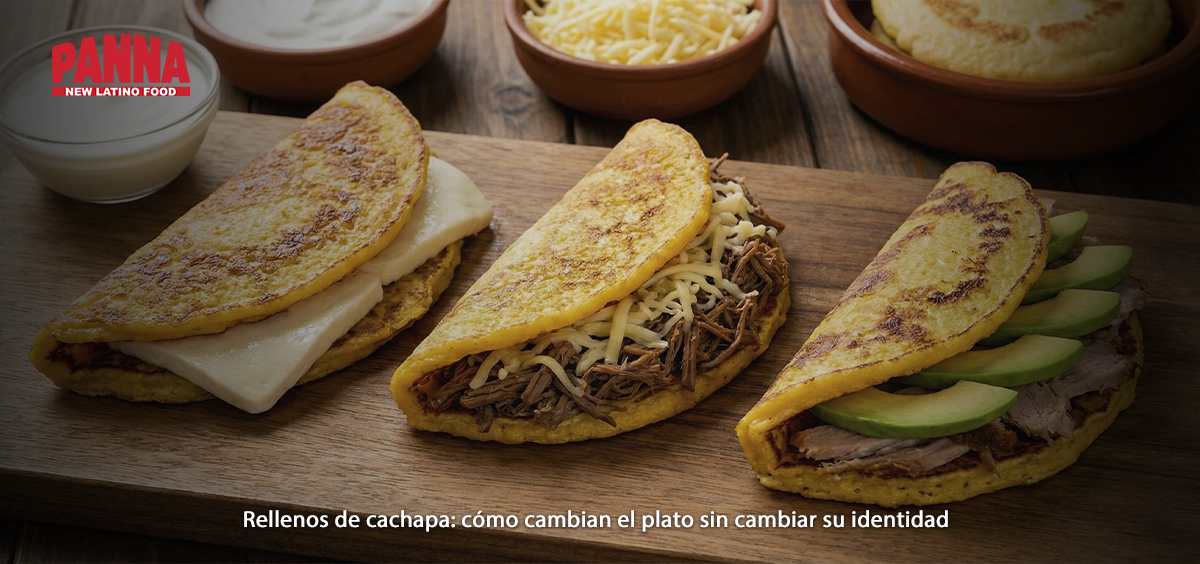
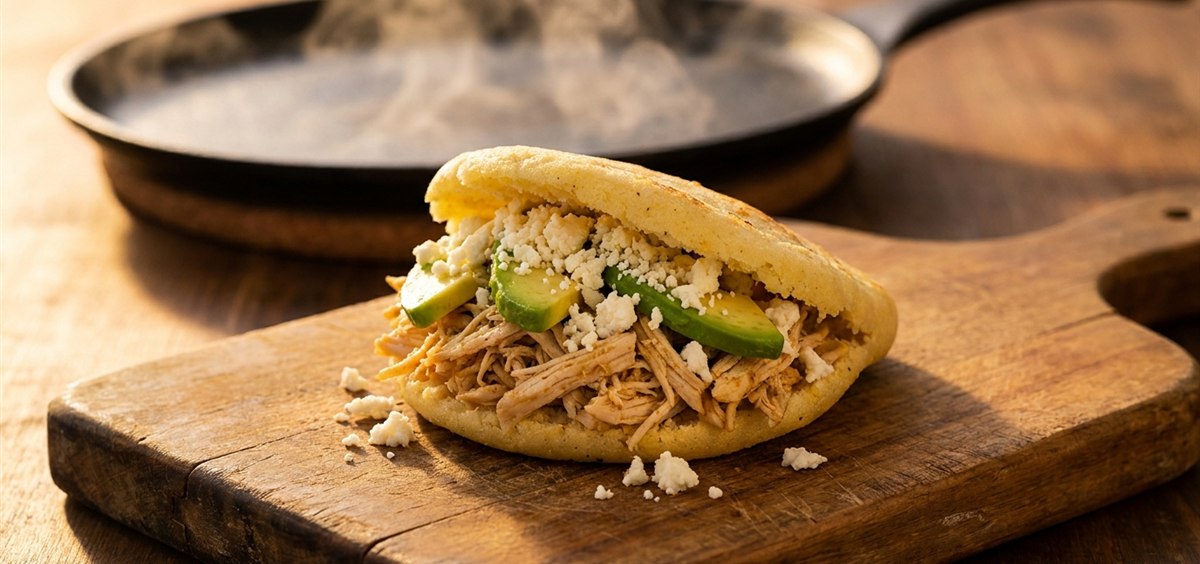
The main difference between Venezuelan and Colombian arepas is how they are usually served and eaten. Venezuelan arepas are often thicker, opened like a pocket and filled with cheese, meats, beans, chicken or other ingredients. Colombian arepas vary widely by region and are often served as a side, breakfast food or topped rather than deeply stuffed.
What is the main difference between Venezuelan and Colombian arepas?
Venezuelan and Colombian arepas come from neighboring food cultures that share corn as a central ingredient, so it is natural that people compare them. Both are important. Both are traditional. Both can be delicious. But they do not always play the same role on the table.
In the Venezuelan tradition, the arepa is often treated as a complete meal. It is shaped, cooked, opened and filled. The filling is not a minor detail; it defines the experience. A Venezuelan arepa can hold shredded beef, chicken, cheese, black beans, avocado, eggs or combinations that turn it into breakfast, lunch, dinner or a late-night bite.
In Colombia, arepas have many regional expressions. Some are thin, some are thicker, some are sweet, some are cheesy, some are served plain, some accompany a meal, and some are topped with butter, cheese or other ingredients. That variety is part of Colombian arepa culture.
The real difference is not that one country has arepas and the other does not. The difference is how each culture uses them.
What is a Venezuelan arepa?
A Venezuelan arepa is a round corn cake usually made with precooked cornmeal, water and salt. The dough is shaped by hand, cooked on a griddle or similar surface, and often finished until the outside has enough structure to be opened. Inside, it should remain tender enough to hold a generous filling without becoming dry.
The defining feature is the pocket. Venezuelan arepas are commonly split open and filled, which makes them highly adaptable. The arepa itself has a mild corn flavor, so the filling becomes the center of the dish.
Common Venezuelan arepa fillings include:
- Cheese, fresh, sliced or grated.
- Carne mechada, or Venezuelan shredded beef.
- Shredded chicken.
- Black beans with cheese.
- Avocado-based combinations.
- Eggs, ham or breakfast-style fillings.
This is why an arepa in Venezuela can be simple or abundant. It can be a quick breakfast with cheese or a full handheld meal with several ingredients. The format is practical, but it also carries a strong sense of identity.
What is a Colombian arepa?
A Colombian arepa is also a corn-based preparation, but its forms vary significantly by region. Some Colombian arepas are thinner and served with butter or cheese. Others are thicker, sweeter or made with fresh corn. In certain regions, arepas may be grilled, served alongside meats, eaten at breakfast or used as a base for toppings.
Because Colombia has many regional arepa styles, it is difficult to describe one single Colombian arepa. That is precisely the point. Colombian arepas are not defined only by stuffing. They may function as a side, a breakfast staple, a snack or part of a larger plate.
Some Colombian arepas are more neutral and accompany food. Others, like cheese arepas or sweet corn-style versions, carry more flavor on their own. The style depends heavily on region, household and occasion.
Are Venezuelan arepas usually filled?
Yes. Venezuelan arepas are very often filled, and that is one of their strongest identifying features. The arepa is cooked with enough thickness to be opened, then stuffed with ingredients that create a full bite. This is why Venezuelan arepas are commonly described as handheld meals.
The filling changes the personality of the arepa. Cheese makes it simple and salty. Carne mechada makes it juicy and savory. Black beans bring earthiness. Chicken adds softness. Avocado brings creaminess. When several ingredients come together, the arepa becomes layered, but still easy to understand.
The dough must support that role. If it is too thin, it cannot hold the filling. If it is too dry, it breaks. If it is too dense, it overwhelms the inside. A good Venezuelan arepa gives structure without taking over.
Are Colombian arepas usually stuffed?
Some Colombian arepas can be stuffed or filled, but many are not used in the same way as Venezuelan arepas. In many Colombian contexts, the arepa is served beside food, topped lightly or eaten with butter and cheese. Again, this depends on region.
This is where many comparisons become too simple. It would be incorrect to say that Colombian arepas are never filled. It would also be incorrect to say they work exactly like Venezuelan arepas. The Colombian arepa tradition is broader and more regionally varied, while the Venezuelan arepa is widely recognized for its filled, meal-like format.
For someone trying both for the first time, the easiest distinction is this: a Venezuelan arepa often feels like the main event, while many Colombian arepas may feel like part of a larger plate or a simpler corn-based food. There are exceptions, but the pattern helps.
How does the texture differ between Venezuelan and Colombian arepas?
Venezuelan arepas often aim for a contrast between a lightly firm outside and a tender inside. Because they are frequently opened and filled, the structure matters. The arepa should hold its shape and contain the filling without becoming tough.
Colombian arepas vary more widely in texture. Some are thinner and firmer. Others are soft and cheesy. Some are made with sweet corn and feel more tender. Others are grilled until they have a stronger surface. The regional range creates many textures rather than one standard.
The difference comes from purpose. A filled Venezuelan arepa needs enough body to behave like a pocket. A Colombian arepa served as a side or breakfast item may not need the same thickness or internal space.
Which arepa should you try first at a Venezuelan restaurant?
At a Venezuelan restaurant, try a filled arepa first because that is the format that best represents the Venezuelan style. Choose the filling based on what you want from the meal.
A simple guide helps:
- Choose cheese if you want something classic and direct.
- Choose carne mechada if you want a savory, juicy filling.
- Choose chicken if you want something softer and familiar.
- Choose black beans and cheese if you want earthy and salty contrast.
- Choose a fuller combination if you want the arepa to feel like a complete meal.
At PANNA, arepas are a natural starting point for anyone discovering Venezuelan food in Miami because they show the heart of the cuisine clearly: corn, filling, warmth and generosity in one handheld format.
Frequently Asked Questions
Are Venezuelan and Colombian arepas made from the same ingredient?
Both are based on corn, but the exact preparation can vary. Venezuelan arepas are commonly made with precooked cornmeal, while Colombian arepas vary by region and may use different corn preparations depending on the style.
Which arepa is usually more filled?
Venezuelan arepas are more commonly opened and filled like a pocket. Colombian arepas can be topped or filled in some versions, but many are served as sides, breakfast items or simpler corn cakes.
Are Venezuelan arepas better than Colombian arepas?
It is not about better or worse. Venezuelan and Colombian arepas belong to different food traditions. Venezuelan arepas are known for generous fillings, while Colombian arepas have wide regional variety and many serving styles.
What is the best Venezuelan arepa to try first?
For a first Venezuelan arepa, start with cheese, carne mechada, shredded chicken or black beans with cheese. These fillings show how the mild corn dough works with salty, savory and creamy ingredients.
Venezuelan and Colombian arepas share corn, history and everyday comfort, but they speak in different ways. The Venezuelan arepa is usually a filled, generous pocket built to become a full meal. At PANNA, that difference is easy to taste: warm corn, real fillings and the kind of arepa that does not need to compete with any other tradition to show exactly who it is.