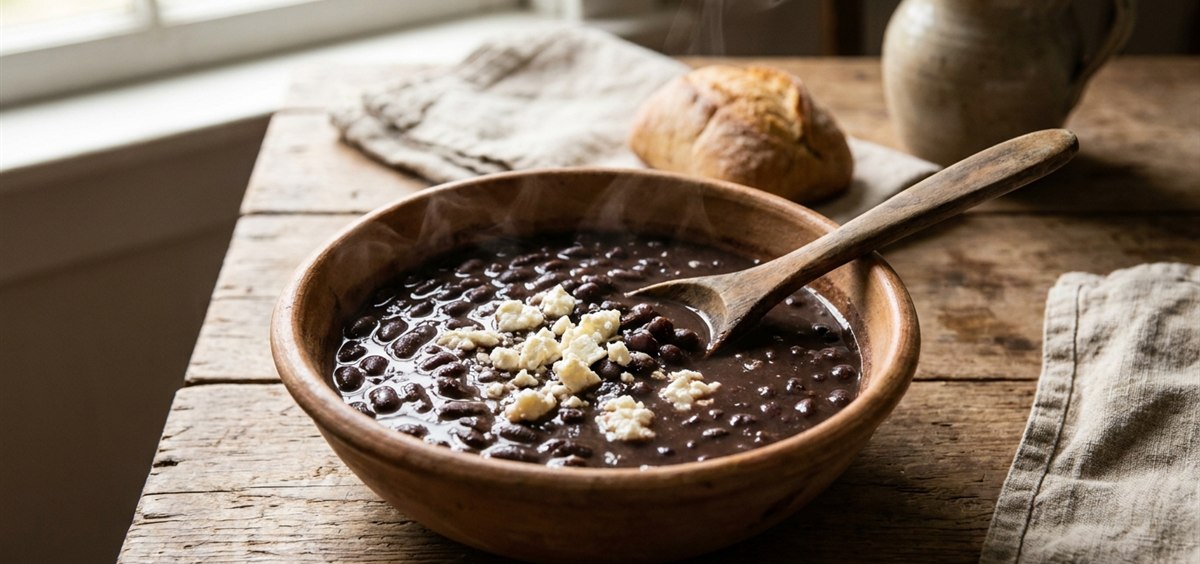
Caraotas negras are Venezuelan black beans, cooked until tender, seasoned and often served with rice, shredded beef, cheese, arepas, sweet plantains or traditional plates like pabellón criollo. They are essential because they bring depth, creaminess and balance to Venezuelan food, turning simple ingredients into meals that feel warm, complete and deeply familiar.
What are caraotas negras in Venezuelan food?
Caraotas negras are one of the quiet foundations of Venezuelan cooking. They may look like a simple side dish, but in many Venezuelan meals they do much more than fill space on the plate. They bring earthiness, moisture, softness and depth, especially beside rice, meats, corn-based foods and sweet plantains.
In Venezuela, caraotas can appear at lunch, inside arepas, beside white rice, as part of pabellón criollo or in everyday home meals where the goal is not complication, but comfort. Their flavor is not loud. Their importance comes from how they hold the plate together.
A spoonful of caraotas can soften rice, balance salty cheese, deepen a bite of carne mechada or contrast with the sweetness of tajadas. That is why they are essential: they do not always lead the dish, but they make the dish feel complete.
Are caraotas negras the same as regular black beans?
Caraotas negras are black beans, but the Venezuelan preparation gives them a specific cultural and culinary identity. Calling them simply “black beans” is not wrong, but it does not explain how they behave in Venezuelan food.
The difference is in the seasoning, texture and role. Caraotas negras are usually cooked until tender and seasoned so they have body. They should not feel like plain beans taken from a can and placed beside rice. They need depth, enough liquid to stay creamy, and enough flavor to stand beside strong ingredients like shredded beef or fried plantains.
Their texture is especially important. If they are too watery, they disappear into the plate. If they are too dry, they lose the softness that makes them comforting. The ideal caraota is tender, seasoned and slightly creamy, with enough broth to connect with rice or corn dough.
Why are caraotas negras so important in pabellón criollo?
Caraotas negras are essential in pabellón criollo because they bring the plate its earthy center. Pabellón is built on contrast: carne mechada brings savory intensity, white rice gives a neutral base, tajadas add sweetness, and caraotas bring depth and creaminess.
Without caraotas, pabellón loses balance. The rice and beef can still work together, and the tajadas can still bring sweetness, but the plate becomes less grounded. The beans slow the bite down. They add moisture. They give the rice something to absorb and create a softer bridge between meat and plantain.
The role of caraotas in pabellón can be understood this way:
- They bring creaminess to the plate.
- They balance the savory beef.
- They connect naturally with white rice.
- They contrast with sweet tajadas.
- They make the meal feel more complete.
That is why caraotas should never feel like an afterthought. In a good pabellón, they are one of the reasons the plate works.
How are caraotas negras usually seasoned?
Seasoning varies by kitchen, family and region, but caraotas negras usually depend on aromatic ingredients that create depth without overwhelming the beans. Onion, garlic, sweet pepper, ají dulce or similar seasonings may appear depending on the cook’s style. Some versions lean slightly sweet, others more savory, but the goal is always balance.
The seasoning should support the bean flavor rather than cover it. Caraotas should taste warm, earthy and well-cooked. They should not taste raw, metallic, flat or overly salty. Their flavor needs time to develop because beans absorb seasoning slowly.
The cooking liquid also matters. It should carry flavor. If the broth tastes thin, the beans will feel unfinished. If it is too reduced or heavy, the dish can become dense. Venezuelan caraotas work best when the broth is flavorful enough to touch the rice, but not so thick that it loses movement.
Why do caraotas work so well with rice, cheese and sweet plantains?
Caraotas work well with rice, cheese and sweet plantains because each pairing creates a different kind of balance. With rice, the beans bring moisture and depth. White rice is neutral and clean, so it receives the bean broth naturally. Together, they become more satisfying than either one alone.
With cheese, caraotas gain salt and freshness. A salty white cheese can sharpen the beans and make them feel brighter. This is why beans and cheese work so well inside an arepa or beside a traditional plate. The beans bring softness; the cheese brings definition.
With tajadas, the contrast is even more Venezuelan. Ripe plantains add sweetness and tenderness. Caraotas bring earthiness. Together, they create a sweet-savory balance that is central to many Venezuelan plates.
That combination is not random. Venezuelan food often works by placing opposites together until the plate feels whole.
How are caraotas used beyond pabellón criollo?
Caraotas negras are strongly connected to pabellón, but they are not limited to it. They can appear in arepas, bowls, lunch plates, family meals, breakfast-style combinations or as a side with rice and cheese. Their flexibility comes from their texture and flavor.
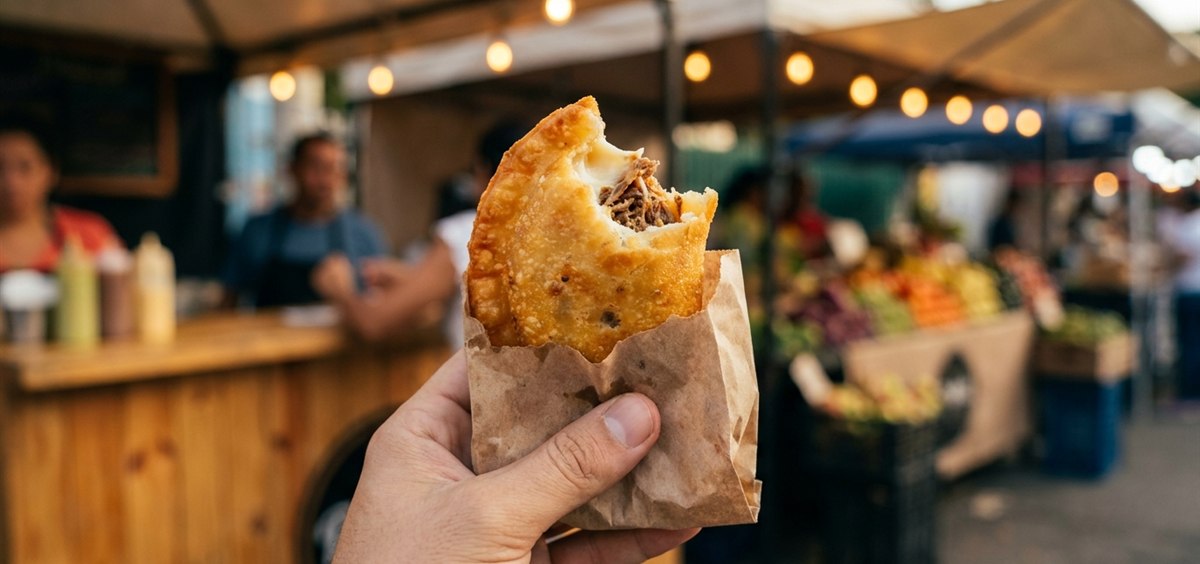
Inside an arepa, caraotas bring creaminess and substance. When paired with cheese, they create a simple but complete filling. In a bowl or plate, they provide depth beside rice, proteins, sauces or plantains. With empanadas or other corn-based foods, they can be part of a more generous Venezuelan combination when the filling is balanced correctly.
The important detail is moisture control. Caraotas that work beside rice may be too loose for a handheld dish. For an arepa, they should be creamy but not watery. For a plate, they can be softer and more brothy because the rice can absorb some of that liquid.
Why do caraotas feel so connected to Venezuelan comfort food?
Caraotas feel connected to Venezuelan comfort food because they taste like something cooked with time. They are not flashy, but they carry warmth. A plate with caraotas immediately feels more homemade, more grounded and more familiar.
Part of their comfort comes from repetition. Many Venezuelans grow up eating black beans with rice, cheese, plantains, meat or arepas. The combination becomes part of everyday memory. It is not only about one special dish; it is about the feeling of a complete meal.
At PANNA, caraotas help tell that story because they connect traditional Venezuelan flavors with a restaurant experience that still needs to feel close. They bring depth to plates, substance to arepas and balance to combinations that would feel incomplete without them.
Frequently Asked Questions
What are caraotas negras made of?
Caraotas negras are black beans cooked until tender and seasoned with aromatic ingredients such as onion, garlic, peppers or other seasonings depending on the recipe. They are served with rice, meats, cheese, plantains, arepas or traditional plates.
Are caraotas negras the same as black beans?
Caraotas negras are black beans, but the Venezuelan preparation gives them a specific identity. The seasoning, texture, broth and the way they are served with rice, cheese, plantains or shredded beef make them part of Venezuelan food culture.
Why are caraotas important in pabellón criollo?
Caraotas bring depth, creaminess and earthiness to pabellón criollo. They balance the savory carne mechada, soften the rice and contrast with the sweetness of tajadas.
Can caraotas negras be eaten inside an arepa?
Yes. Caraotas can be served inside an arepa, especially with cheese. The beans should be creamy but not too watery, so the arepa keeps its structure while still feeling generous and satisfying.
Caraotas negras matter because they show how Venezuelan food builds comfort from ingredients that seem simple but carry real purpose. They soften rice, deepen pabellón, balance tajadas, work with cheese and bring substance to arepas and plates. At PANNA, that quiet depth is part of the experience: Venezuelan food served with the kind of warmth and balance that makes every bite feel complete.