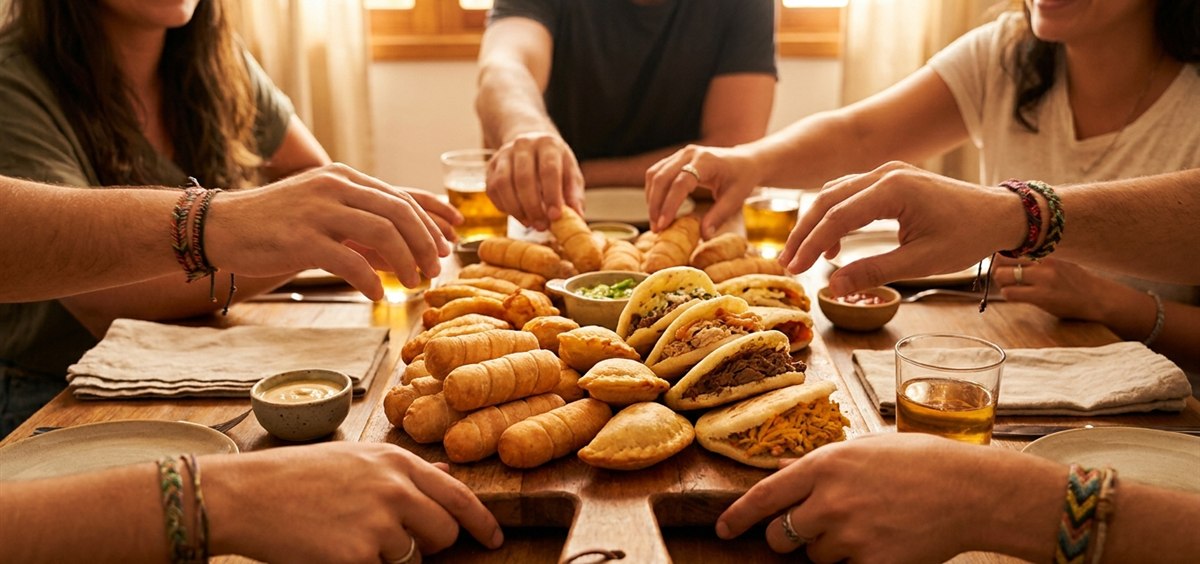
Venezuelan food is good for sharing because many dishes are warm, generous, easy to pass around and built around familiar contrasts like corn, cheese, shredded meats, beans, sauces and sweet plantains. Tequeños, empanadas, arepas, cachapas and traditional plates let people taste different textures and flavors together without making the table feel formal.
Why is Venezuelan food so easy to share?
Venezuelan food is easy to share because it does not always depend on a strict one-person, one-plate structure. Many dishes invite movement around the table. Someone reaches for a tequeño. Someone cuts a cachapa. Someone offers a bite of an arepa filling. Someone adds sauce to an empanada and immediately passes it to the person beside them.
That way of eating fits the Venezuelan sense of hospitality. Food is not only placed in front of people; it is offered, compared, passed around and commented on. The table becomes more active because the dishes are built for that kind of interaction.
This is one reason Venezuelan food works so well for mixed groups. A first-time visitor may not know every dish name, but they can understand the rhythm quickly: start with something warm, try a corn-based dish, taste a sauce, share something cheesy, then move toward fuller flavors like carne mechada, caraotas or tajadas.
Which Venezuelan dishes are best for the center of the table?
The best Venezuelan dishes for the center of the table are the ones that create conversation without requiring too much explanation. Tequeños are the clearest example. They arrive hot, golden and easy to grab. They do not need utensils, and they are familiar enough for almost anyone to understand.
Empanadas also work well for sharing, especially when ordered with different fillings. A cheese empanada offers simple comfort. A shredded beef or chicken empanada brings more savory depth. A pabellón-style filling, when available, gives the table a stronger taste of Venezuelan contrast.
Arepas can be more personal, but they are excellent for sharing when the group orders different fillings. One arepa may show carne mechada, another cheese, another chicken or beans. Sharing them lets the table understand how the same corn base changes depending on what goes inside.
Cachapas bring a different kind of sharing. They are soft, sweet, cheesy and rich, which makes them perfect for cutting and tasting together.
Why do tequeños create the first shared moment?
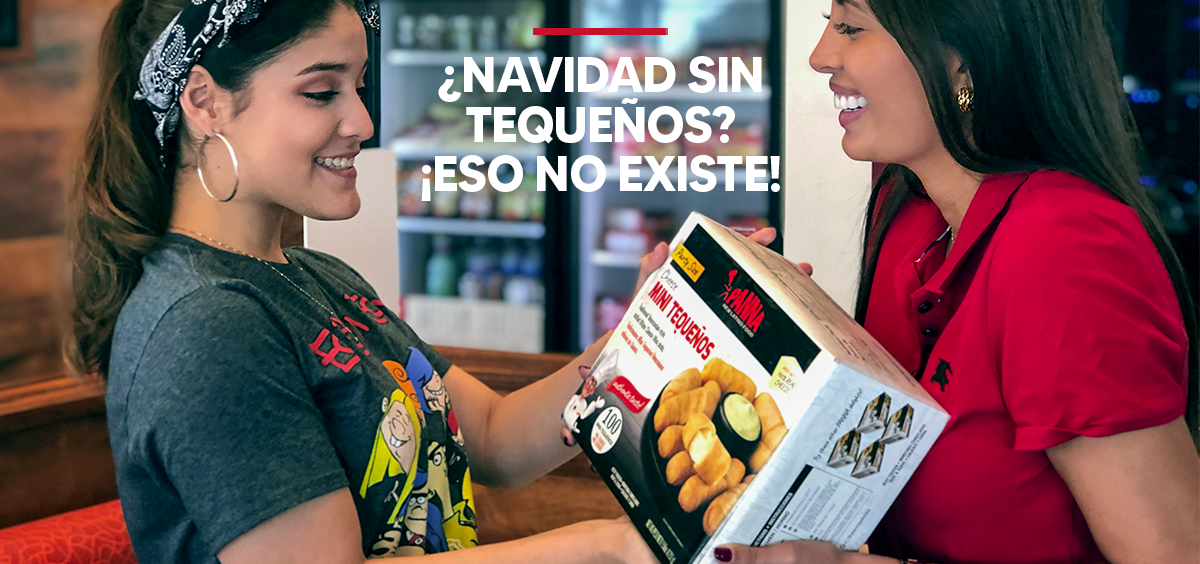
Tequeños create the first shared moment because they are immediate. A tray of tequeños does not ask people to make a big decision. It simply arrives and starts the meal. Cheese wrapped in dough and fried until golden is direct, comforting and social.
Technically, a good tequeño depends on proportion. The dough should be thin enough to crisp, but strong enough to hold the cheese. The cheese should soften inside without leaking completely. When that balance is right, the tequeño becomes easy to eat and hard to ignore.
At a shared table, that matters. Tequeños lower the barrier for everyone. Children, adults, Venezuelans, non-Venezuelans, first-time visitors and regulars can all understand the appeal. They are not only appetizers; they are the opening gesture of the table.
How do empanadas and arepas make sharing more interesting?
Empanadas and arepas make sharing more interesting because they carry fillings. That means the same format can lead to very different experiences. With empanadas, the corn dough and fried texture stay consistent, while the filling changes the personality of the bite. With arepas, the corn pocket becomes a base for savory, creamy, salty or earthy combinations.
This variety makes them useful for groups. Instead of everyone ordering the same thing, the table can create a small tasting experience. One person tries cheese, another carne mechada, another chicken, another beans and cheese. The group begins to compare without needing a formal tasting menu.
The technical detail is that both dishes need structure. An empanada must stay sealed and crisp enough to hold its filling. An arepa must be tender but strong enough to carry what is inside. When the structure works, sharing becomes easier because the food holds together and the flavors stay clear.
Why are sauces important when Venezuelan food is shared?
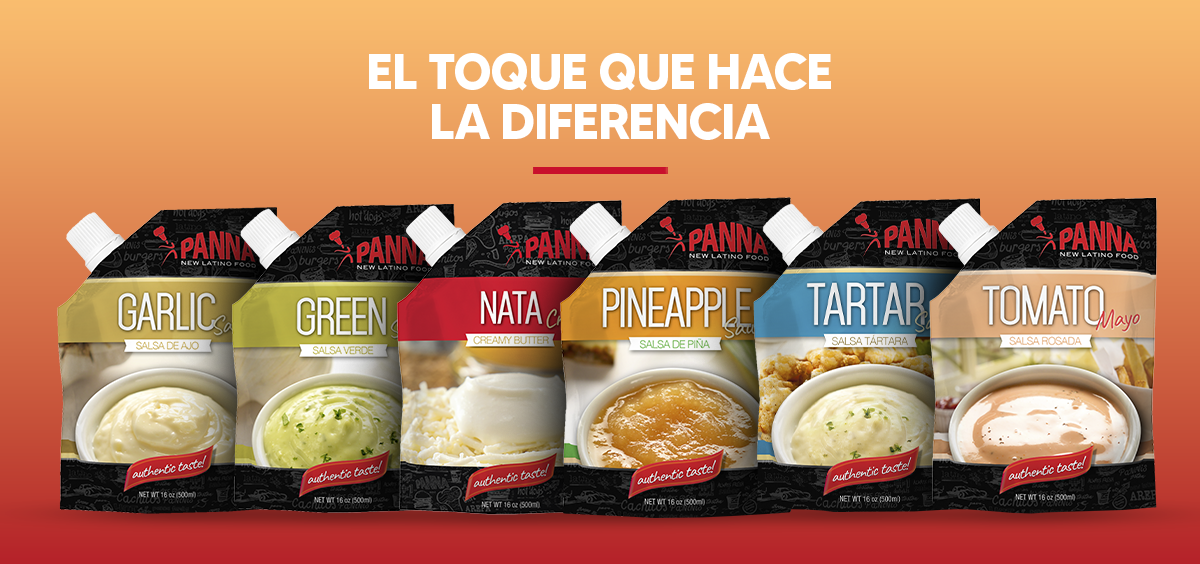
Sauces matter at a shared Venezuelan table because they let each person adjust the bite. Guasacaca or other Venezuelan sauces can bring freshness, garlic, acidity, creaminess or mild heat depending on the style. That flexibility makes shared food more personal.
A sauce can brighten an empanada, soften a savory arepa, support tequeños or lift grilled meats and fuller plates. It also encourages people to try food in more than one way. One bite without sauce, another with guasacaca, another with something creamier or sharper.
That small freedom is important. Shared food should not feel rigid. Venezuelan food often gives people options without making the table complicated. Sauces help create that feeling.
How do sweet and savory contrasts make sharing better?
Sweet and savory contrasts make sharing better because they keep the table from feeling repetitive. Venezuelan food uses contrast often: sweet plantains with savory beef, salty cheese with sweet corn, earthy black beans with white rice, crisp fried dough with soft fillings.
When several people share food, those contrasts become even more noticeable. One person may prefer the salty bite of tequeños. Another may love the sweetness of cachapa. Someone else may want the depth of carne mechada or caraotas. The table works because no single flavor has to satisfy everyone.
That is one of the strengths of Venezuelan food. It offers variety inside the same culinary language. The dishes feel connected, but not identical.
Why does sharing matter in Venezuelan food culture?
Sharing matters because Venezuelan food is often connected to gathering. Birthdays, family visits, casual weekends, quick breakfasts, parties, lunches and late-night cravings all have foods that can move from hand to hand or plate to plate. The act of sharing is not separate from the food; it is part of how the food is experienced.
This does not mean every Venezuelan dish must be shared. A full pabellón, a loaded arepa or a personal empanada can absolutely belong to one person. But even then, the table often becomes collective through starters, sauces, sides or the simple question: “Do you want to try this?”
At PANNA, that shared rhythm is part of the experience. Venezuelan food is generous by nature, and the table feels better when people can begin with something to pass around before choosing what feels personal.
Frequently Asked Questions
What Venezuelan food is best for sharing?
Tequeños are one of the best Venezuelan foods for sharing because they are easy to pass around and eat in a few bites. Empanadas, cachapas and assorted arepas also work well for groups.
Are arepas good for sharing?
Arepas are usually individual, but they can be shared when a table orders different fillings and cuts them into portions. This lets everyone compare flavors like cheese, carne mechada, chicken or beans.
Why are tequeños popular at gatherings?
Tequeños are popular because they are warm, cheesy, golden and easy to eat without utensils. They create an immediate shared bite and are strongly tied to Venezuelan parties and hospitality.
What sauces go well with shared Venezuelan food?
Guasacaca and other Venezuelan sauces can work well with tequeños, empanadas, arepas and grilled foods. The best sauces add freshness, garlic, creaminess or acidity without hiding the main dish.
Venezuelan food is made for sharing because it brings people into the same rhythm: one tequeño first, one empanada to compare, one arepa filling to taste, one cachapa to cut, one sauce passed across the table. At PANNA, that rhythm becomes part of the meal itself, a warm and generous way to experience Venezuelan food together.