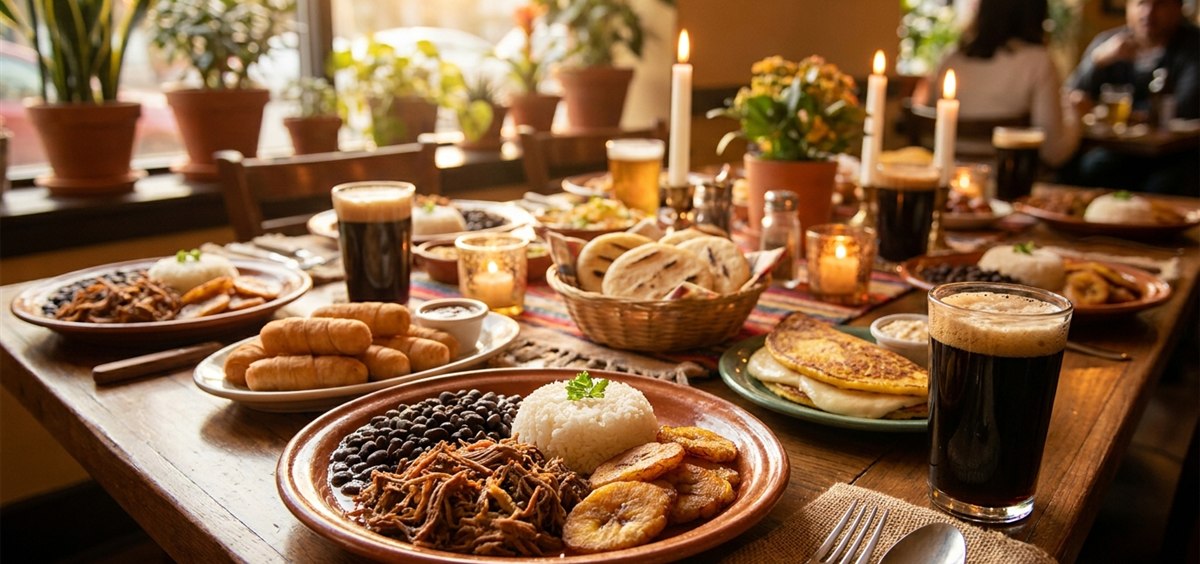
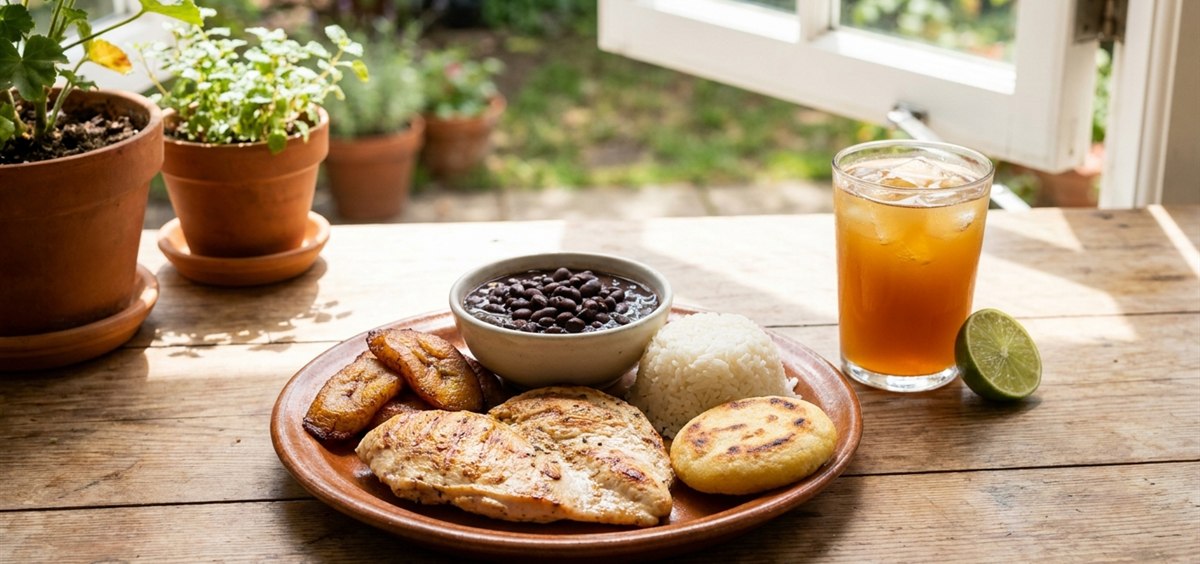
A Venezuelan lunch is usually a complete meal built around balance: protein, rice, beans, plantains, corn-based sides, cheese or sauces depending on the dish. It often feels more filling than a quick sandwich because Venezuelan lunch culture values warmth, variety and contrast, bringing savory, sweet, creamy and fresh elements together on one plate.
What do Venezuelans usually eat for lunch?
A Venezuelan lunch can take many forms, but it often feels like the main meal of the day. In many households and restaurants, lunch is not treated as something rushed or secondary. It is the moment when the plate becomes more structured, with enough food to satisfy but also enough contrast to keep the meal interesting.
That structure may include rice, caraotas negras, shredded beef, chicken, tajadas, arepas, salad, cheese or sauces. It can also appear in more casual formats, like an arepa filled with carne mechada, an empanada with a savory filling, or a bowl-style meal that brings traditional elements together in a practical way.
The important idea is that Venezuelan lunch usually tries to feel complete. Even when the format is casual, the food tends to bring warmth, texture and substance.
Why does Venezuelan lunch feel like a complete meal?
Venezuelan lunch feels complete because it rarely depends on one flavor or one texture. A good lunch plate usually has a base, a main protein, something soft, something savory, and often a sweet or fresh contrast. This is why dishes like pabellón criollo feel so representative: they show how Venezuelan food builds satisfaction through balance.
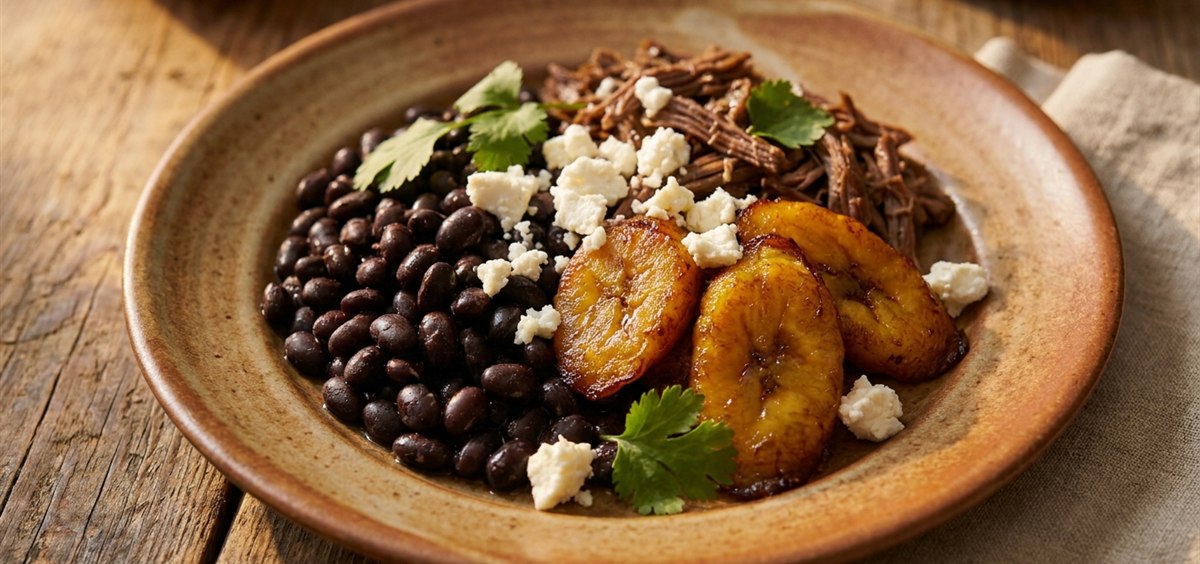
The meal does not need to be complicated to work. White rice can create a clean foundation. Black beans can add creaminess and depth. Carne mechada or chicken can bring savory flavor. Tajadas can add sweetness. Cheese can sharpen the bite. A sauce like guasacaca can bring freshness and moisture.
That combination makes lunch feel abundant without needing to be excessive. The plate has movement. One bite can be savory, the next slightly sweet, the next creamy or fresh. That is one of the clearest differences between a quick lunch and a Venezuelan lunch that feels properly built.
How do rice, beans, meats and plantains work together?
Rice, beans, meats and plantains work together because each one solves a different part of the meal. White rice gives structure. It receives juices, softens stronger flavors and makes the plate feel grounded. Black beans, or caraotas negras, bring earthiness and creaminess. They add depth that plain rice cannot create on its own.
Meats such as carne mechada or shredded chicken bring the savory center. They carry seasoning, texture and warmth. The meat should be juicy enough to mix with the rice and beans, but not so wet that it takes over the plate.
Tajadas bring the contrast many Venezuelan plates need. Ripe plantains, fried until tender and sweet, do not turn lunch into dessert. Instead, they balance the savory and earthy elements. When the tajadas are right, the whole plate feels more rounded.
The basic logic looks like this:
- Rice gives a neutral base.
- Beans bring creaminess and depth.
- Meat adds savory flavor and texture.
- Tajadas bring sweetness and softness.
- Cheese or sauce can add salt, freshness or acidity.
That is why a Venezuelan lunch can feel so satisfying even when the ingredients are familiar.
Is pabellón criollo the most traditional Venezuelan lunch?
Pabellón criollo is one of the most traditional and recognizable Venezuelan lunches, but it is not the only one. It is important because it gathers several essential elements on one plate: carne mechada, caraotas negras, white rice and tajadas. For many people, it is the clearest image of Venezuelan lunch.
Still, Venezuelan lunch can also be more flexible. A person may choose chicken instead of beef, an arepa instead of a full plate, empanadas for something faster, or a mixed meal with sides and sauces. The structure can change depending on the setting, appetite and time of day.
What matters is not only the name of the dish. What matters is the logic behind it: something warm, filling and balanced enough to carry the middle of the day.
Why are arepas also part of Venezuelan lunch?
Arepas are part of Venezuelan lunch because they can move easily between breakfast, lunch, dinner and late-night eating. A Venezuelan arepa is not limited to the morning. When filled generously, it can become a complete lunch in handheld form.
For lunch, the filling usually matters more. A simple cheese arepa may be enough for breakfast, but a lunch arepa often needs more substance: carne mechada, shredded chicken, black beans, cheese, avocado or combinations that make the bite more complete.
The arepa works because the corn dough creates structure. It holds the filling, keeps the meal practical and gives the lunch a warm base. The best lunch arepas are not dry or overloaded. They should have enough filling to feel generous, but enough structure to stay together.
How does Venezuelan lunch compare to a typical American lunch?
A typical American lunch can be many things: sandwiches, salads, burgers, soups, wraps or bowls. Venezuelan lunch can also be quick, but it often leans warmer and more structured. Instead of bread as the default base, Venezuelan lunch frequently uses rice, corn dough, beans, plantains or full plates.
The difference is not that one is heavier and the other is lighter. The difference is how the meal is organized. Venezuelan lunch often uses contrast as the main tool. Sweet plantains can sit beside savory beef. Beans can soften rice. Cheese can add salt. Sauces can bring freshness.
For someone in Miami trying Venezuelan food for lunch, this can be the biggest surprise. The food feels familiar enough to understand, but the arrangement is different. It is not only a protein with a side. It is a plate where every part has a reason.
What should you order for a Venezuelan lunch in Miami?
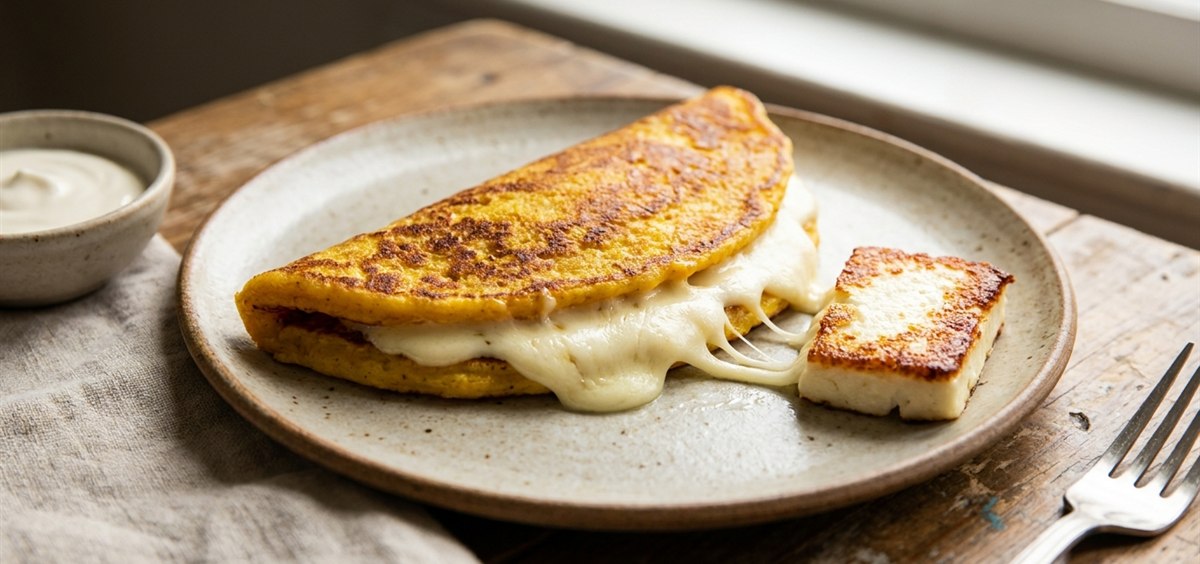
For a Venezuelan lunch in Miami, choose based on how complete you want the meal to feel. If you want the most traditional plate, pabellón is a strong choice. If you want something handheld but filling, an arepa with carne mechada, chicken, beans or cheese can work well. If you want something fried and satisfying, empanadas are a good option. If you want sweet corn and cheese, a cachapa brings a softer, richer lunch.
A practical first order could be:
- Pabellón if you want a complete traditional plate.
- Arepa with carne mechada if you want a savory handheld lunch.
- Empanadas if you want something casual and filling.
- Cachapa if you want sweet corn, cheese and comfort.
- Tequeños to share if you are eating with someone else.
At PANNA, lunch can be approached this way: not as one fixed dish, but as a Venezuelan experience built around corn, guisos, beans, cheese, tajadas, sauces and warmth.
Frequently Asked Questions
What is a typical Venezuelan lunch?
A typical Venezuelan lunch may include rice, black beans, shredded beef or chicken, sweet plantains, arepas, cheese or sauces. Pabellón criollo is one of the most traditional examples of a complete Venezuelan lunch.
Is Venezuelan lunch usually heavy?
It can be filling, but it is not only about heaviness. A Venezuelan lunch usually feels complete because it balances protein, rice, beans, plantains, corn, cheese or sauces in one meal.
What should I order for lunch at a Venezuelan restaurant?
Order pabellón if you want a full traditional plate, an arepa if you want something handheld and savory, empanadas if you want something fried and filling, or a cachapa if you want sweet corn and cheese.
Is an arepa good for lunch?
Yes. An arepa can be a full lunch when it is filled with ingredients like carne mechada, shredded chicken, black beans, cheese or avocado. Its corn dough makes it practical, warm and satisfying.
A Venezuelan lunch is complete because it understands balance: rice to ground the plate, beans for depth, meats or guisos for savory flavor, tajadas for sweetness, cheese or sauces for contrast, and corn in the background of so many everyday choices. At PANNA, lunch is a natural way to experience that Venezuelan rhythm: warm, generous, familiar and built to satisfy without losing the comfort that makes the food feel close.