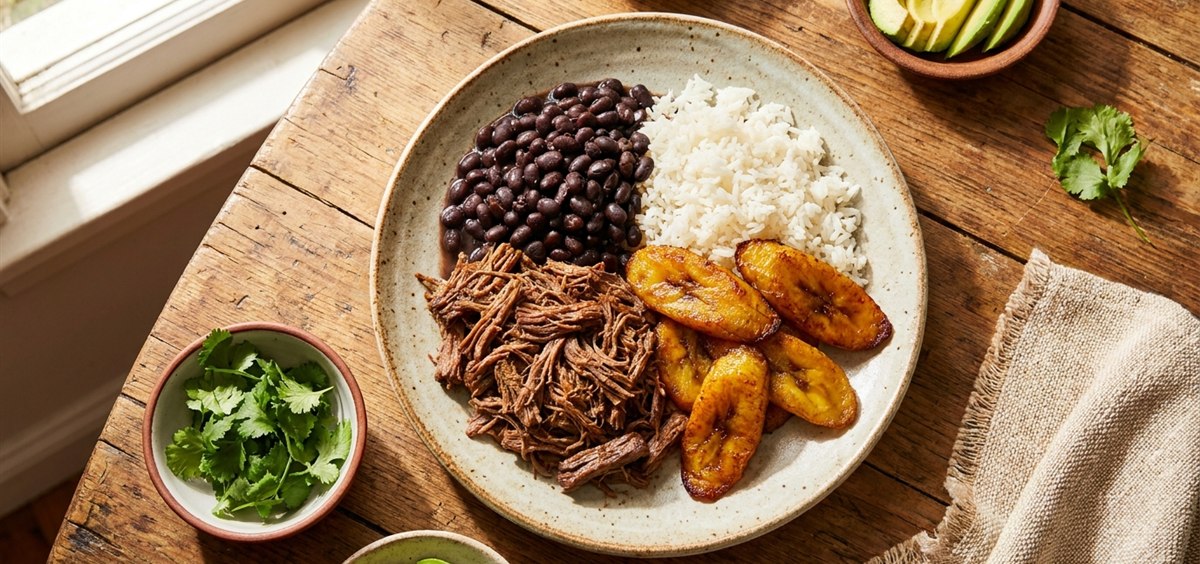
Pabellón criollo is Venezuela’s most iconic traditional plate, usually made with shredded beef, black beans, white rice and sweet plantains called tajadas. It is considered complete because each element brings a different flavor, texture and function: savory meat, creamy beans, neutral rice and sweet plantains working together in one balanced dish.
What is pabellón criollo?
Pabellón criollo is one of the clearest ways to understand Venezuelan food on a plate. It is generous, familiar and built around contrast. At its most recognizable, it combines carne mechada, caraotas negras, arroz blanco and tajadas. Some versions may include cheese, avocado or a fried egg, but the essential structure comes from those four classic elements.
The dish matters because it is not just a random combination of sides. Each part has a role. The rice gives the plate a clean base. The black beans bring creaminess and depth. The shredded beef adds savory intensity. The tajadas bring sweetness and softness. Together, they create a rhythm that feels complete without needing a complicated presentation.
For many Venezuelans, pabellón is not only a national dish; it is a memory of lunch, home cooking and the kind of food that makes sense from the first bite.
Why is pabellón criollo considered Venezuela’s national dish?
Pabellón criollo is widely considered Venezuela’s national dish because it brings together ingredients and techniques that are central to the country’s food culture. It includes corn’s everyday companion, rice; the depth of black beans; the slow-cooked comfort of carne mechada; and the sweet contrast of ripe plantains.
It also reflects the Venezuelan way of building a meal: abundant, balanced and practical. Pabellón does not depend on one dominant flavor. Instead, it allows several elements to speak at the same time. That is why the dish feels familiar even when someone tries it for the first time. It has savory, sweet, soft, creamy and structured parts in one plate.
Its importance is also cultural. Pabellón appears in restaurants, homes, lunch counters and family conversations. It is the kind of dish people recognize immediately, even when small variations appear from one kitchen to another.
What does each part of pabellón bring to the plate?
The strength of pabellón criollo comes from the way its parts work together. If one element is weak, the plate changes. If the rice is too wet, the base becomes heavy. If the beans are too thin, they lose presence. If the beef is dry, the plate feels less generous. If the tajadas are not ripe enough, the sweet contrast disappears.
Each component has a specific function:
- White rice gives neutrality and structure.
- Black beans bring earthiness, creaminess and depth.
- Carne mechada adds savory flavor, texture and seasoning.
- Tajadas bring sweetness, softness and contrast.
- Cheese, when included, adds salt and freshness.
This is why pabellón works so well. It is not only filling; it is balanced. The plate moves between flavors without becoming confusing. The rice catches the juices, the beans soften the beef, the tajadas brighten the savory elements, and the cheese, if present, sharpens the bite.
Why is carne mechada so important in pabellón criollo?
Carne mechada gives pabellón its savory center. It should be tender enough to separate into strands, but not so soft that it becomes mushy. The seasoning should reach the meat, not just coat the surface. Good carne mechada is juicy, flavorful and controlled.
In pabellón, the beef has to carry intensity because the other elements are more grounding. Rice is neutral. Beans are earthy. Tajadas are sweet. The carne mechada brings the deeper savory note that makes the plate feel complete as a meal.
Moisture is especially important. If the carne mechada is too dry, the whole plate feels less warm. If it is too watery, it can overwhelm the rice and beans. The right point is juicy enough to mix naturally with the plate, but structured enough to stay present.
Why do black beans matter so much in pabellón?
Caraotas negras are not just a side in pabellón criollo. They bring depth, color and creaminess. Their earthy flavor balances the sweetness of tajadas and the seasoning of the carne mechada. When cooked well, they help unify the plate.
The beans should not feel like plain boiled beans placed beside the meat. They need body. A good portion of caraotas should be tender, seasoned and slightly creamy, with enough liquid to bring moisture but not so much that the plate becomes soupy.
Black beans also help make pabellón feel comforting. They slow the bite down. They give the rice something to absorb and create a softer contrast with the shredded beef. Without them, the dish loses one of its deepest flavors.
Why are tajadas essential in pabellón criollo?
Tajadas are essential because they bring sweetness and softness to a plate built around savory and earthy flavors. They are made from ripe plantains, sliced and fried until tender and golden. The goal is not crunch; the goal is softness, caramelization and balance.
In pabellón, tajadas do something very specific. They make the beef taste more savory, the beans feel deeper and the rice less plain. Their sweetness is controlled by the rest of the plate. That is why they do not turn pabellón into a sweet dish. Instead, they complete the contrast.
The ripeness of the plantain matters. Green plantains are too starchy for this role. Tajadas need ripe plantains, usually yellow with dark spots, because that maturity gives them the sweetness and tenderness the plate expects.
How do variations of pabellón criollo work?
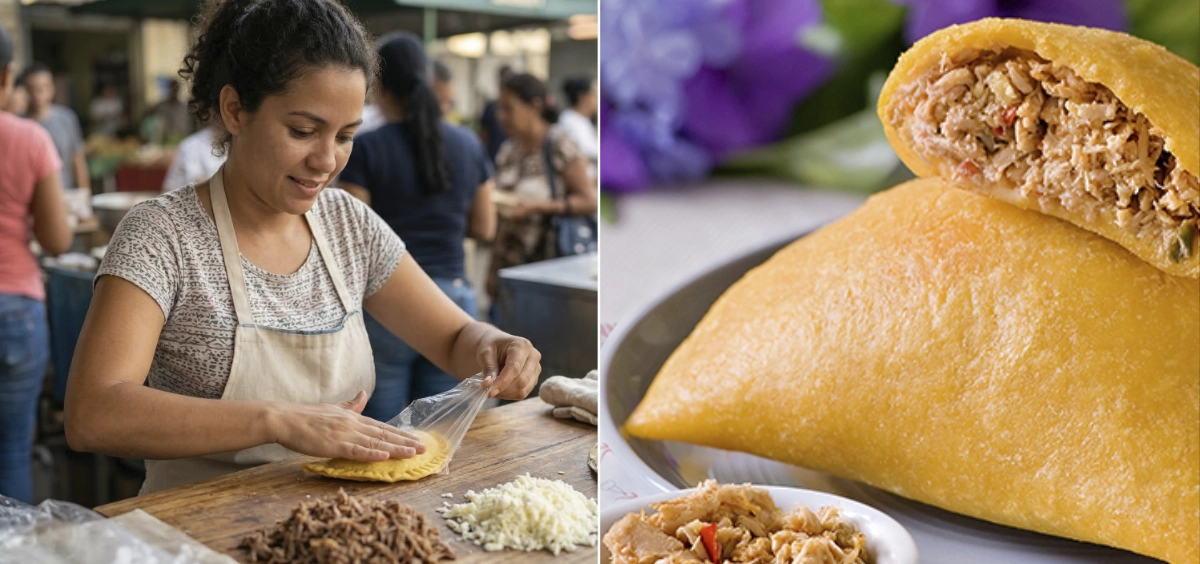
Pabellón criollo has a classic structure, but Venezuelan food also adapts easily. Some versions include a fried egg on top. Others add grated or sliced white cheese. Some restaurants serve pabellón inside an arepa or empanada, turning the full plate into a handheld format.
These variations work when they respect the logic of the dish. A pabellón arepa should still feel like pabellón: beef, beans, plantains and cheese or other supporting elements in balance. A pabellón empanada should be flavorful, but the filling must be controlled so the corn dough can hold it.
The format can change, but the identity should stay clear. Pabellón is not just “beef with sides.” It is a combination where every element has a reason to be there.
Where can you try pabellón criollo in Miami?
For anyone looking for Venezuelan food in Miami, pabellón criollo is one of the best dishes to order because it gives a full view of the cuisine. It is traditional without being difficult to understand, generous without being messy, and rich in contrast without feeling overly complicated.
At PANNA, pabellón connects naturally with the larger Venezuelan experience: carne mechada, caraotas, rice, tajadas and the familiar warmth of a plate meant to satisfy. Whether someone already knows the dish or is trying it for the first time, pabellón is a strong way to taste how Venezuelan food builds comfort through balance.
Frequently Asked Questions
What is pabellón criollo made of?
Pabellón criollo is usually made with carne mechada, black beans, white rice and sweet plantains called tajadas. Some versions may also include cheese, avocado or a fried egg.
Why is pabellón criollo important in Venezuela?
Pabellón criollo is important because it is widely recognized as Venezuela’s national dish. It brings together several essential parts of Venezuelan cooking in one balanced plate.
Is pabellón criollo spicy?
Pabellón criollo is usually flavorful rather than spicy. Its flavor comes from seasoned shredded beef, black beans, ripe plantains and the balance between savory, earthy and sweet elements.
Can pabellón be served inside an arepa or empanada?
Yes. Pabellón can appear as a filling for arepas or empanadas when the main elements are kept in balance. The format changes, but the idea remains the same: beef, beans, plantains and contrast.
Pabellón criollo is complete because it understands balance: rice to hold the plate, caraotas for depth, carne mechada for savory character and tajadas for sweetness. At PANNA, that balance becomes part of the real Venezuelan experience, the kind of meal that feels abundant, familiar and carefully built from the first bite to the last.