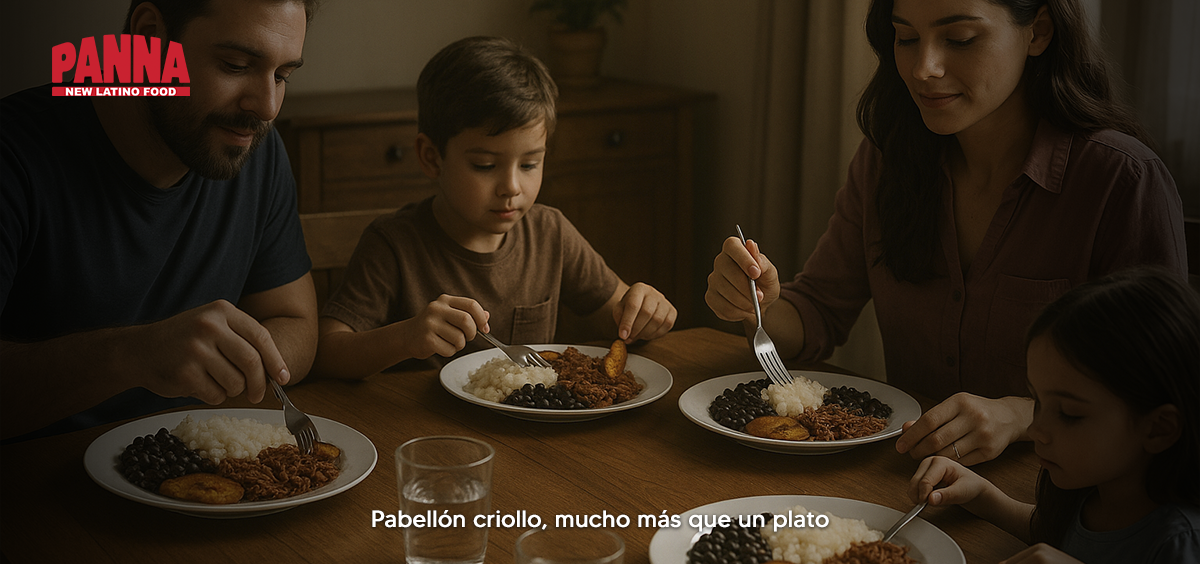
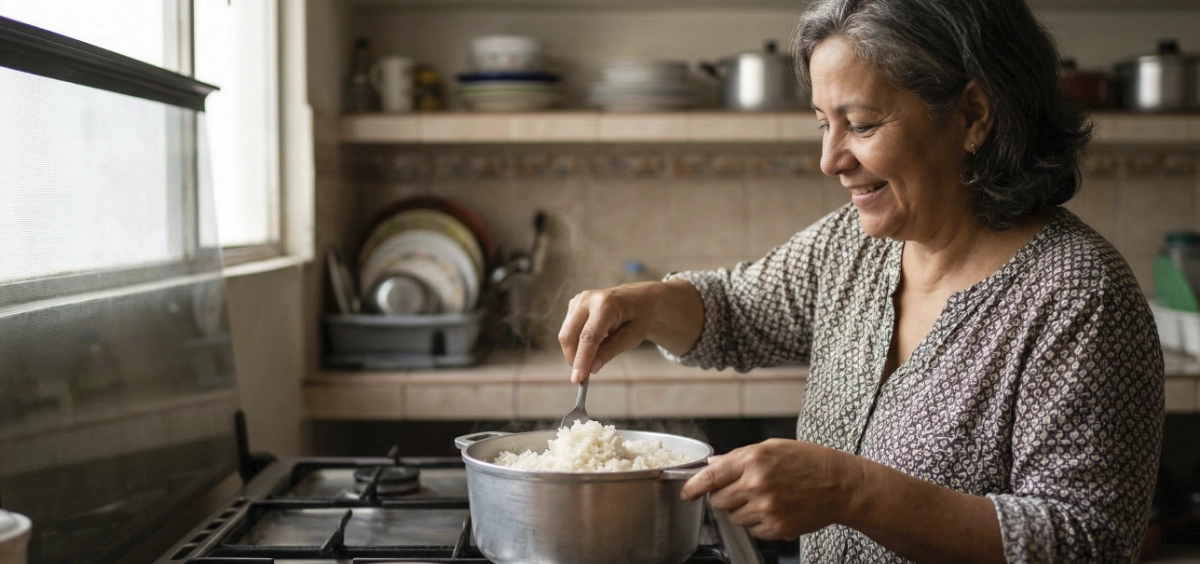
Venezuelan white rice is not a neutral side dish; it is a technical component that regulates the entire plate. In a cuisine where intense elements like shredded beef, black beans, and fried sweet plantains coexist, rice provides structure, absorption, and balance. When properly executed, it goes unnoticed; when it fails, the entire dish loses cohesion.
This role is not merely cultural, it is functional. Venezuelan white rice is designed to be loose, dry, and separate. This texture is not aesthetic; it is essential. It allows sauces and juices to adhere without dilution, and fats to distribute evenly without overwhelming the palate.
VENEZUELAN WHITE RICE: RATIO, GRAIN TYPE, AND INITIAL CONTROL
The most commonly used rice in Venezuela is long-grain white rice, typically polished and low in surface starch. This directly impacts technique. The standard ratio of 1:2 (rice to water) is a baseline, but not absolute; it depends on grain age, moisture content, and cooking environment.
Older rice may require slightly more water, while fresher rice requires less. This introduces an important technical principle: ratios must be adjusted, not blindly followed.
Washing the rice is essential. Removing surface starch reduces external gelatinization, allowing grains to remain separate. Skipping this step increases the likelihood of clumping, even if proportions are correct.
CLEAN BASE VS LIGHT AROMATIC START
In Venezuelan cooking, white rice can be prepared completely neutral or with a minimal aromatic base. In both cases, the goal remains the same: not to interfere with the main dish.
Some preparations include oil and salt at the beginning, occasionally with lightly sautéed garlic. However, garlic must not brown excessively. Overcooking it introduces bitterness and alters the final profile.
Unlike other Latin American styles, Venezuelan rice is not toasted. The grain must remain light in color. This is a deliberate technical choice to preserve its supporting role.
VENEZUELAN WHITE RICE: COOKING, EVAPORATION, AND RESTING
The most critical stage is the transition from boiling to low-heat cooking. Initial boiling activates water absorption; reducing the heat ensures even internal cooking without breaking the grain.
At this stage, starch gelatinization occurs, typically between 70–80°C. If this process is too rapid, grains break and release excess starch, resulting in a sticky texture. Controlled cooking preserves grain integrity.
The lid plays a key role. It must trap steam to ensure uniform cooking. In many Venezuelan kitchens, a cloth is placed between the pot and lid to prevent steam loss. This is a practical method of moisture control.
The resting phase is often overlooked but essential. After turning off the heat, the rice should rest covered for 5–10 minutes. Residual heat completes the cooking process and stabilizes texture.
COMMON ERRORS THAT ALTER THE RESULT
Impatience is the most frequent mistake. Increasing heat to speed up cooking disrupts internal structure. Stirring during cooking breaks grains and releases starch, compromising texture.
Too much water leads to soft, unstable rice; too little results in undercooked interiors. The key is managing evaporation, not just measuring liquid.
Cookware also matters. A wide pot promotes even evaporation, while a narrow one can trap excess moisture. These variables significantly influence the outcome.
CONTRAST: WHAT MAKES VENEZUELAN RICE DISTINCT
Compared to Mexican rice, which incorporates tomato and higher fat content, Venezuelan rice is cleaner. Compared to many Asian preparations, which may favor stickiness, Venezuelan rice prioritizes separation.
Within the Caribbean, variations exist, but Venezuelan rice consistently serves a supporting function rather than acting as the flavor centerpiece. This distinction shapes how dishes are constructed.
TECHNICAL INSIGHT: RICE AS A FLAVOR REGULATOR
The defining insight is this: rice does not accompany, it regulates. Its ability to absorb liquids redistributes salt, fat, and sauces across each bite.
In dishes like pabellón, rice absorbs elements from both beans and shredded beef, softening intensity and creating balance. Without properly cooked rice, the dish becomes disjointed.
Scientific studies on starch interaction with lipids and saline solutions support this behavior, demonstrating how starch structures act as absorption and redistribution mediums.
A MEASURE OF EXECUTION
In Venezuelan cooking, white rice is a silent indicator of technical skill. It does not draw attention, but it reveals control. Loose, dry grains signal precision; clumped or wet rice signals inconsistency.
For that reason, rice is often the first element judged in a meal. It reflects the level of execution across the entire kitchen.
And when seeking Venezuelan food in Miami that respects the integrity of the cuisine, rice cannot be secondary. It must be precise, because it supports everything else.
At Panna, that principle is applied consistently. Because Venezuelan cuisine is not only about recognizable dishes, but about executing every element, especially the simplest ones, with technical accuracy.