Venezuelan sauces are not explained through recipes; they are understood through use. They live in the street, in hot dog carts, in empanada stands, in weekend grills, and at home. They are part of how food is built in Venezuela, not something added at the end.
In practice, no hot dog, empanada, or portion of fries feels complete without sauces. And it is never just one; it is a combination, layered with a kind of logic that may look improvised but is not. That is where Venezuelan food truly reveals how it works.
VENEZUELAN SAUCES: THE BASE THAT IS EVERYWHERE
There is a foundation that repeats across the country: mayonnaise, ketchup, and mustard. It is present in street food, burger spots, and home kitchens, and it is not accidental.
This trio works because each one has a role. Mayonnaise softens, ketchup balances, and mustard adds intensity. It is not about adding everything blindly, but about how they come together.
In Venezuela, there is also a clear preference: mayonnaise usually leads. It is common to see food generously covered, yet still balanced. That controlled excess is part of the identity.
GARLIC SAUCE: THE MOST UNIVERSAL ONE
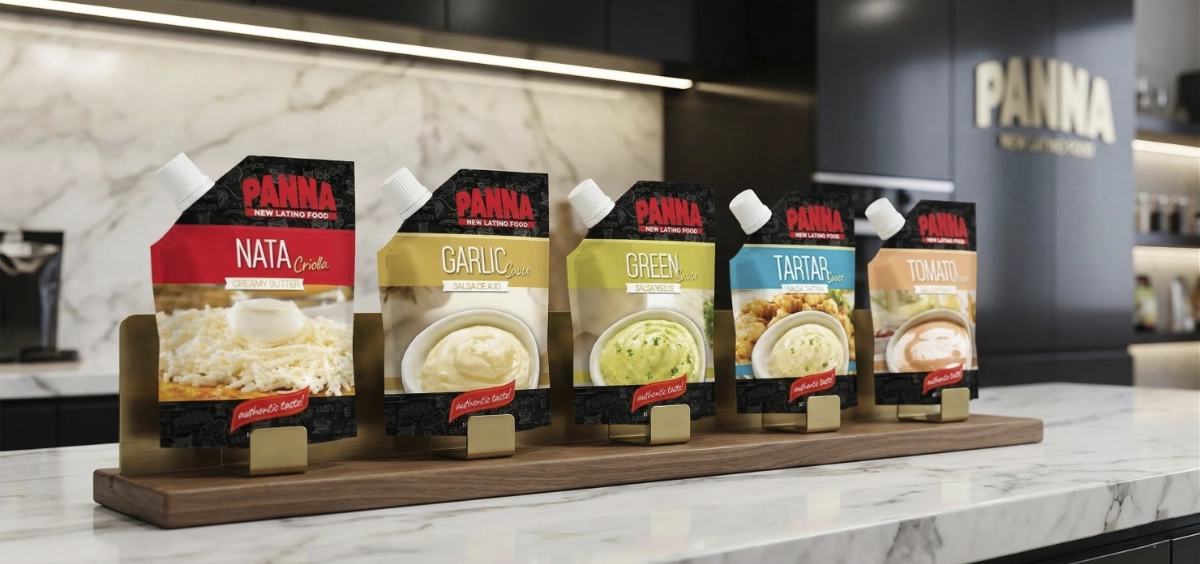
If there is one sauce that cuts across everything, it is garlic sauce. It appears in empanadas, arepas, grilled meats, sandwiches, and hot dogs; there are very few formats where it is absent.
There is no single fixed recipe; it changes depending on who makes it. But it always keeps the same idea: creamy, with presence, but not overwhelming.
When it is well made, it supports the dish. When it is not, it takes over completely. That difference is easy to notice.
HOT DOGS: WHERE EVERYTHING COMES TOGETHER
The Venezuelan hot dog is probably the best example to understand sauces, not only because of quantity, but because of how they are combined.
Alongside the basics and garlic sauce, you often find cheese sauce, corn sauce, and other variations depending on the vendor. Each cart has its own style, but all follow the same logic: layering without losing structure.
The mistake is not using many sauces; it is not knowing when to stop. A good hot dog can be eaten without falling apart. If everything spills uncontrollably, it no longer works.
GUASACACA: THE SAUCE OF THE GRILL
Guasacaca is a fixed part of Venezuelan barbecue. It is expected. It is served with meats, chicken, and even cassava.
Unlike what many assume outside Venezuela, it is not guacamole. It is lighter, more fluid, and more acidic. Its role is clear: to cut through fat and refresh the bite.
That is why it should not be thick or heavy. When it is, it stops doing its job.
WHAT HAPPENS WITH EMPANADAS AND PASTRIES
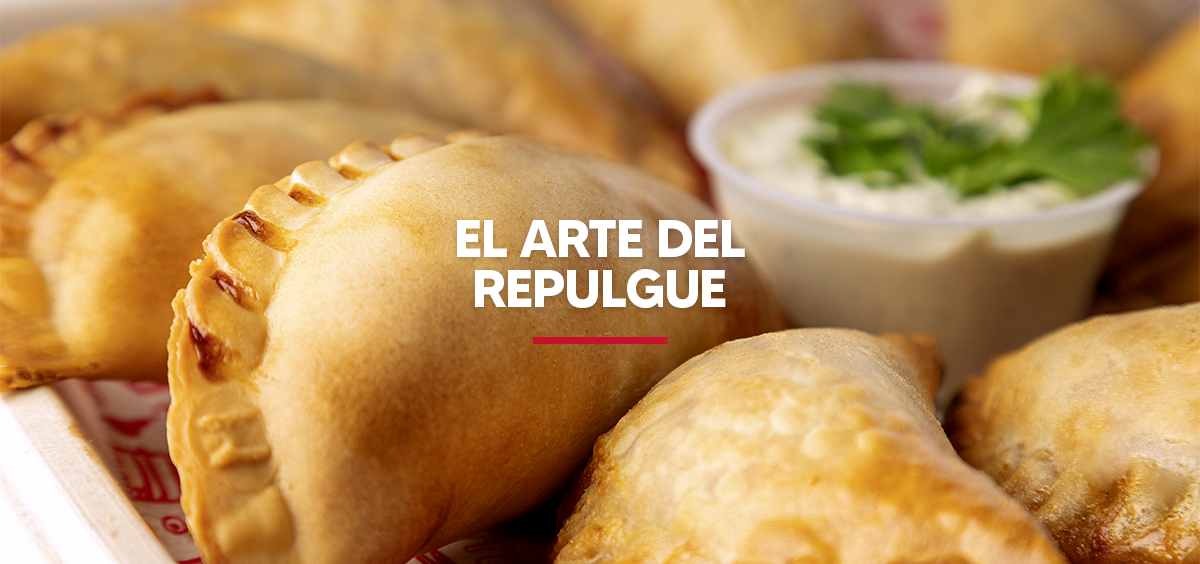
In a Venezuelan empanada, sauce is not optional. Garlic sauce is the most common, and in many cases guasacaca is also present.
There is a clear reason: fried food needs something to balance it. Without sauce, the empanada feels heavier and less complete.
In Maracaibo, for example, it is common to eat pastelitos with tartar-style sauces. This is not an exception; it reflects local habits.
FRIES AND EVERYDAY HABITS
Fries in Venezuela are almost always eaten with ketchup, but rarely on their own. Mayonnaise is almost always added, and both are often combined without much thought.
This is not random; it is habit. It is part of how taste has been shaped.
At home, it is the same. Mayonnaise appears with rice, chicken, salads; it is naturally integrated into everyday meals.
WHEN SAUCES STOP WORKING
The problem is not using multiple sauces, but not understanding them. Mixing without purpose creates heavy, messy results that are difficult to eat.
It also happens when one sauce dominates everything. If it covers all other flavors, it stops being a complement and becomes a problem.
Balance is not complicated, but it matters.
A WAY TO UNDERSTAND VENEZUELAN FOOD
Venezuelan sauces are not a minor detail; they are an extension of the dish. They define how food is eaten, combined, and enjoyed.
They are not written in formal recipes, but they are part of everyday memory, of how people actually eat in the street and at home.
And when looking for Venezuelan food in Miami that respects this way of eating, the key is not only the main dish, but how it is completed.
At Panna, that logic is preserved. Because a good sauce is not the one that stands out the most, but the one that makes everything work together, from the first bite to the last.