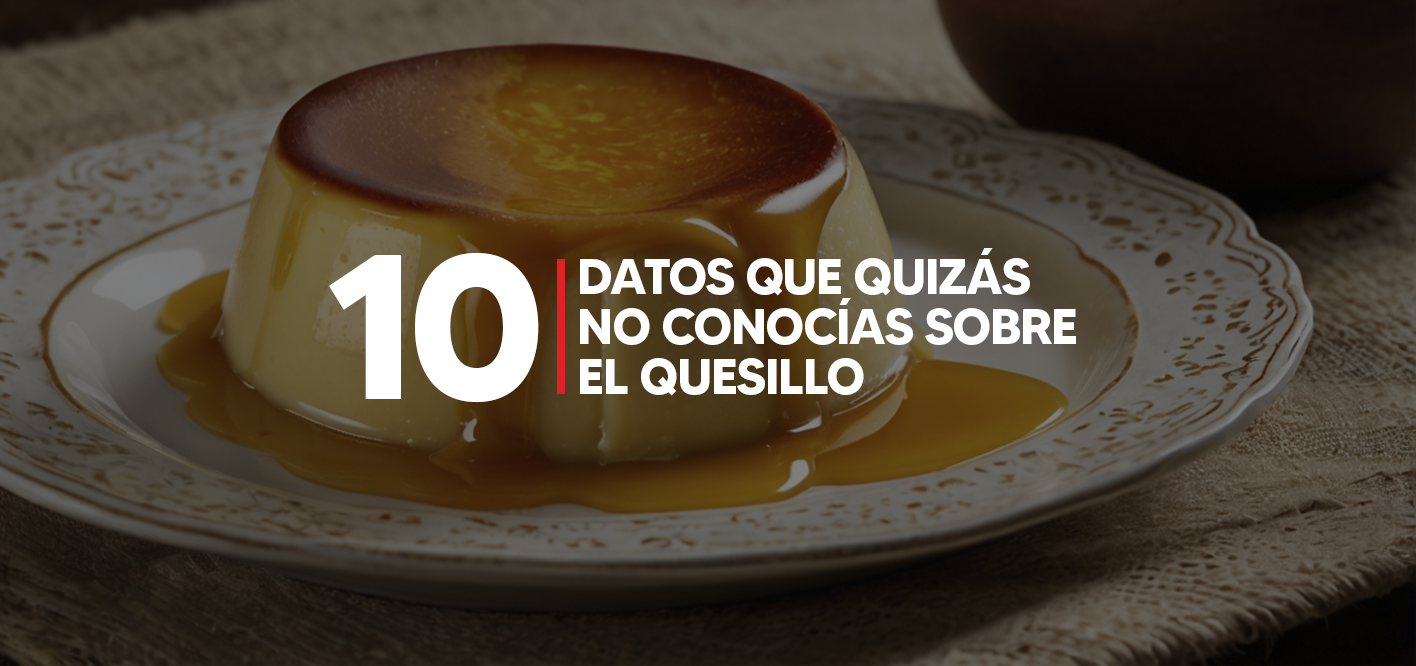
In our previous article, we shared the origins of quesillo and how it arrived in our country… but there is still so much to tell about this Venezuelan treasure. In the world of Venezuelan desserts, the quesillo holds the same legendary status as the tequeño does for appetizers: they are the undisputed kings of every party.
THE QUESILLO AT THE BIRTHDAY TABLE
In Venezuela, a birthday isn’t just a celebration; it’s a sacred trinity of Cake, Jello, and Quesillo. While the cake might be massive and the jello often ignored, the quesillo is the true star.
The moment it’s brought out from the fridge, a ceremonial silence falls over the room. We all know the struggle: no matter how big it is, there’s never enough to satisfy the crowd. There’s always that one brave guest who asks for “just quesillo,” putting the person serving in a tough spot while the rest of the guests wait in suspense. If you are a self-proclaimed “quesillo-addict,” you know exactly what we’re talking about!
A BRIEF HISTORY RECAP
The evolution of our favorite dessert looks something like this:
-
Ancient Rome: Tyropatina (the predecessor of flan).
-
The Middle Ages: Sugar is added, and it becomes Flado.
-
France/Spain: Liquid caramel is introduced, and it becomes the Flan.
-
The Conquest: Flan travels to the Americas with the Spanish.
-
The Canary Islands: Immigrants reinvent the recipe, call it “quesillo” (due to its cheese-like holes), and bring it to Venezuela.
-
The Venezuelan Touch: We add condensed milk and a splash of rum, crowning it as the king of our desserts.
10 INTERESTING QUESILLO FACTS
-
Spanish Cousins: It is recognized as a variant of the Spanish leche asada or tocinillo de cielo.
-
The Secret Tool: Every Venezuelan home has a “quesillera“—a specific metal mold, often a repurposed cookie tin, used for the Baño de María (water bath) cooking method.
-
The Perfect Math: Pastry is all about measurements. In Venezuela, we have a golden rule: once you empty the can of condensed milk, that exact same can is the measure for the milk you need.
-
Calorie Count: There are approximately 146 calories per 100 grams. A delicious treat to be enjoyed in moderation!
-
Nutritional Boost: Surprisingly, it’s a source of proteins, Vitamins A, C, B6, B12, calcium, iron, and magnesium.
-
No Cheese Included: Despite the name (which means “little cheese”), it contains no cheese. The name comes strictly from its appearance.
-
The “Hole” Standard: Those characteristic little holes are a sign of excellence. Many believe that the more holes it has, the better the quesillo.
-
Mexican Confusion: In Mexico, “quesillo” refers to the famous Oaxaca cheese used in quesadillas—not a dessert!
-
Southern Variations: In Argentina and Chile, quesillo is a fresh artisanal cheese served as a dessert with honey or nuts.
-
Nicaraguan Style: If you order quesillo in Nicaragua, you’ll get a savory dish made with tortillas, cheese, and pickled onions.
AN UNFORGETTABLE EXPERIENCE AT PANNA
Every home has its own unique version of quesillo, passed down through generations. But if you are in Miami and craving that authentic, creamy, and traditional Venezuelan flavor, you must visit PANNA New Food Latino.
We offer you a unique gastronomic experience where you can taste this legendary dessert in all its glory.
Ready to sweeten your life? Visit us at PANNA and discover the unmistakable taste of home!