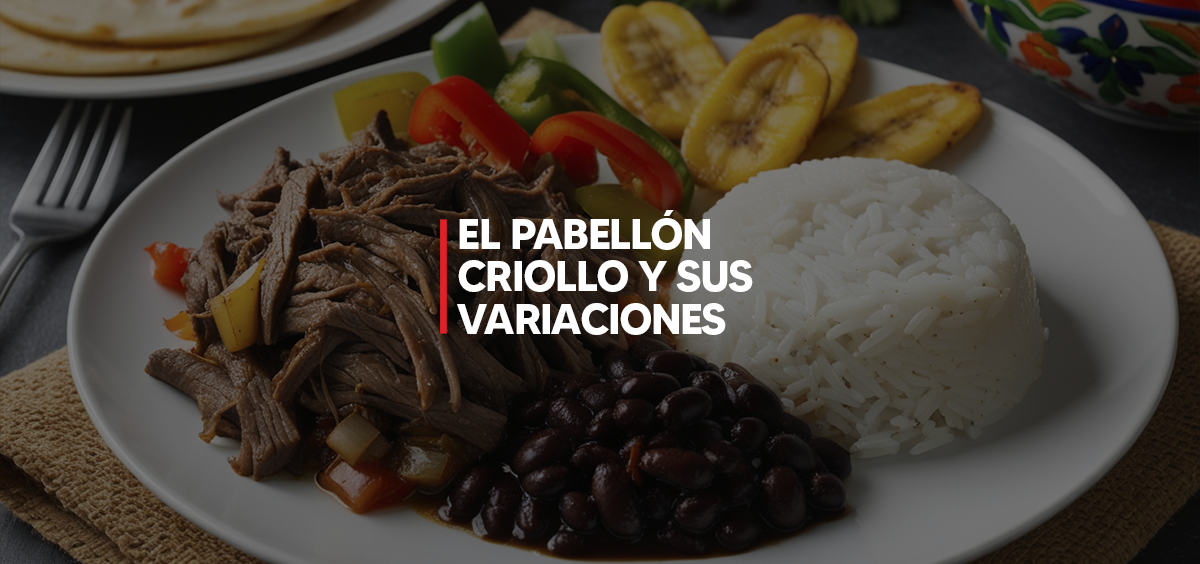
The Pabellón Criollo is undoubtedly a culinary masterpiece that encapsulates the history and cultural identity of Venezuela. Like a mosaic of flavors, this dish combines key ingredients of our gastronomy, offering a sensory experience that takes the palate through centuries of tradition.
Its colorful plating, often evoking our national flag, is more than just a combination of rice, shredded beef, black beans, and fried plantains. Each element has a purpose, linking historical and social aspects that have shaped who we are today.
The Pabellón Criollo and Its Variations: ORIGIN AND CULTURAL SIGNIFICANCE
The Pabellón Criollo is a mirror of our rich history and cultural melting pot.
- Indigenous, Spanish, and African Influences: The black beans (caraotas) and rice have pre-Columbian roots. During colonization, the Spanish introduced beef, while enslaved Africans contributed essential culinary techniques and spices that enriched our kitchen.
- A Social Meeting Point: In Venezuela, this dish transcends social classes and regions. Whether served with perfectly fluffy rice or plantains fried to a golden caramel, it represents the unity of our society.
The Pabellón Criollo and Its Variations: THE FOUR PILLARS OF PABELLÓN
- Carne Mechada (Shredded Beef): Flank steak slow-cooked until tender and then shredded into fine strands. Its savory profile contrasts beautifully with the sweeter elements of the plate.
- Arroz Blanco (White Rice): The neutral base of the dish. It must be fluffy and simple to complement the intensity of the other flavors.
- Caraotas Negras (Black Beans): Cooked until soft. They provide a creamy texture and a deep, earthy flavor enhanced by cumin and garlic.
- Tajadas (Fried Ripe Plantain): These golden slices add a sweet touch and a soft texture. Pro-tip: Never take your eyes off them while frying; they go from perfect to burnt in a heartbeat!
POPULAR VARIATIONS
The Pabellón is flexible and adapts to different regional tastes:
- Pabellón a Caballo: Topped with a fried egg. The creamy yolk melds perfectly with the beef and beans.
- Pabellón con Baranda: “With railings.” The fried plantain slices are placed around the edge of the plate, often served with a side of white cheese.
- Pabellón Margariteño: From the coast. The beef is replaced with shredded fish (usually baby shark or cazón), reflecting the flavors of Margarita Island.
- Pabellón Veguero: Typical of the plains (Los Llanos). The beef is replaced with shredded capybara (chigüire), a traditional delicacy of the region.
- Vegetarian Pabellón: Uses pulled eggplant or soy meat as a delicious meat-free alternative.
EXPERT TIPS FOR THE PERFECT PABELLÓN
- For the Beef: Marinate the meat overnight with garlic, onion, peppers, and cilantro. Sauté these aromatics (sofrito) before adding the shredded meat back into the pan.
- For the Rice: Rinse the rice to remove excess starch and use the “sofrito” technique (toasting the grains with oil and garlic) before adding water.
- For the Beans: Soak them overnight to soften. Cook them over low heat with a piece of green bell pepper and a pinch of sugar to balance the flavors.
- Presentation: Keep each component well-defined on the plate so the diner can appreciate the variety of colors and textures.
AN UNFORGETTABLE EXPERIENCE
The Pabellón Criollo is more than a meal; it is an experience that connects you with Venezuelan culture. It is a dish that unites families across generations and honors our history.
Ready to explore the best of Latin cuisine? We invite you to visit PANNA New Food Latino, where you will find the tastiest Pabellón of all!