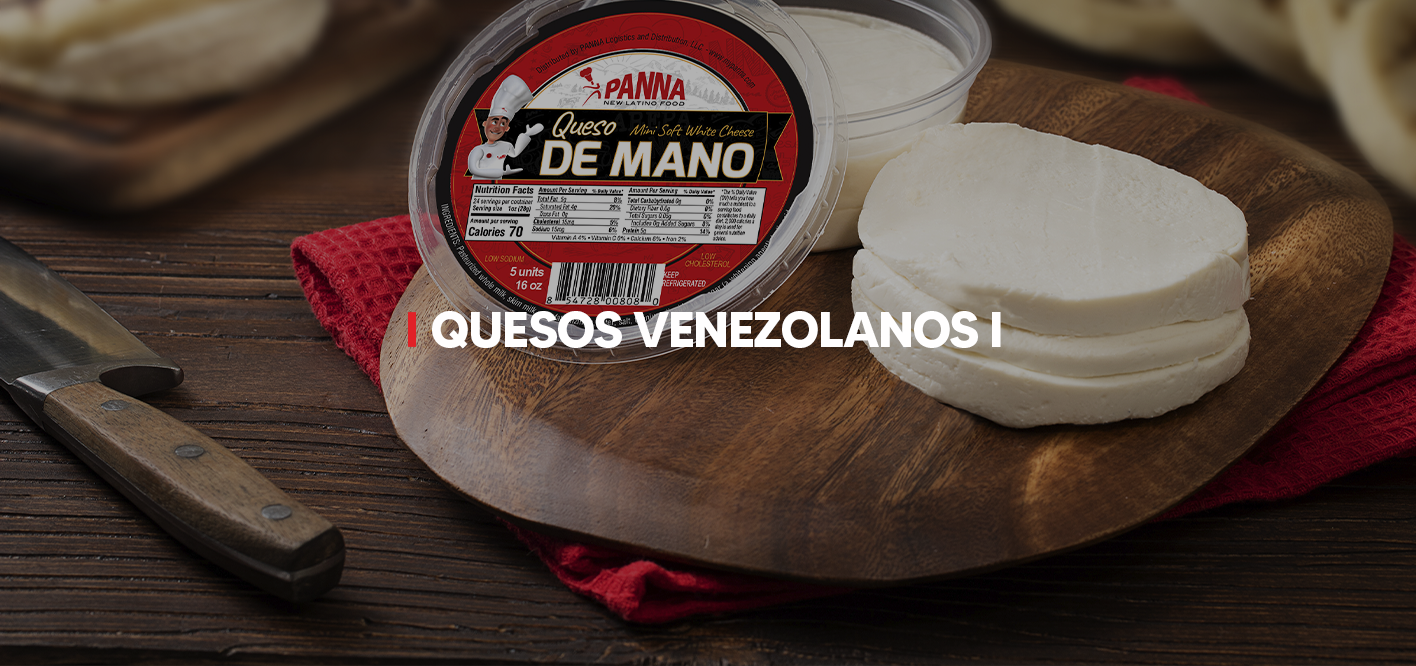
Venezuelan Cheeses, get ready for a gastronomic journey like no other! We are diving into the heart of Venezuelan cuisine to discover the secrets of its artisanal cheeses, recognized internationally for their unique flavor and traditional production.
A UNIVERSE OF TEXTURES AND FLAVORS
From the Guayanés cheese that melts in your mouth to the firm and bold Palmizulia, the variety of Venezuelan cheeses is endless. Enjoying a fried arepa with butter and shredded cheese, or biting into a tequeño and seeing the cheese stretch like a spiderweb, are experiences part of the Venezuelan DNA. Every region and every family keeps its own recipes and techniques, passed down through generations.
SYMBOL OF CULTURE AND TRADITION
Venezuela has the largest variety of fresh cheeses in the world. The magic lies in their artisanal preparation, the use of raw milk, and the ancestral wisdom of the cheesemakers.
As the expert Dietrich Truchsess, better known as “Doctor Quesero” and author of Venezuelan and Colombian Cheeses Made at Home, points out: “When you pasteurize milk, you eliminate not only the bad bacteria but also some of the good bacteria that give flavor to the cheese.” By avoiding this step, Venezuelan cheeses retain natural yeasts that grant them that cherished characteristic taste.
NOT ALL CHEESES ARE THE SAME
Understanding the magic is simple, but mastering it is an art. Here is a basic guide to the most famous varieties:
Hard and Semi-Hard Cheeses:
-
Llanero: A timeless classic, ideal for shredding.
-
Concha Negra: Intense flavor and firm texture, perfect with wine.
-
Queso de Año: An aged cheese often matured with coffee or onoto for a unique kick.
Soft Cheeses:
-
Palmita: Fresh and creamy, great for salads.
-
Palmizulia: A true gem! The only soft cheese in the world with natural holes.
Pasta Filata (Stretched Curd) Cheeses:
-
Telita: Smooth and elastic, perfect for tequeños.
-
Guayanés: Soft, delicate, and intensely flavorful.
-
De Mano: Hand-crafted, artisanal cheese that pairs perfectly with cachapas.
HOW IS VENEZUELAN CHEESE MADE?
Producing quality Venezuelan cheese is no easy task. Experts Elizabeth Martínez and Doctor Quesero reveal the basic steps for a home adventure:
Basic Ingredients:
-
Fresh milk from healthy cows.
-
Thermometer (precision is key).
-
Cheesecloth (to separate whey from curd).
-
Lactic bacteria (the flavor allies).
The Step-by-Step Process:
-
Heat the milk: Between 30 and 40°C.
-
Add lactic ferments: Let it ripen for 45 minutes.
-
Incorporate the rennet: Time for the milk to coagulate!
-
Cut the curd: Say goodbye to the whey.
-
Mold your cheese: Press it or let it rest, depending on the style.
-
Aging: Give it time to develop its magical flavor.
A Note on Craftsmanship: In Venezuela, there is no rigid rule. While industries follow diagrams, in the artisanal world, the personal secret recipe is what rules. These recipes define the soul of our cheeses.
A CHEESE EXPERIENCE IN MIAMI
Ready for a delicious experience? Visit us at PANNA New Food Latino and discover the authentic richness of Venezuelan cheeses used in our arepas, empanadas, cachapas, and tequeños. You can also take your favorite cheeses home!
Enjoy a smooth, creamy, and flavorful moment that will transport you straight to the heart of Venezuela.