When Christmas arrives, Venezuelans abroad begin to experience a curious mix of joy and melancholy. Outside, the streets light up with cold lights and winter landscapes; but in the heart, memory insists on images of a warm tropic, gaitas playing early in the day, and the smell of stew escaping through the window. Being far away doesn’t mean forgetting, and that is proven by the thousands of homes where, despite the change in language, climate, or geography, Christmas still has a Venezuelan accent.
Every year, families organize themselves to recreate the usual rituals. They look for plantain leaves—even if they come frozen—ask for a day off from work to dedicate entirely to hallacas, bake pan de jamón, prepare ponche crema, and make video calls to Caracas or Maracaibo to show the results. It is a choreography that combines nostalgia and pride; a way of telling the world that it isn’t just about eating, but about preserving what defines us.
THE KITCHEN AS AN EMOTIONAL BRIDGE
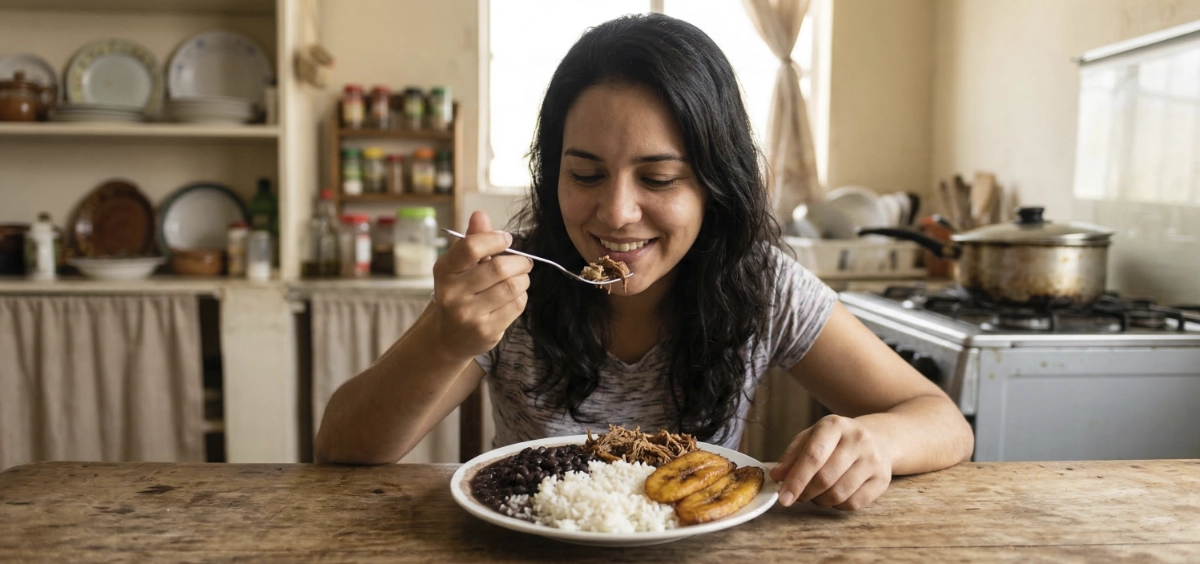
For those who migrated, cooking is a way to return. Not to a physical place, but to a feeling: the feeling of belonging. In the diaspora, the hallaca becomes more than a dish, the pan de jamón more than a recipe, and the ponche crema more than a drink; they are keys that unlock memory. Through flavor, Venezuelans reconstruct lost intimacy, connect with their childhood, and pass down to their children a heritage that cannot be learned in books.
In every foreign kitchen where a pot of hallacas boils, there is a story. A mother teaching her kids how to fold the leaf, a group of friends taking turns chopping the aliños, a grandfather telling how “the ones from back in the day” were made. In those simple gestures, the essential is preserved: the joy of cooking as a group, solidarity, humor. The table becomes a refuge, and food, a language that is never forgotten.
WHEN CHRISTMAS FITS IN A SUITCASE
Many Venezuelans carry their Christmas in suitcases. They pack cornmeal, papelón, Muscat wine, and fruits for the torta negra; they also pack patience and eagerness. At airports and customs, those boxes full of ingredients are almost a national symbol: small treasures that guarantee that, no matter where you live, the holiday will taste like it always has.
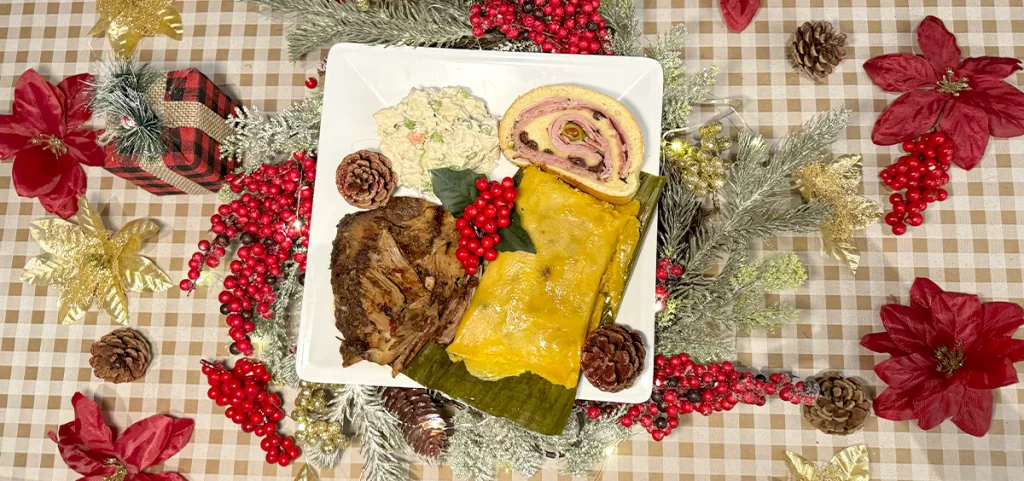
Thus, Christmases in the diaspora transform into hybrid versions of the original, with slight local accents: hallacas made with Spanish olives, pan de jamón with Serrano ham, dulce de lechosa cooked on an electric stove. And yet, the spirit is the same. Because the important thing isn’t the exactness of the recipe, but the act of continuing to make it. Every time a Venezuelan cooks their Christmas far from home, they reaffirm a sense of identity that doesn’t depend on borders. Instead of pure nostalgia, there is gratitude: for the memories that travel and the ability to reinvent them.
THE SOUND OF A DIFFERENT CHRISTMAS
Outside the country, gaitas share space with Christmas carols in other languages, but they keep setting the rhythm of the soul. “Sin rencor” or “Sentir zuliano” play in kitchens all over the world, accompanied by laughs, voice messages, and the inevitable toast with punch.
Music, like food, sustains belonging. It unites what distance separates and brings back the feeling of community. Thus, between improvised tables and family video calls, Venezuelans achieve a simple miracle: transforming absence into presence, and nostalgia into celebration.
AT PANNA, CHRISTMAS IS ALSO SHARED FROM A DISTANCE
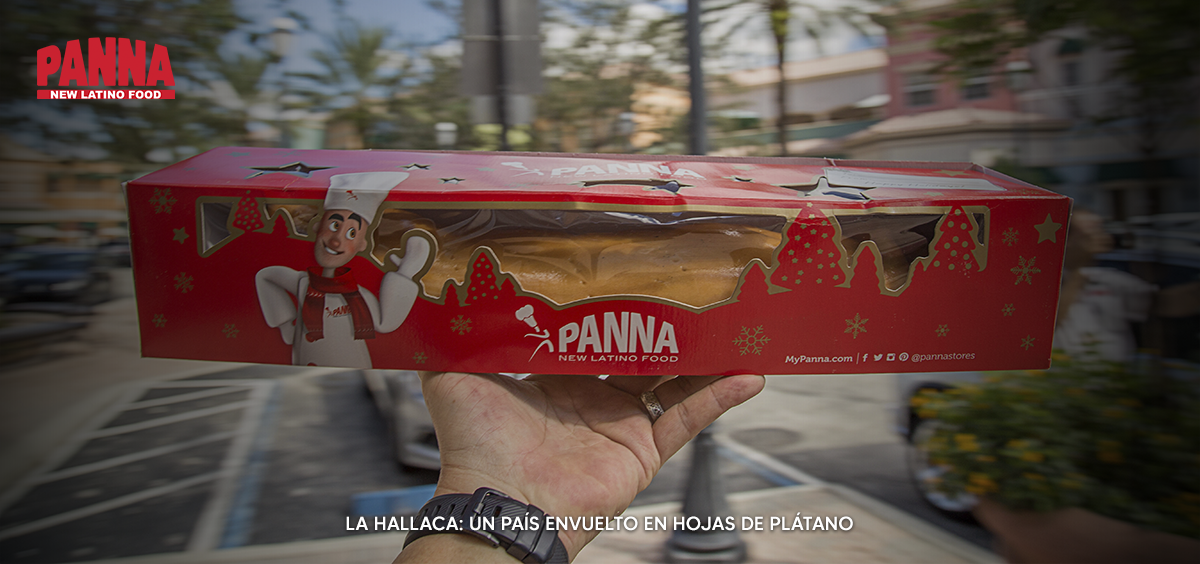
At PANNA, we know that a Venezuelan Christmas is a feeling that travels. That’s why our hallacas, panes de jamón, sweets, and desserts are made with the same love with which they are prepared at home, to accompany those who celebrate far or near. Every December, our kitchens fill with that smell that understands no distances: the smell of food that brings people together.
If Christmas finds you far from home this year, let the flavor bring you closer. In every PANNA hallaca there is a piece of home, in every pan de jamón a shared story, and in every dessert a [sweet connection to our roots].